The Limits of Modern Physics
Modern science has made enormous progress by studying both the very large and the very small. Fields like nanotechnology, microelectronics, and particle physics all rely on our ability to understand structures at extremely tiny scales.
To describe these scales, scientists use powers of ten. A micrometer is 10⁻⁶ meters, a nanometer is 10⁻⁹ meters, and beyond that, reality becomes increasingly strange. Even something as smooth as a sheet of paper reveals a rough and uneven structure under magnification.
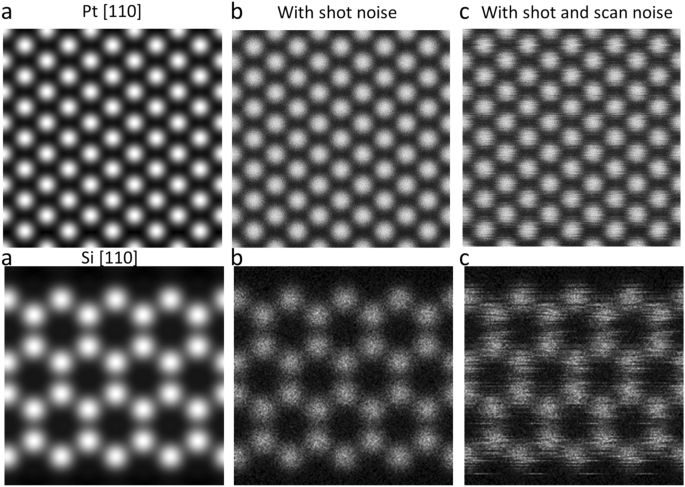
With advanced tools like transmission electron microscopes, we can now observe structures approaching the size of atoms. These instruments use accelerated electron beams with extremely short wavelengths, allowing resolutions far beyond what visible light can achieve .
Yet even this level of precision is not the true limit.
Is Spacetime Really Smooth?
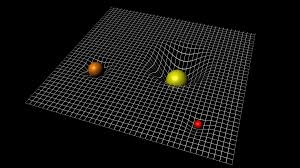
In relativity, spacetime is often described as a smooth and continuous fabric. It bends and curves under the influence of mass, but in the absence of matter, it is assumed to be perfectly flat.
But this raises an important question. If ordinary materials appear smooth only at large scales but become irregular when magnified, could spacetime behave the same way?
When physicists attempt to examine spacetime at extremely small scales, they find something unexpected. Instead of remaining smooth, spacetime begins to fluctuate. At even smaller scales, it may behave like a turbulent, foaming structure rather than a calm surface .
The Concept of Quantum Foam
This chaotic structure is often referred to as quantum foam, a term introduced to describe the violent fluctuations of spacetime at microscopic levels.
At these scales, the uncertainty principle plays a crucial role. Just as particles cannot have perfectly defined properties, spacetime itself cannot remain stable and well-defined.
Even in a vacuum, where no matter is present, quantum fluctuations cause constant changes. The gravitational field is no longer zero in a strict sense, but instead fluctuates around an average value. In extremely small regions, these fluctuations can become very large.
When Relativity Stops Working
This creates a serious problem for relativity. The theory assumes a smooth geometric structure that can be described continuously.
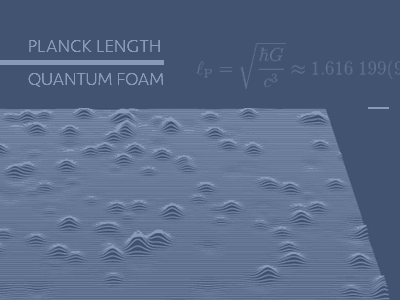
But at quantum scales, that assumption breaks down. Spacetime may no longer be continuous, and concepts like distance, direction, or curvature lose their usual meaning.
If we try to apply the equations of relativity in this regime, the results often become infinite or undefined. These infinities are not just mathematical inconveniences—they signal that the theory is no longer valid under those conditions .
The Extreme Nature of the Planck Scale
The scale at which these effects dominate is known as the Planck scale. Here, distances are on the order of 10⁻³⁵ meters, far beyond anything we can directly measure.
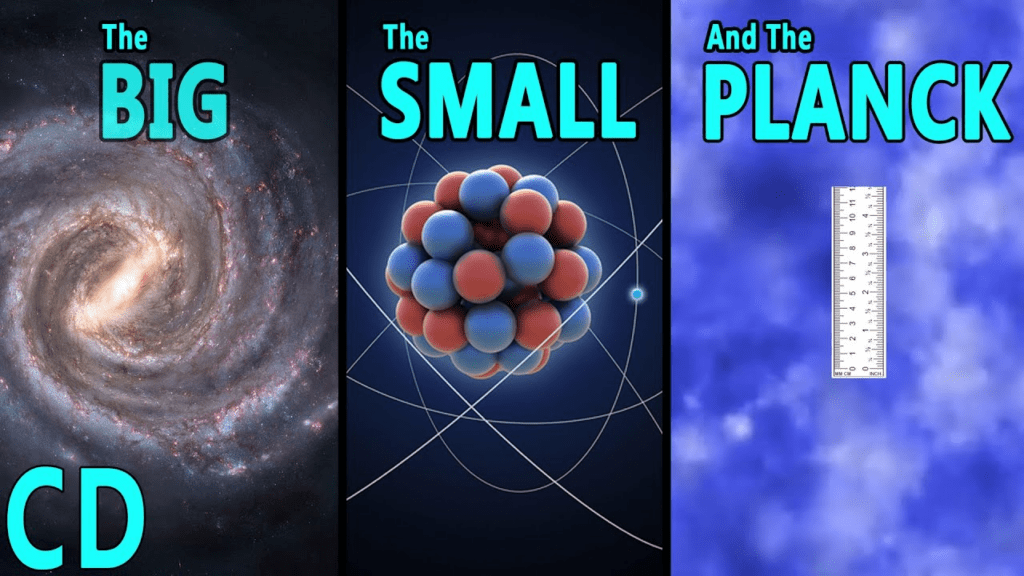
At this scale, even simple calculations lead to extreme results. For example, applying classical gravitational formulas at Planck distances can produce forces so large that they become physically meaningless.
These values highlight the gap between our current theories. What works perfectly at large scales becomes unstable and unrealistic when pushed into the quantum domain.
The Mystery of Gravity
Another major issue is gravity itself. In quantum physics, forces are typically described through particles that mediate interactions. But gravity does not fit neatly into this framework.
At atomic scales, gravity appears incredibly weak compared to other forces. Yet at cosmic scales, it dominates the structure of the universe.
Why gravity behaves so differently remains one of the biggest unanswered questions. It may also be the key to understanding why relativity and quantum mechanics cannot yet be unified.
Toward a Deeper Theory
All of these problems point toward the same conclusion. Our current understanding of nature is incomplete.
Relativity works beautifully for large systems, and quantum mechanics excels at describing the microscopic world. But at the Planck scale, both theories begin to fail.
Somewhere beyond them lies a deeper framework—a theory capable of describing spacetime, matter, and energy as a unified whole. Until that theory is discovered, the true nature of spacetime at the smallest scales will remain one of the greatest mysteries in physics.