The Paradox of “Point-Like” Particles
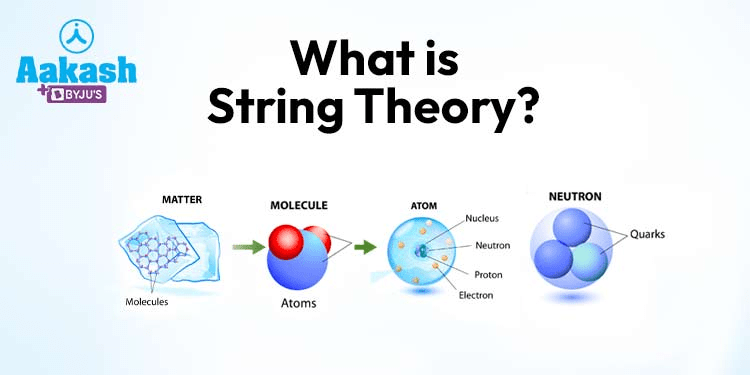
In ancient Greek, the word “atom” originally meant something indivisible. Today, modern physics has gone even further, breaking atoms into smaller components known as fundamental particles. These particles are considered the most basic building blocks of reality.
But here lies a strange contradiction. According to current physics, particles like electrons or quarks are treated as having no size at all. They are described as points in space, with no volume and no surface.
This creates an immediate conceptual problem. If everything in the universe is built from these “points,” how can objects with real size and structure emerge from something that has no dimensions? This question highlights a deeper limitation in how we currently describe nature .
The Standard Model and Its Limits
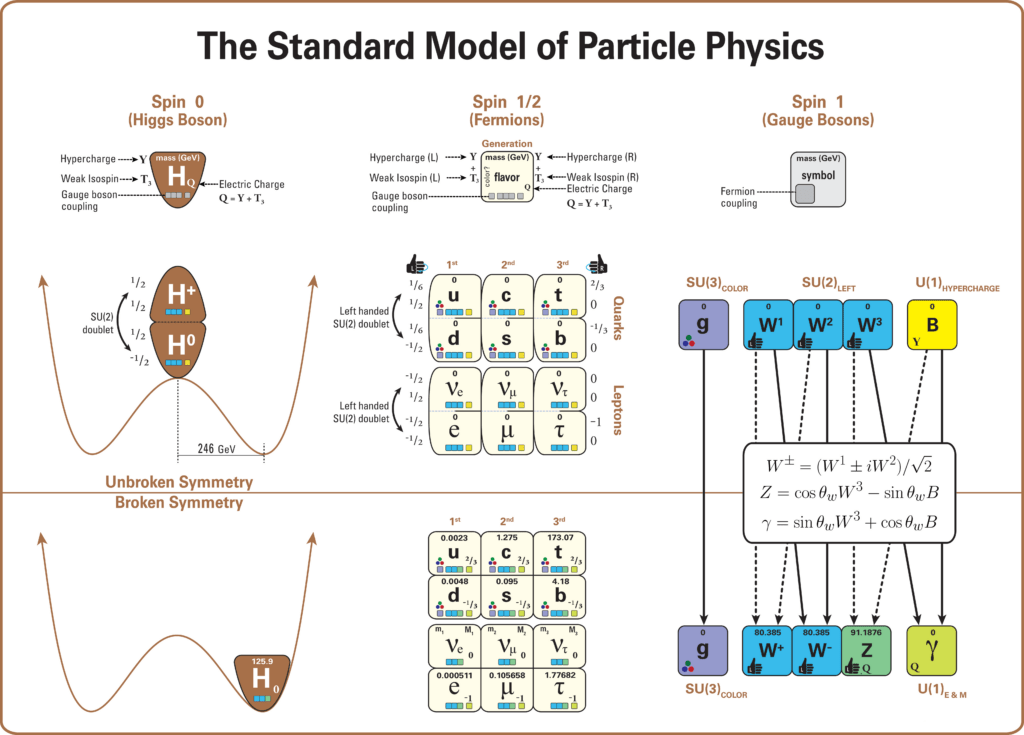
The Standard Model of particle physics has been remarkably successful. It explains how fundamental particles interact and accurately predicts a wide range of experimental results.
However, it does so by treating particles as dimensionless points. This simplification works mathematically, but it leaves important gaps. Most notably, the Standard Model does not include gravity, one of the four fundamental forces.
This suggests that, while powerful, the model is incomplete. To truly understand the nature of reality, physicists believe a deeper theory is needed—one that can describe all forces and resolve these conceptual inconsistencies .
A Radical Idea: Particles as Vibrating Strings
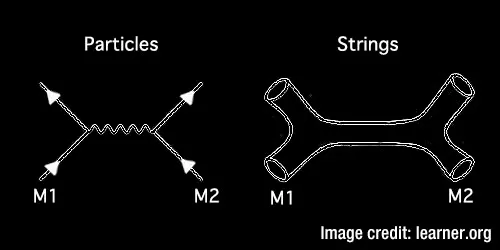
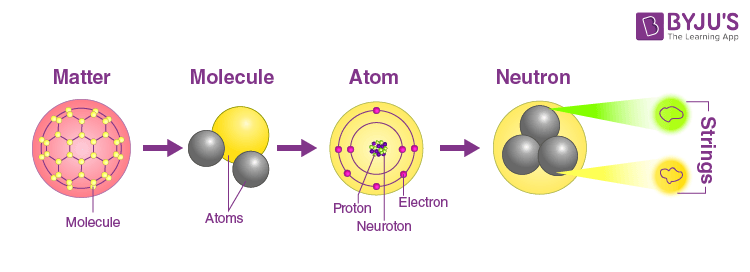
In the late 20th century, a new idea began to emerge. Instead of treating particles as points, some physicists proposed that they might actually be tiny one-dimensional objects—strings.
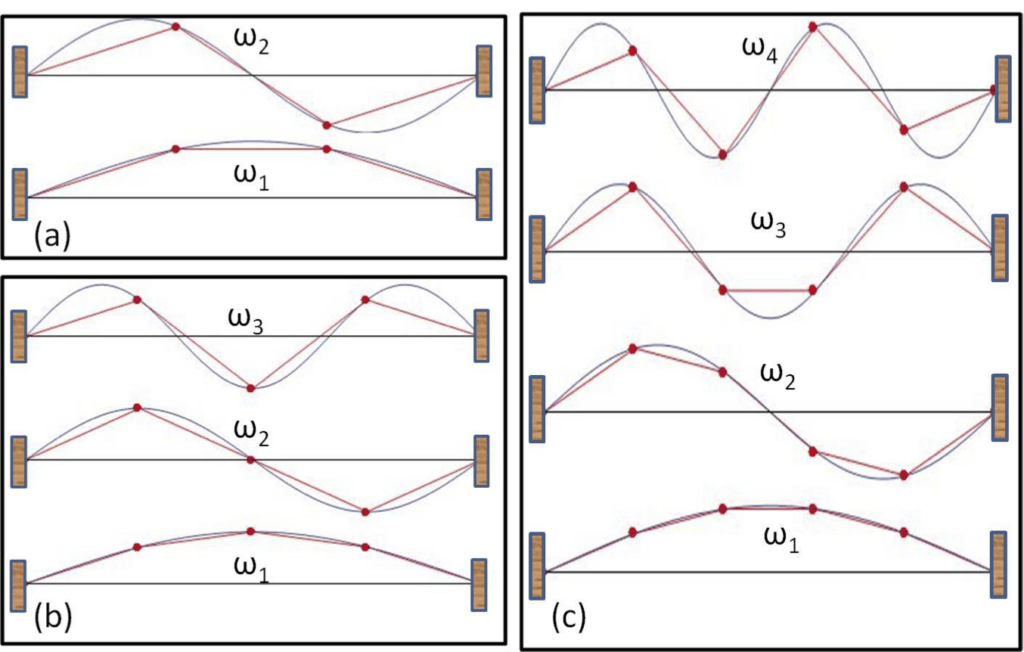
These strings are unimaginably small, existing near the Planck scale. From a distance, they would still appear as point-like particles, but at a deeper level, they have structure.
The key idea is that different particles correspond to different vibration modes of the same fundamental string. Just as a guitar string can produce different notes depending on how it vibrates, these microscopic strings produce different particles depending on their oscillation patterns.
The Rise, Fall, and Revival of String Theory
Initially, this idea did not gain much acceptance. Early predictions from string theory did not match experimental results, and many physicists turned back to the Standard Model.
However, a small group of researchers continued exploring the theory. By the 1980s, deeper mathematical structures began to emerge, revealing that string theory might be far more powerful than originally thought.
In 1984, a major breakthrough sparked renewed interest. Over the following years, hundreds of studies were published, and string theory quickly became one of the most actively researched areas in theoretical physics. It was no longer seen as a failed idea, but as a possible path toward a unified theory of everything .
A Theory Full of Promise—and Challenges
String theory offers several important advantages. It removes the need for point-like particles, replacing them with extended objects that naturally avoid certain mathematical inconsistencies. It also provides a possible way to include gravity through a particle known as the graviton, which emerges naturally from string vibrations.
Despite this promise, the theory faces serious challenges. Its equations are extremely complex, often impossible to solve exactly. Many predictions remain beyond the reach of current experiments, making it difficult to verify.
As a result, string theory exists in a unique position. It is one of the most ambitious and mathematically rich ideas in physics, yet it remains unconfirmed. Whether it represents the true foundation of reality or just another step toward a deeper theory is still an open question.