The Illusion of a Crowded Night Sky
When we look up at the night sky from Earth, it feels full of stars. Countless points of light seem to fill every corner of the darkness, giving the impression that the universe is crowded and alive with activity.

But this is only an illusion created by human perception. In reality, the universe is overwhelmingly empty. If someone could observe it from the outside, they would mostly see darkness stretching in every direction, interrupted only by faint structures where galaxies cluster together.
The stars we see are just a tiny fraction of what actually exists. Most of the universe remains invisible, hidden beyond the limits of human vision.
Beyond Light: What We Cannot Directly Observe
Everything we know about the universe comes from detecting photons. These particles of light carry both energy and information, allowing us to observe distant stars, galaxies, and cosmic events.

However, photons are only part of the story. The universe is also filled with neutrinos, dark matter, dark energy, and the fabric of spacetime itself. These components are far more difficult to detect, and in many cases, we cannot observe them directly at all.
This means the universe is not truly empty. It is filled with phenomena that remain largely unknown, existing beyond the reach of our instruments and current understanding.
Most of the Universe’s Light Does Not Come from Stars
It may seem natural to assume that stars are the main source of light in the universe. After all, they are the brightest objects we can see.
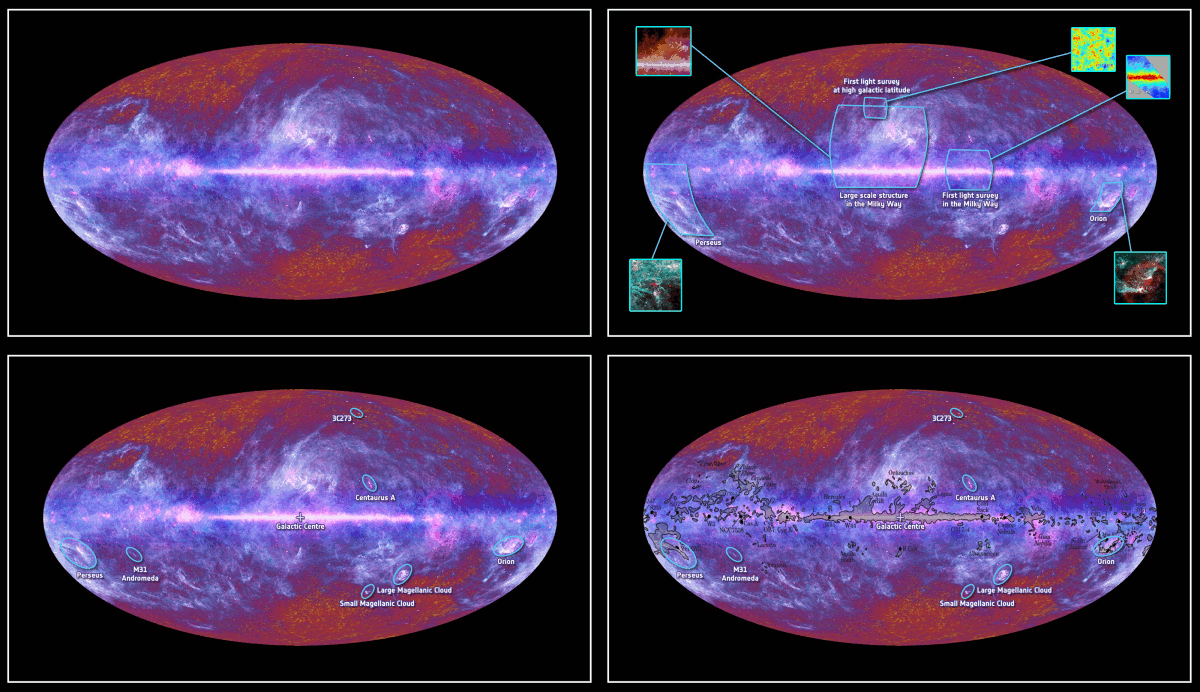
But measurements tell a very different story. More than 99.9 percent of all photons in the universe do not come from stars. Instead, they belong to something far older and more fundamental: the cosmic microwave background.
This radiation is a remnant from the earliest moments of the universe. Compared to it, all the stars that exist today contribute only a tiny fraction of the total photon population.
The Universe Was Once a Hot Plasma
To understand where this background radiation comes from, we need to go back to the early universe.
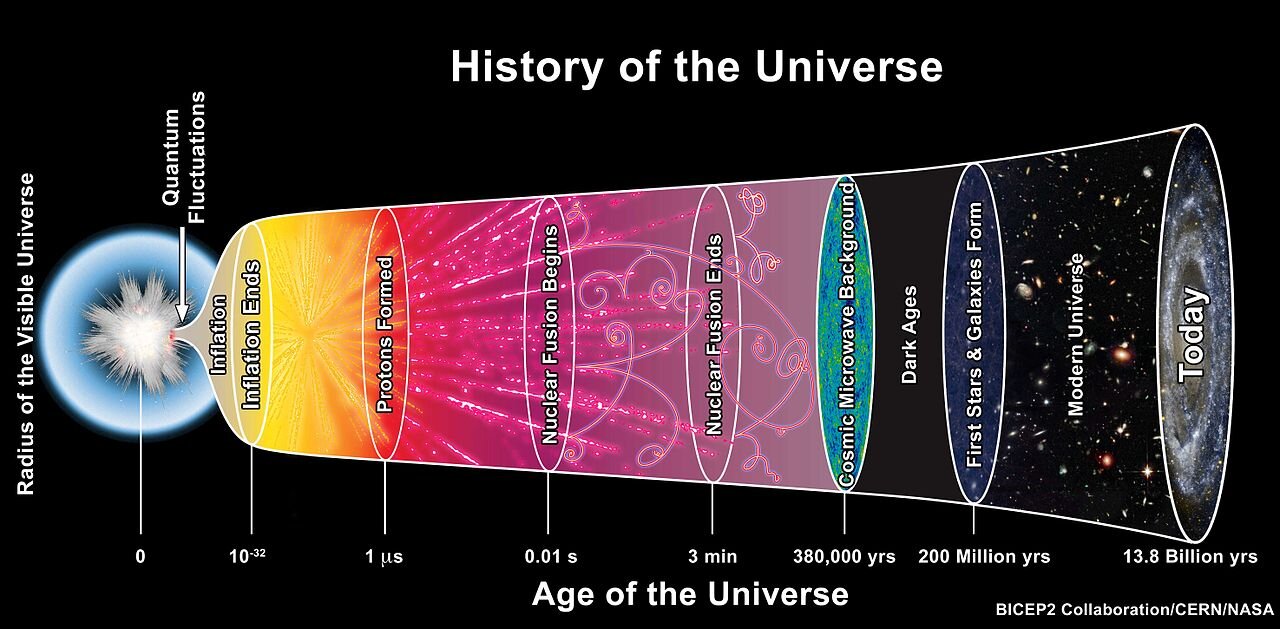
Shortly after the Big Bang, the universe was extremely hot and dense. It was filled with a chaotic mixture of fundamental particles such as quarks, electrons, and photons. This state is often described as a plasma.
At such high temperatures, photons could not travel freely. They constantly collided with charged particles, scattering in all directions and losing energy. Light, in the form we understand it today, could not move across space.
When the Universe Became Transparent
As the universe expanded, its temperature gradually dropped. After about 380,000 years, it cooled enough for electrons and protons to combine and form neutral hydrogen atoms.
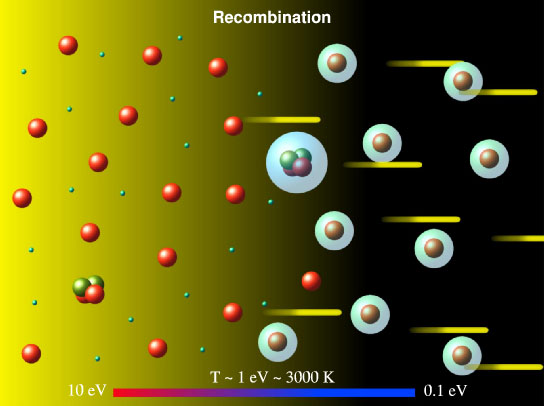
This moment is known as recombination. It marked a turning point in cosmic history.
With fewer free charged particles to scatter them, photons were finally able to travel freely through space. The universe became transparent for the first time, allowing light to move without constant interruption.
These photons have been traveling ever since, forming what we now observe as the cosmic microwave background.
Why This Ancient Light Became Microwaves
Originally, this radiation was much more energetic. At the time it was released, it existed as visible light and infrared radiation.

However, the universe has been expanding continuously. As space stretches, the wavelengths of photons stretch with it. Over billions of years, this process has shifted the original light into the microwave region of the electromagnetic spectrum.
Today, this ancient radiation fills the entire universe. It is not only a relic of the Big Bang but also one of the most important pieces of evidence we have about the early universe.
In fact, by studying this radiation, scientists can estimate how many hydrogen atoms formed in the early universe and even infer the total amount of matter that exists today.