The Limit of What We Can Observe
When we look into the universe, there is a hard boundary we cannot cross. No telescope, no matter how advanced, can see beyond a certain point in time. That boundary lies at about 380,000 years after the Big Bang.
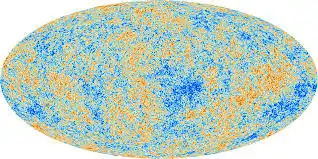
Everything before that moment is hidden behind a dense background of photons known as the cosmic microwave background. This radiation fills the entire universe and acts like a fog that blocks our view of earlier events.
Because of this, the earliest history of the universe cannot be observed directly. Scientists must rely on theoretical models, indirect evidence, and subtle signals such as neutrinos or gravitational effects to reconstruct what may have happened.
The Planck Era: A Universe Without Laws
The earliest known stage of the universe is called the Planck era, lasting from time zero to about 10⁻⁴³ seconds. At this scale, the universe was so hot and dense that our current understanding of physics completely breaks down.

All four fundamental forces are believed to have been unified into a single interaction. Gravity, electromagnetism, and nuclear forces were not yet distinct.
Energy levels were so extreme that even the concept of particles becomes uncertain. Instead of stable matter, the universe may have been dominated by quantum fluctuations of spacetime itself. This is why no existing theory can fully describe this period.
Grand Unification and the First Separation of Forces
After the Planck era, the universe quickly transitioned into the grand unification era, lasting until about 10⁻³⁶ seconds.
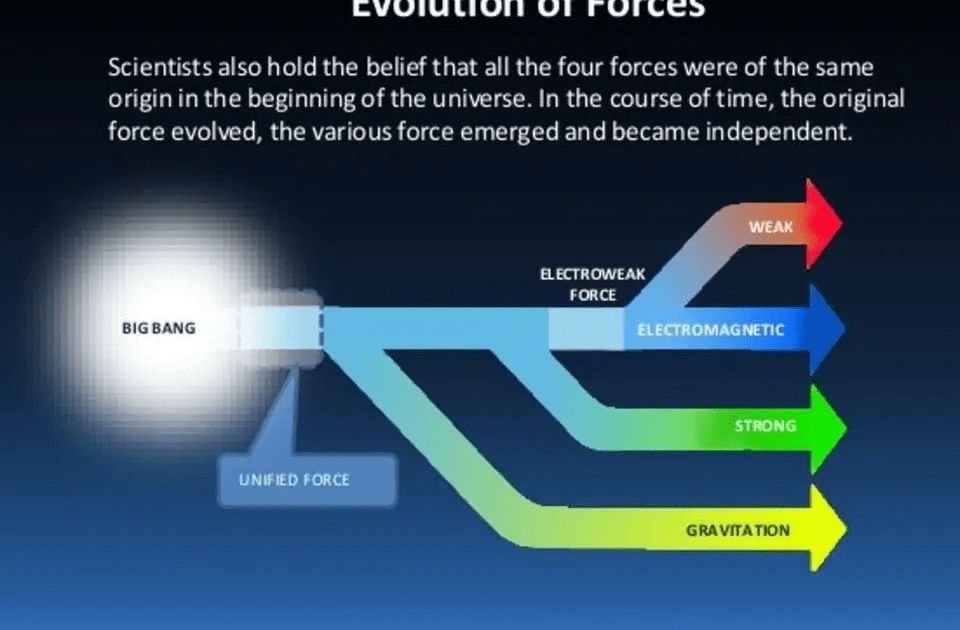
During this stage, gravity separated from the other forces, while the strong, weak, and electromagnetic interactions remained unified. Physicists attempt to describe this period using models such as grand unified theories and quantum field frameworks.
However, incorporating gravity into these models remains extremely difficult. This is one of the reasons why a complete theory of everything has not yet been achieved.
Cosmic Inflation: Expansion Beyond Imagination
Between about 10⁻³⁶ and 10⁻³² seconds, the universe underwent a dramatic phase known as cosmic inflation.
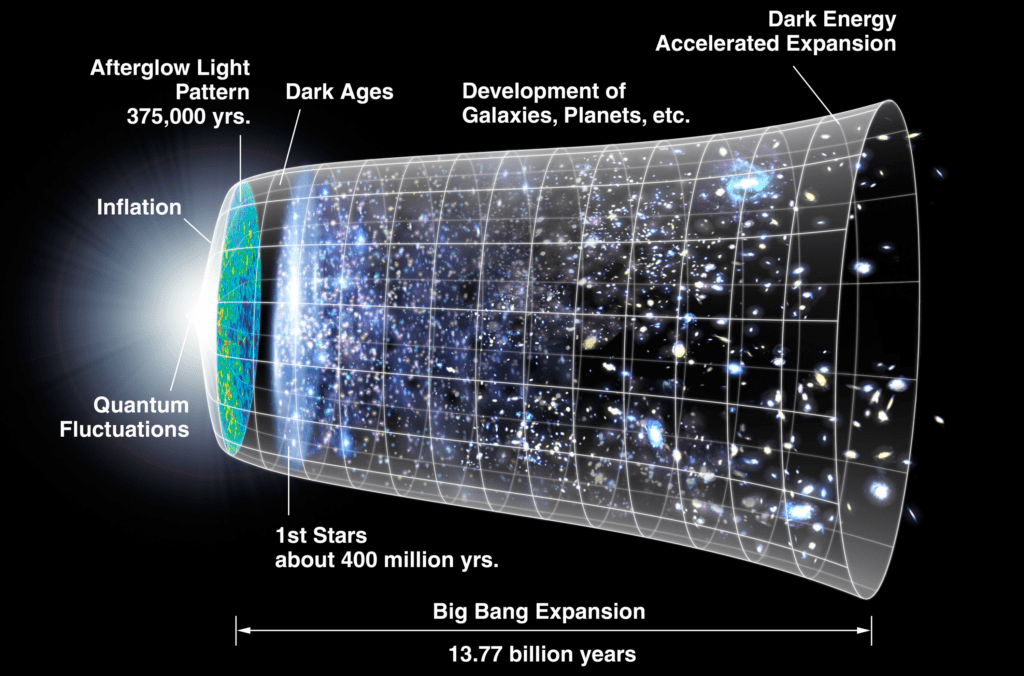
During this extremely short interval, the universe expanded at an astonishing rate. Its size increased by at least 10²⁶ times in every direction. A region smaller than an atom could have expanded to astronomical scales almost instantly.
This rapid expansion explains several key features of the universe today. It helps account for the large-scale uniformity of cosmic background radiation and the distribution of matter across vast distances.
The Birth of Matter and the Survival of Asymmetry
As the universe cooled further, it entered stages where fundamental particles could begin to form. Quarks combined into protons and neutrons, marking the transition into the hadron era.
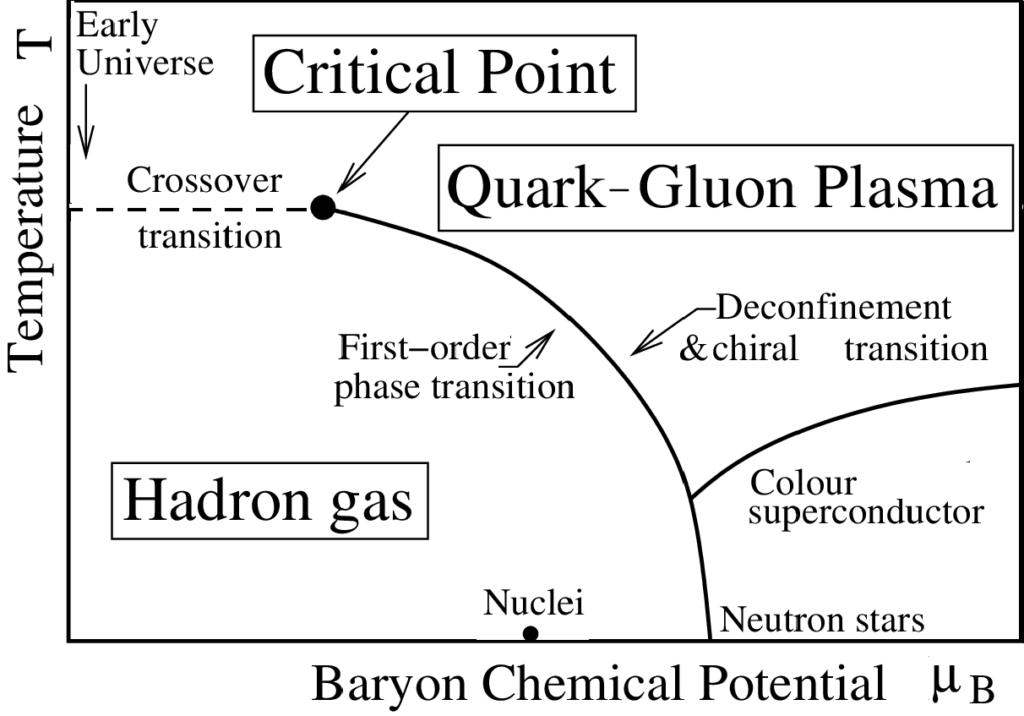
At the same time, particles and antiparticles were continuously created and destroyed. Under normal conditions, these processes should have canceled each other out completely.
However, a small asymmetry appeared. Slight differences in decay rates and interactions allowed a tiny fraction of matter to survive while most antimatter disappeared. This imbalance is the reason anything exists at all today.
During this period, neutrinos were also produced in enormous quantities. Because they interact very weakly with matter, they escaped early and may still form a cosmic background similar to the photon background we observe.
Nucleosynthesis and the Photon-Dominated Universe
From a few seconds to several minutes after the Big Bang, the universe cooled enough for nuclear reactions to occur. This phase is known as Big Bang nucleosynthesis.
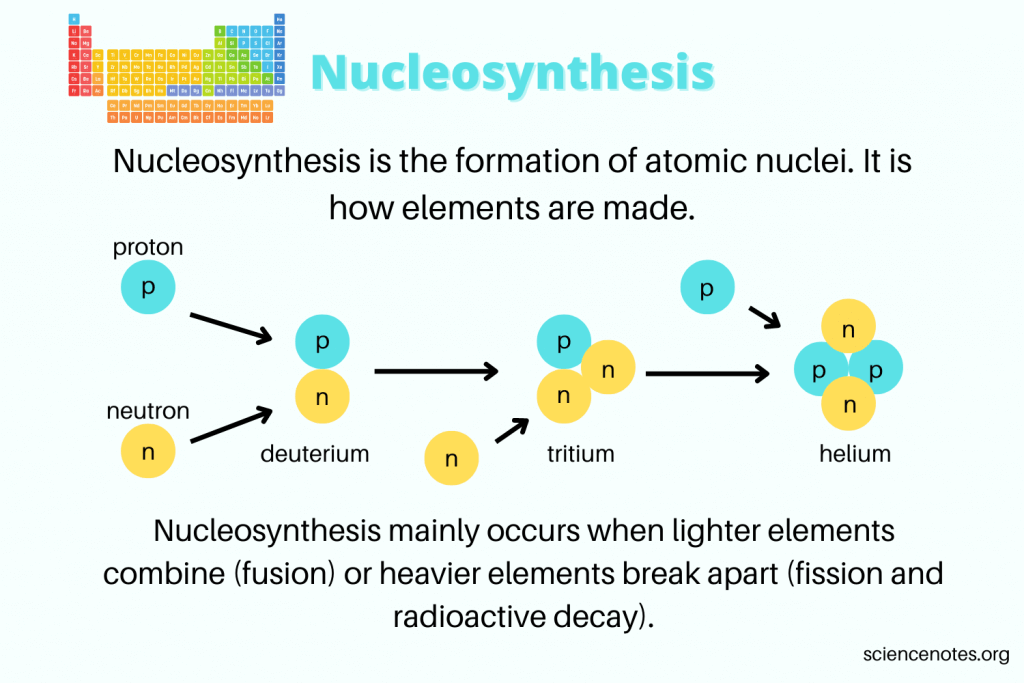
During this time, light nuclei such as hydrogen, deuterium, helium, and small amounts of lithium were formed. These elements became the building blocks for future stars and galaxies.
At the same time, the universe was still filled with high-energy photons constantly interacting with matter. These photons prevented stable atoms from forming, keeping the universe in a hot, ionized state.
Recombination and the Beginning of the Dark Ages
Around 380,000 years after the Big Bang, the temperature of the universe dropped to about 3000 kelvin. At this point, electrons were finally able to combine with protons to form neutral hydrogen atoms.
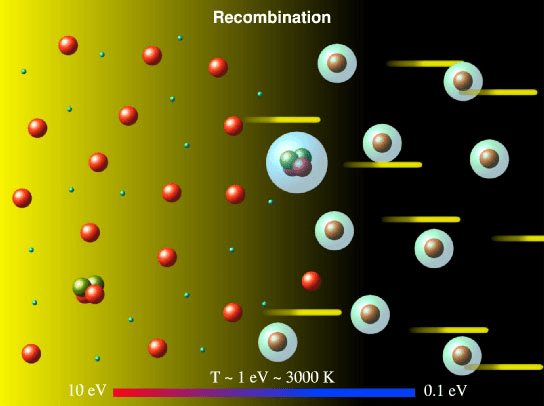
This process, known as recombination, marked a major transition. Photons were no longer scattered constantly and could travel freely through space.
These photons are what we now observe as the cosmic microwave background. After billions of years of expansion, their wavelengths have stretched into the microwave region.
Following this moment, the universe entered the cosmic dark ages. There were no stars yet, only vast clouds of hydrogen slowly evolving under gravity.
The Dark Ages and the Limits of Human Knowledge
The dark ages lasted for hundreds of millions of years until the first stars formed and lit up the universe.
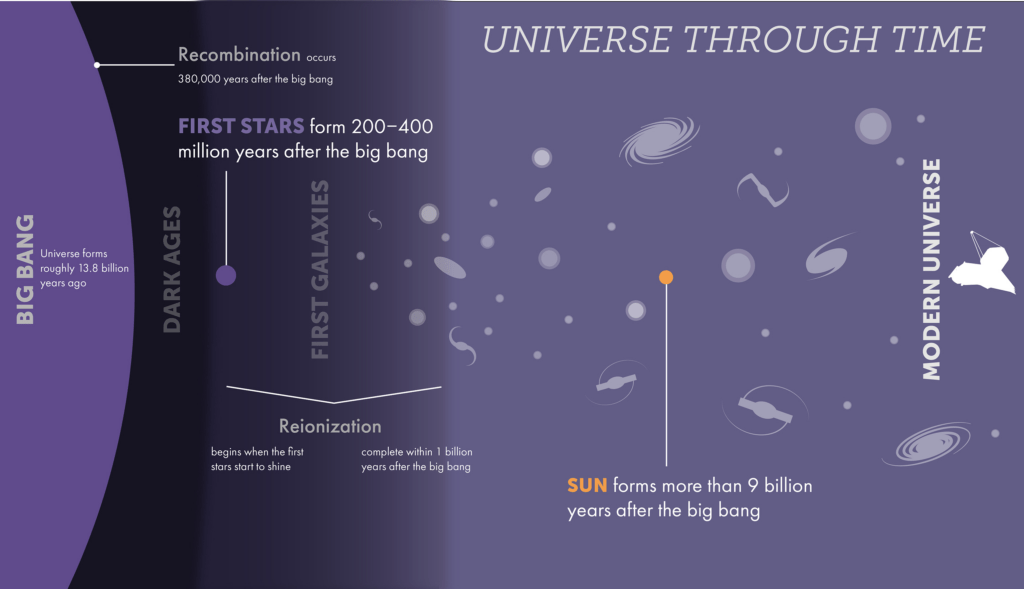
This period remains one of the least understood phases in cosmic history. Although many important processes took place, we have almost no direct observational data.
In the end, everything that happened before 380,000 years after the Big Bang remains hidden behind the cosmic background radiation. Scientists can build models and propose explanations, but definitive proof remains extremely difficult.
This is why the origin and earliest evolution of the universe continue to be among the deepest unanswered questions in modern science.