From String Theory to a “Theory of Everything”
In 1995, Edward Witten presented a groundbreaking idea that reshaped string theory into something broader and more ambitious: M-theory. This was not just an extension, but a unifying framework that connected previously separate versions of string theory into a single, deeper structure.
For decades, physicists had been searching for a “theory of everything”—a model capable of describing all particles and all fundamental forces within one consistent system. M-theory appeared to offer exactly that. It did not simply describe strings, but suggested a richer structure behind them, opening the possibility of unifying quantum mechanics and gravity.
Yet despite its elegance, very few people truly understand how deep this theory goes. Much of its power lies in mathematics so abstract that even experts are still exploring its implications .
Why We Cannot Directly Observe Strings
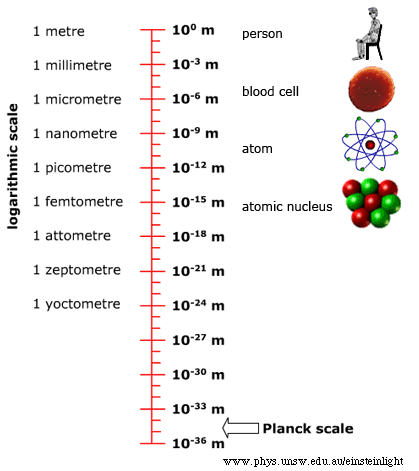
One of the biggest challenges of string theory—and by extension M-theory—is that strings are unimaginably small. Their size is believed to be close to the Planck scale, far beyond anything current technology can probe.
Even the most powerful particle accelerators today fall short by an enormous margin. To directly observe a string, we would need energies millions of billions of times greater than what we can currently achieve.
Because of this, string theory exists largely as a theoretical framework. Its predictions are explored through equations and indirect reasoning rather than direct experiments. This also explains why simple questions—such as what strings are “made of”—do not have conventional answers. In this framework, strings are not made of anything more fundamental; they are the fundamental entities themselves .
The Problem with Point Particles
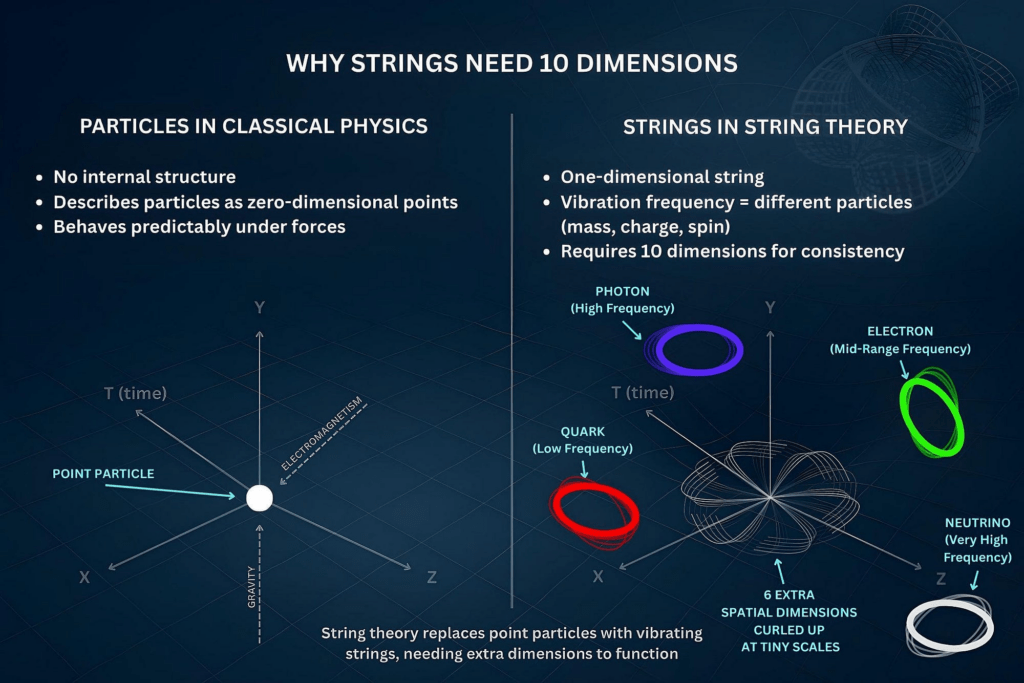
In the Standard Model, particles are treated as points with no size. This assumption works extremely well in calculations, but it creates a conceptual limitation.
If particles are truly point-like, then their internal properties—such as mass, charge, and spin—must simply be accepted as given. There is no deeper explanation for why these properties exist or why they have specific values.
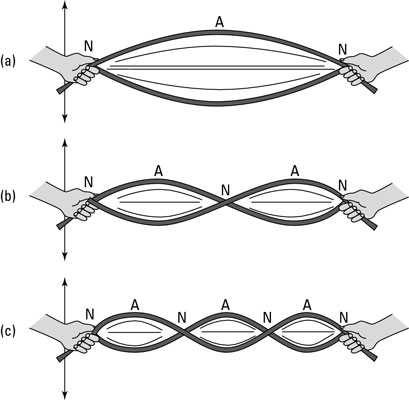
String theory offers a different perspective. Instead of points, it describes particles as vibrating strings. The properties of a particle are no longer arbitrary—they emerge from how the string vibrates. Different vibration modes correspond to different particles, much like different frequencies on a musical instrument produce different notes.
This shift replaces unexplained constants with underlying physical behavior, giving a more intuitive origin to the properties of matter.
How Strings Define Mass and Interaction
In string theory, every particle is associated with a specific vibration pattern. These vibrations determine not only the type of particle, but also its energy—and therefore its mass.
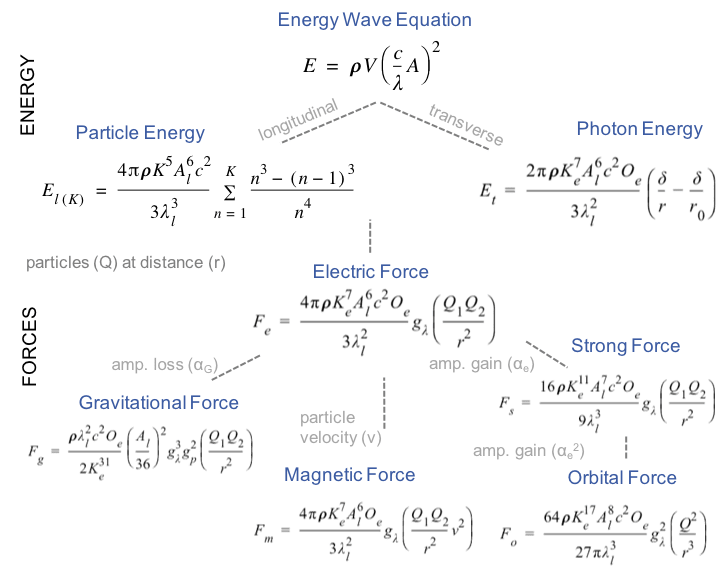
A string vibrating with higher energy corresponds to a heavier particle, while lower-energy vibrations correspond to lighter ones. This naturally connects mass to motion, aligning with the idea that energy and mass are interchangeable.
Even forces can be explained within this framework. Certain vibration modes correspond to force-carrying particles, including the hypothetical graviton, which would mediate gravity. This is one of the most important features of string theory: it provides a natural way to include gravity, something the Standard Model cannot fully achieve.
Promise, Limitations, and the Road Ahead
Despite its elegance, M-theory remains incomplete. Its equations are extraordinarily complex, often impossible to solve exactly. Many results can only be approximated, and a large portion of the theory remains mathematically unexplored.
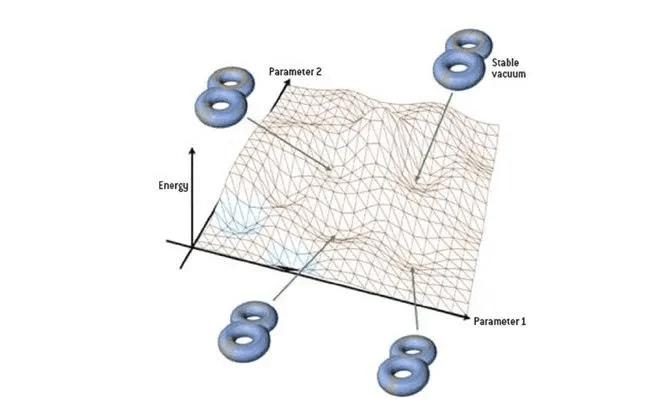
This creates a paradox. On one hand, M-theory is one of the most comprehensive frameworks ever proposed in physics. On the other, it is still far from being experimentally verified.
Yet this is often how major breakthroughs begin. What starts as an abstract mathematical idea can eventually reshape our understanding of reality. Whether M-theory truly represents the final theory of nature or just another step forward is still unknown—but its potential is too significant to ignore.