When Two Great Theories Refuse to Agree
Modern physics is built on two extraordinary pillars: quantum mechanics and relativity. Each has been tested countless times and proven to describe nature with incredible accuracy.
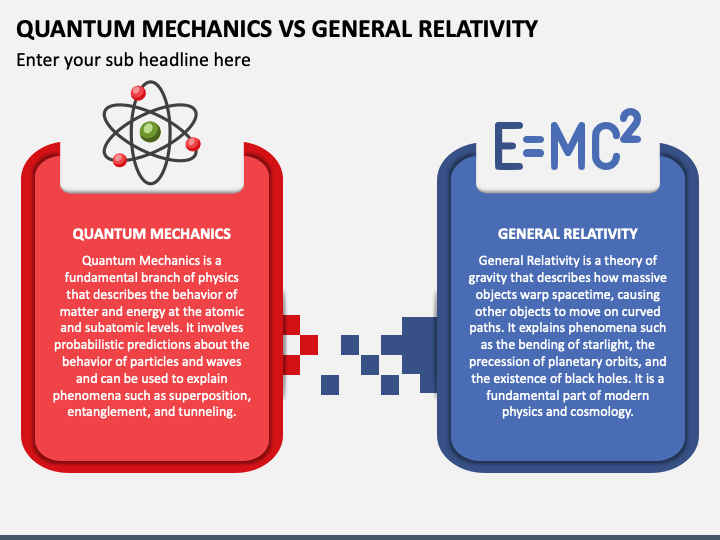
Yet there is a problem that has persisted for decades. These two theories do not fully agree with each other. In most situations, scientists must choose one or the other. Quantum mechanics works for the very small, while relativity explains the very large.
However, there are extreme environments where both should apply at the same time. Near the center of a black hole or at the moment of the Big Bang, reality is both incredibly dense and incredibly small. In these conditions, using only one theory is not enough, but combining them often leads to meaningless or even infinite results .
The Chaos Hidden in Quantum Uncertainty
At the heart of quantum mechanics lies the uncertainty principle. This idea fundamentally changed how scientists think about reality.
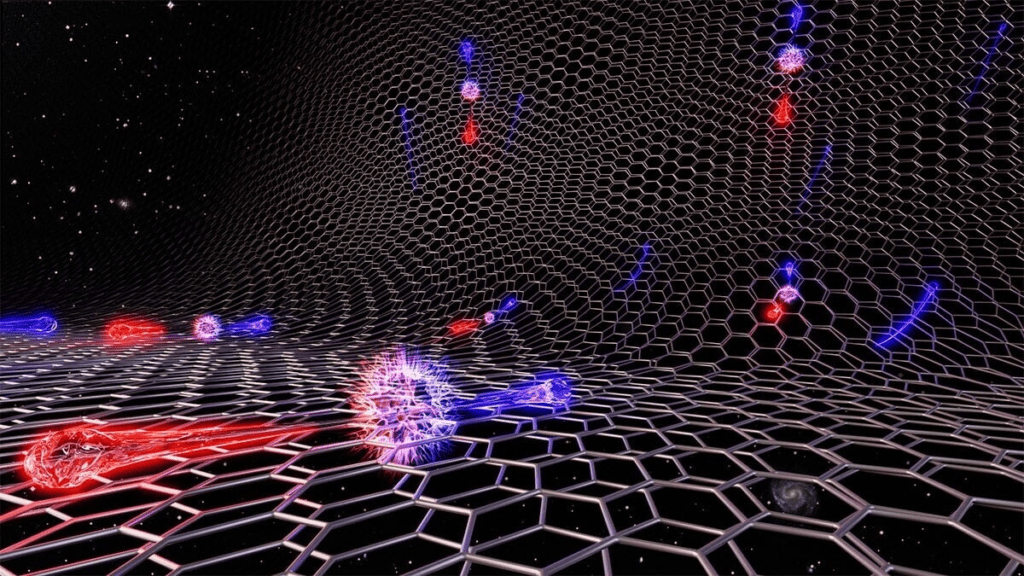
Even in the absence of external forces, particles like electrons never truly stay still. Their motion constantly fluctuates, and their properties cannot be pinned down with complete certainty.
More surprisingly, this uncertainty extends beyond position and velocity. It also affects energy and time. Even in what appears to be completely empty space, particles are not at rest. Instead, they continuously fluctuate, as if borrowing and returning energy in an endless cycle.
Borrowing Energy from Empty Space
Quantum physics suggests that empty space is not truly empty. It is filled with temporary fluctuations that can briefly create energy.
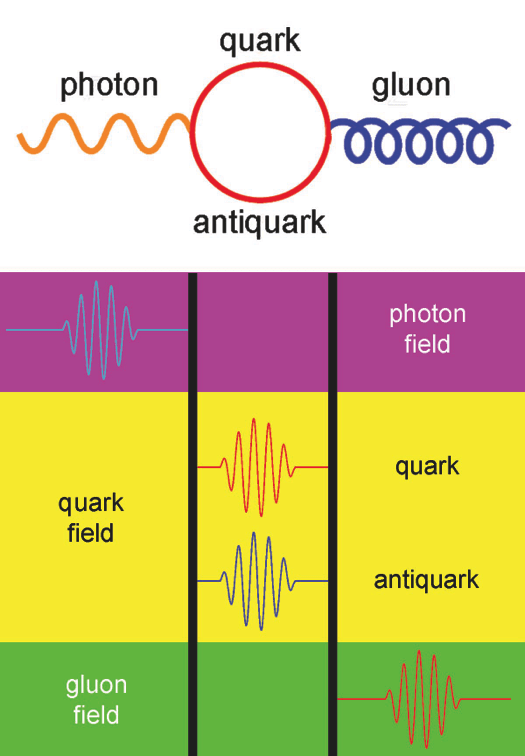
In certain conditions, this borrowed energy can even turn into matter. For example, a sufficiently energetic fluctuation can produce a particle and its antiparticle, such as an electron and a positron. These particles exist only briefly before annihilating each other and returning the borrowed energy.
From a classical perspective, this process seems pointless. Everything returns to its original state, as if nothing ever happened. But at the quantum level, these fluctuations are real and measurable effects that shape the behavior of the universe .
The Rise of Quantum Field Theory
To better understand these phenomena, physicists developed a deeper framework known as quantum field theory.
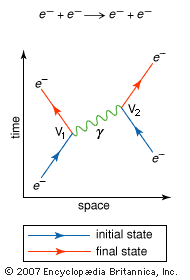
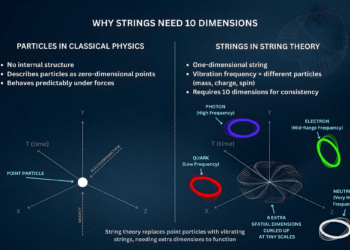
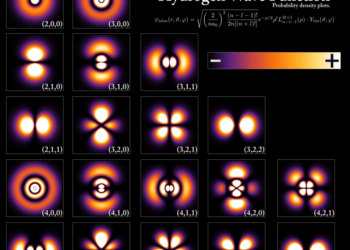
Instead of treating particles as isolated objects, this theory describes them as excitations of underlying fields that fill all of space. Every type of particle corresponds to its own field, and what we observe as a particle is simply a vibration within that field.
These fields are never completely still. They constantly fluctuate, interact, and exchange energy. The universe, at its most fundamental level, behaves more like a dynamic web of interacting fields than a collection of individual particles.
The Precision of Quantum Electrodynamics
One of the greatest successes of quantum field theory is quantum electrodynamics, the theory describing how light and matter interact.
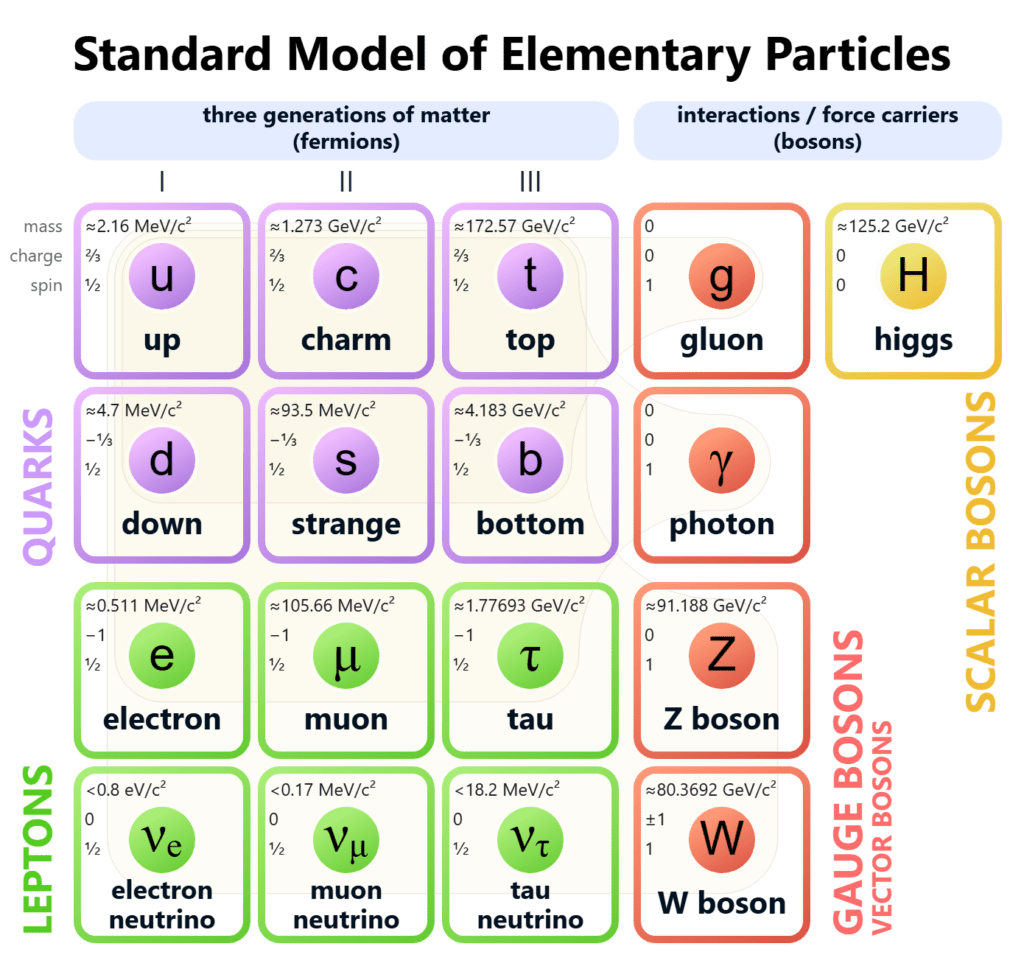
Over decades of research, physicists have used this theory to calculate properties of particles like the electron with extraordinary precision. Some results match experimental measurements to within one part in a billion.
This level of accuracy is almost unmatched in science. It demonstrates that, despite its strange and counterintuitive nature, quantum theory provides one of the most reliable descriptions of reality ever developed.
The Standard Model and Three Fundamental Forces
Building on these successes, physicists developed the Standard Model, a framework that describes three of the four fundamental forces of nature: the strong force, the weak force, and electromagnetism.
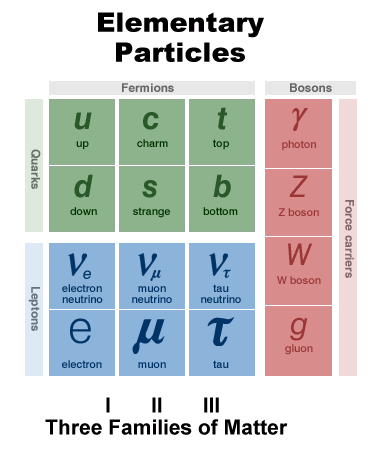
Each force is associated with its own carrier particles. Gluons mediate the strong force, W and Z bosons carry the weak force, and photons are responsible for electromagnetic interactions.
This model explains how particles interact at the smallest scales and has been confirmed by countless experiments. It represents one of the greatest achievements in modern physics.
The Missing Piece: Gravity
Despite all these advances, one major problem remains unresolved. Gravity does not fit into the Standard Model.
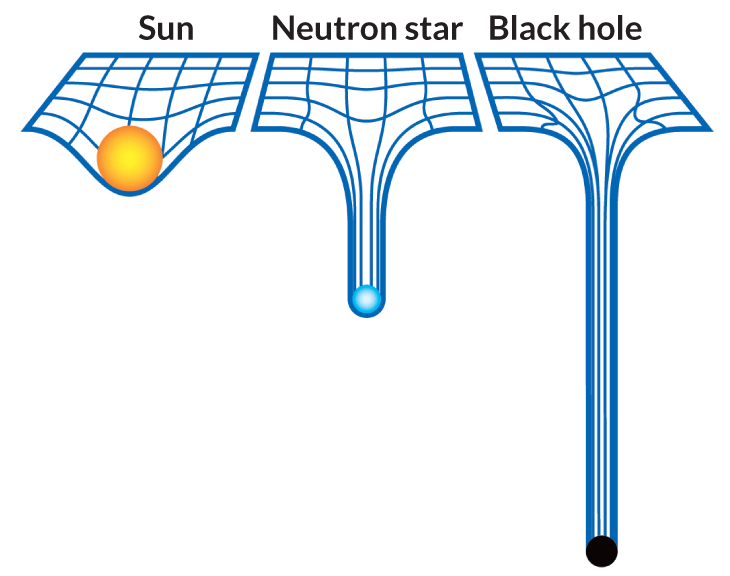
Unlike the other forces, gravity is described by general relativity, a theory that treats it as the curvature of spacetime rather than a force carried by particles. When physicists try to describe gravity using quantum principles, the equations often produce infinities that cannot be resolved.
This incompatibility suggests that our understanding of the universe is still incomplete. Somewhere beyond our current theories lies a deeper framework that can unify all forces into a single, consistent description.
Until that theory is discovered, the tension between quantum mechanics and relativity will remain one of the greatest mysteries in physics.


wish you all the best