Why Is String Theory So Difficult to Understand?
String theory is often described as one of the most promising frameworks in modern physics. Yet, the Standard Model still retains its value. One important reason lies in how we naturally think: imagining a particle as a tiny point is intuitive and logically satisfying.
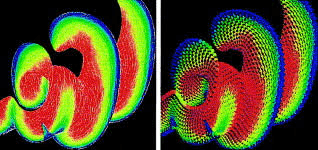
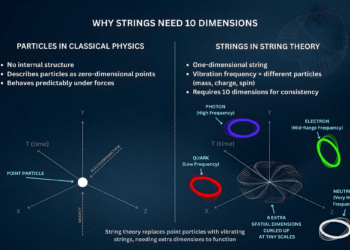
String theory, however, replaces that simple picture with vibrating one-dimensional objects. It becomes extremely difficult to visualize how these tiny loops or strings interact with one another. More importantly, the entire framework is built on highly advanced mathematics. Without strong visualization from physicists, very few people would be able to grasp its meaning.
Although mathematics is the foundation of science, most human brains struggle with it. This is partly because mathematical thinking consumes a large amount of energy. Interestingly, this connects to a broader idea: not only humans, but almost everything in the universe tends to “prefer” minimizing effort.
Laziness as a Fundamental Tendency of Nature
In physics and chemistry, what we casually call “laziness” can be understood as a tendency toward stability.
Any atom or molecule naturally evolves toward a state that is:
- as stable as possible
- as unchanging as possible
- and as low in energy as possible
Under normal conditions, a system will try to maintain its state and avoid unnecessary transformations. It resists decay and change unless acted upon.
This behavior is surprisingly similar to human tendencies. We often seek the least effort while still maintaining stability and long-term survival. In both cases, there is a drive toward conserving energy.
String Tension and the Control of Oscillations
In string theory, a particle exists through the oscillations of a string. These oscillations determine:
- its energy
- and how it interacts with other particles
However, there is an underlying factor that constantly governs these oscillations: string tension.
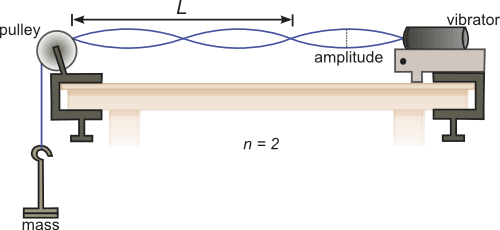
A useful analogy is a musical string:
- A tighter string produces smaller oscillations
- A looser string produces larger oscillations
String theory follows a similar principle, although strings are not fixed at two ends. They can be open or closed loops.
Here lies an interesting point:
- Oscillation amplitude represents energy
- But a more relaxed string appears to have greater oscillation
This leads to a seeming contradiction: a looser string exhibits higher energy behavior than a tighter one.
The Paradox of Tension and Energy
If oscillations represent energy, then what role does tension actually play?
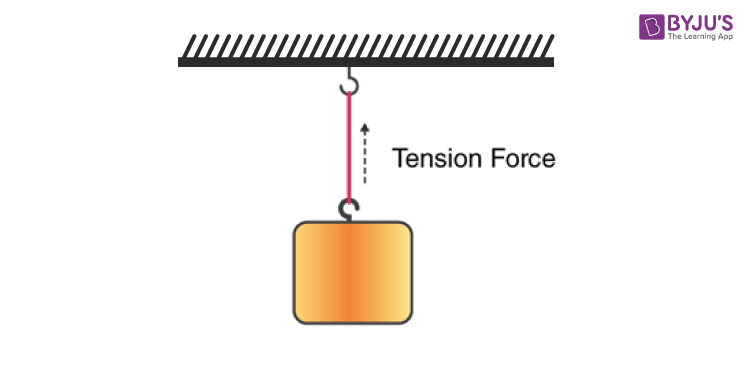
Tension is not a direct source of energy. Instead, it acts as a limiting mechanism. Without tension:
- a string could oscillate uncontrollably
- energy could grow without bound
- the system would become unstable and eventually collapse
Therefore, tension exists to ensure stability and to prevent infinite deformation.
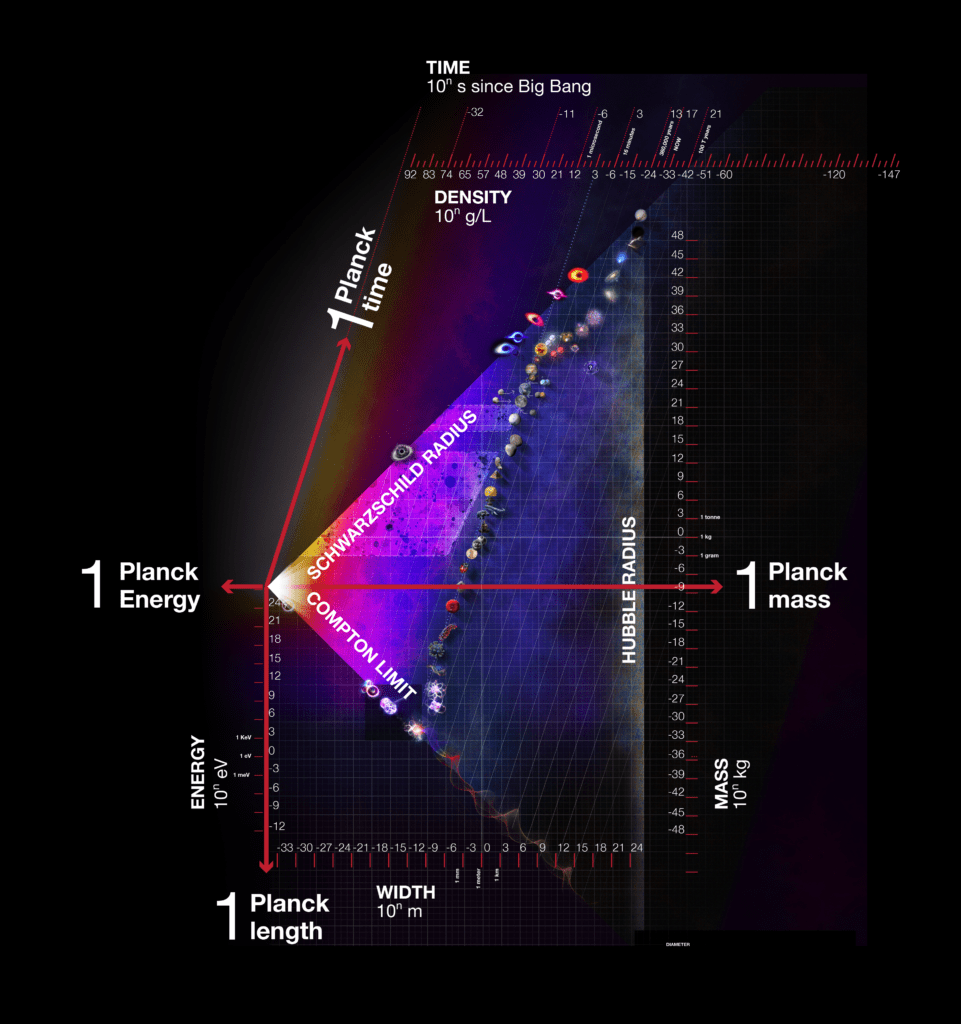
Consider the graviton, the hypothetical particle that carries gravity. Since gravity is the weakest of the four fundamental forces and propagates at the speed of light, the graviton must be massless and extremely low in energy. This corresponds to an incredibly high string tension, on the order of the Planck scale.
This reveals an important relationship:
- higher tension restricts deformation
- and limits observable energy behavior
Minimum Energy and Quantum Oscillations
Another question arises: if string tension is so large, why do strings still oscillate?
The answer is that every string possesses a minimum intrinsic energy. This energy:
- does not directly manifest outwardly
- but serves as the foundation for the string’s existence
Numerically, this minimum energy is extremely large, even far exceeding that of a proton.
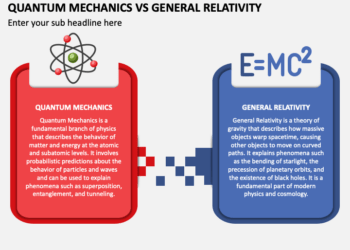
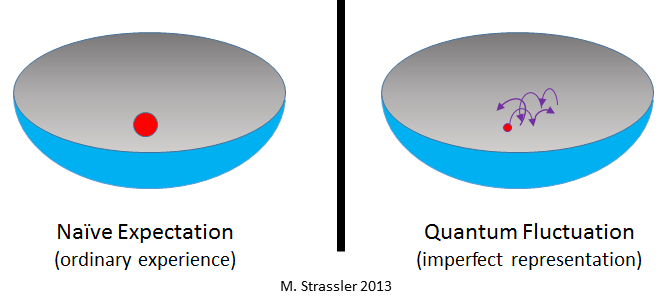
However, quantum mechanics changes the picture. According to the uncertainty principle, nothing in the universe can remain perfectly still. Even empty space undergoes constant fluctuations.
These fluctuations create energy through a process sometimes described as “quantum borrowing,” where energy appears briefly and then disappears within an extremely short time scale.
Crucially, these quantum fluctuations can generate negative energy, which cancels out a large portion of the enormous intrinsic energy of the string.
The Final Balance of a String
When all factors are combined, a balanced picture emerges:
- Tension suppresses oscillations
- Minimum energy drives oscillations
- Quantum fluctuations cancel excess energy
As a result:
- a string never stops vibrating
- but its vibrations are always limited
The system reaches a dynamic equilibrium where motion exists, but remains controlled.
A Reflection of Human Nature
Interestingly, this physical picture mirrors human behavior.
We tend to:
- minimize effort
- maintain stability
- yet constantly respond to internal and external pressures
In physics, this role is played by tension and quantum effects. In everyday life, it appears as time pressure, constraints, and circumstances.
What we call “laziness” may not simply be a human trait, but a deeper principle embedded in the structure of the universe itself.
Image search keywords: string theory visualization, vibrating strings physics, quantum fluctuations vacuum, planck scale diagram, string tension illustration