From Grains of Sand to Fundamental Particles
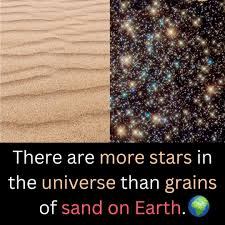
If the Sun were a single grain of sand on a vast beach, the number of stars in the universe would exceed all the grains on every beach on Earth multiplied thousands of times. Around those stars may orbit countless planets, some perhaps similar to our own.
Despite this overwhelming diversity, all material things share a common nature.
At the deepest level, everything is built from particles.
In physics, matter and energy are not separate entities. They do not appear from nothing and do not vanish into nothingness. Instead, they transform into one another. Particles are simply energy expressed at relatively low levels.
This immediately leads to a deeper question.
If matter is energy, then where did all the energy — and all the particles — come from?
Why the Early Universe Must Have Been Extreme
Creating matter from energy is extraordinarily inefficient. Even with modern particle accelerators, enormous amounts of energy produce only tiny amounts of short-lived particles. Most of them decay almost instantly.
This tells us something important.
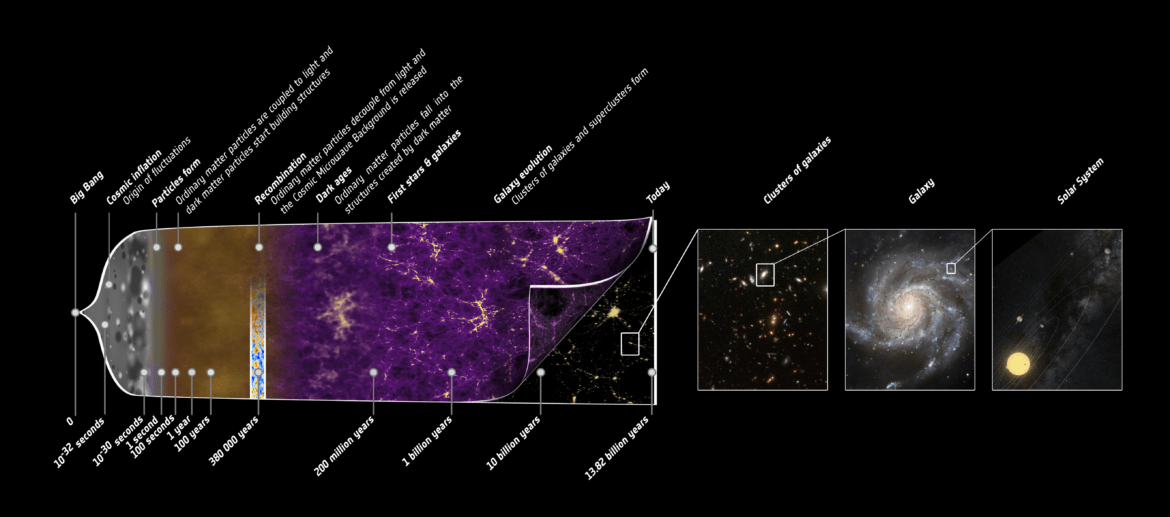
In the earliest moments of the universe, an unimaginable amount of energy must have existed to generate all the matter we see today.
Yet cosmology often states that the universe began from “nothing.”
To resolve this apparent contradiction, physicists must understand the earliest possible moment of cosmic history — the epoch known as the Planck era.
The Planck Scale and the Breakdown of Physics
The Planck era refers to the first fraction of a second after the universe began, from zero to about 10⁻⁴³ seconds. During this time, energy and temperature were so extreme that even subatomic particles could not form.
At this scale, the four fundamental forces of nature had not yet separated.
They existed as a single unified interaction.
The Planck scale defines the smallest meaningful units of length, time, and mass in the universe. Once these limits are crossed, modern physics stops working. Space and time lose their familiar meaning, and cause-and-effect relationships may no longer apply.
Attempting to probe spacetime below the Planck length would require so much energy that it would immediately collapse into a microscopic black hole, destroying the very information being measured. In this sense, the universe actively prevents us from seeing beyond this boundary.
Two Paths Toward Quantum Gravity
Because conventional physics fails at the Planck scale, scientists have proposed new frameworks to understand this regime. Two of the most prominent are string theory and loop quantum gravity.
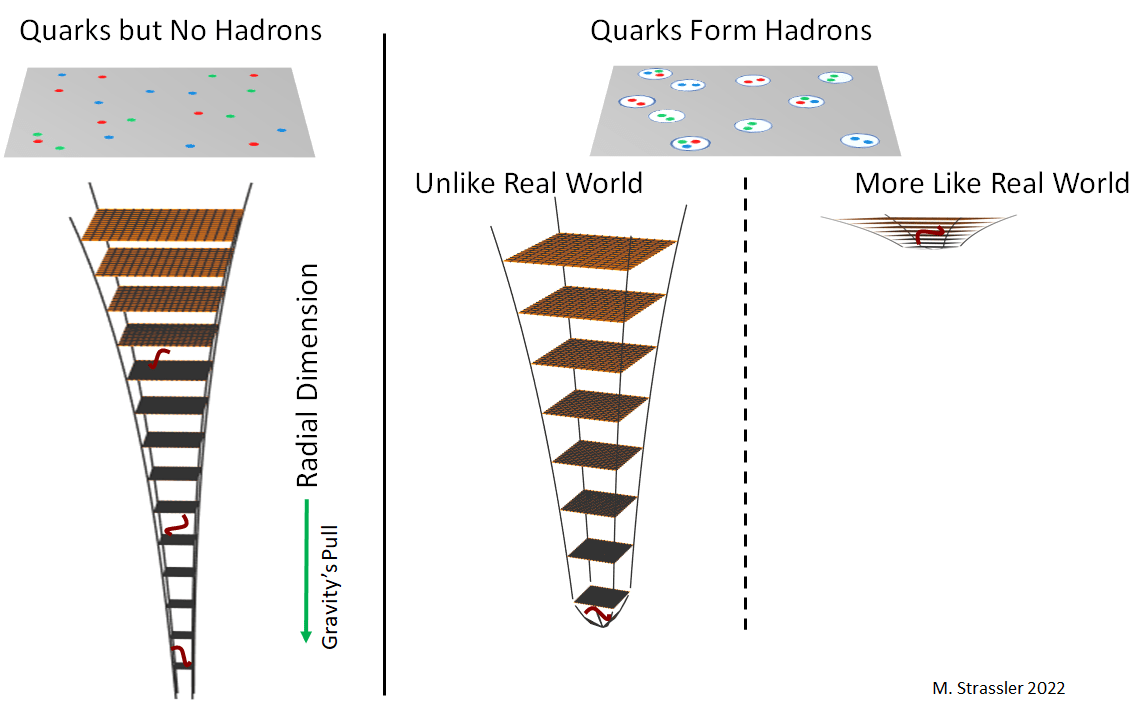
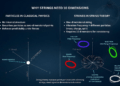
String theory suggests that all particles are tiny vibrating strings existing in higher-dimensional space. Different vibration patterns correspond to different particles, like notes in a cosmic symphony.
However, string theory assumes the existence of spacetime rather than explaining its origin.
It describes the performer, but not the stage.
Loop quantum gravity takes a different approach.
Instead of treating spacetime as a smooth background, it proposes that space itself is made of tiny, discrete loops woven into a dynamic network. These loops form the smallest physically meaningful structure, defining geometry at the Planck scale.
Both theories attempt to describe how spacetime and matter behave under extreme conditions, but neither has yet been experimentally confirmed.
A Universe Before Time
Some physicists suggest that the Planck era cannot be described using ordinary logic at all. Concepts like “before,” “after,” “location,” or even “existence” may simply not apply.
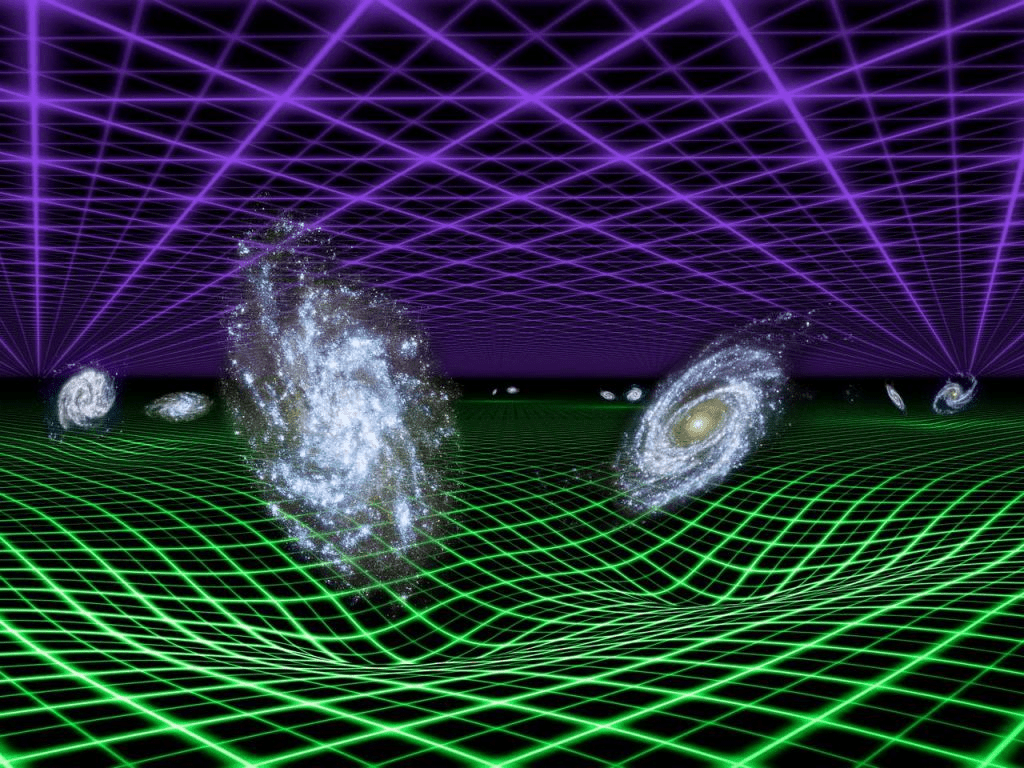
According to ideas discussed by Daniele Oriti, the primordial state of the universe may not have contained spacetime in any familiar sense. Instead, it may have consisted of abstract structures that only later condensed into space and time.
From this perspective, the universe did not begin in time.
Time itself emerged as a consequence of cosmic evolution.
When spacetime finally formed, a timeline became possible, and with it the unfolding of physical laws.
From Information to a Structured Cosmos
In the earliest moments after spacetime emerged, the universe contained very little information. Mathematical descriptions were crude, and physical laws were not yet well-defined.
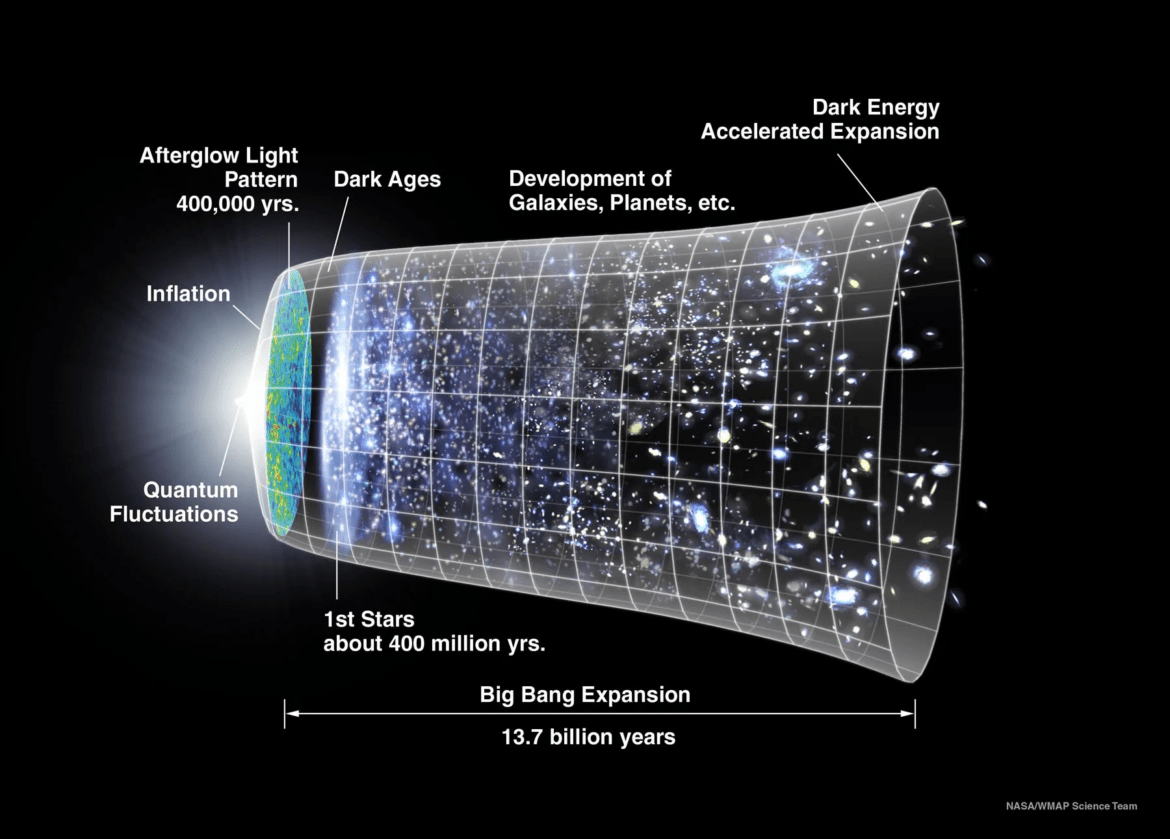
As time progressed, information increased.
Patterns stabilized, models became more precise, and the laws of physics gradually took shape.
As described by Paul Davies, the early universe had almost no computational capacity. Over time, the growth of information allowed complexity, structure, and predictability to emerge.
In this view, the universe may indeed have begun from “nothing.”
But that nothingness was not empty — it was a state beyond space, time, and classical meaning.