Light Is Not Just What We See
When we look at the stars, what reaches our eyes is not matter, sound, or force — it is light.
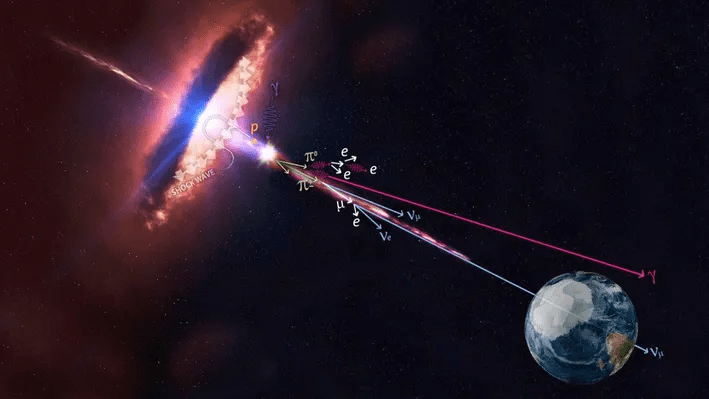
More precisely, it is photons: tiny packets of electromagnetic energy traveling across space and time. Photons are the only messengers from the universe that our eyes can directly perceive. In a deeper sense, they are encoded information, and human vision is simply a biological decoder that can read a very small part of that cosmic message.
A Universe Largely Invisible to Human Eyes
Human vision is limited to visible light, spanning wavelengths from roughly 380 to 700 nanometers.
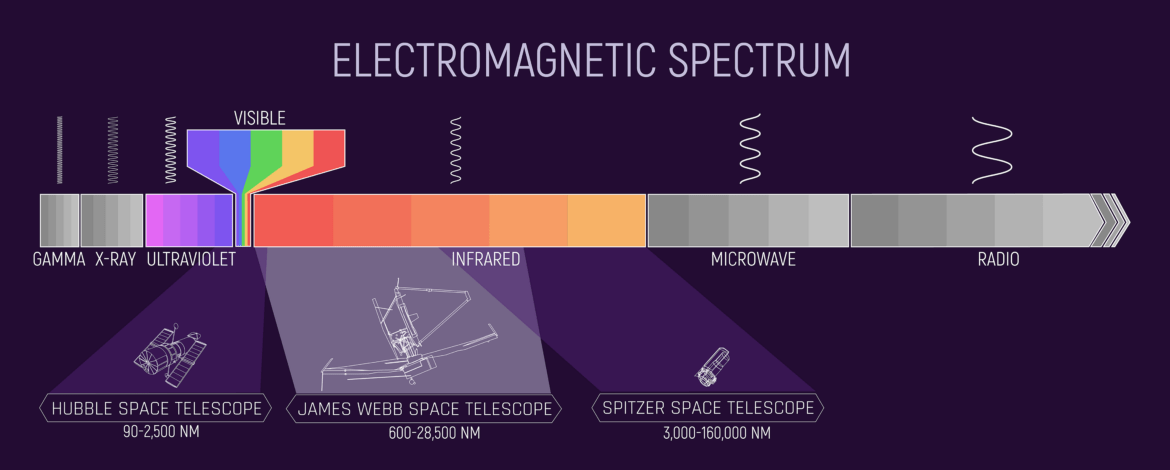
Yet this range represents only a narrow window within the vast electromagnetic spectrum. Infrared, ultraviolet, radio waves, X-rays, and gamma rays constantly pass through space — and through us — unnoticed. When night falls and visible light fades, the universe does not disappear; it simply slips beyond the range of our natural senses, continuing its activity in invisible forms.
Photons and the Forces That Shape Reality
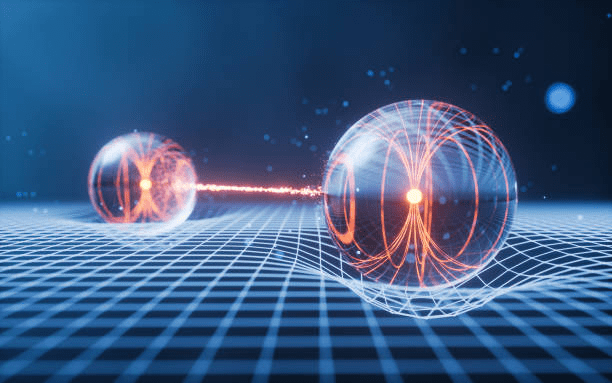
In physics, photons are not only carriers of light but also the mediators of the electromagnetic force, one of the fundamental forces governing the universe.
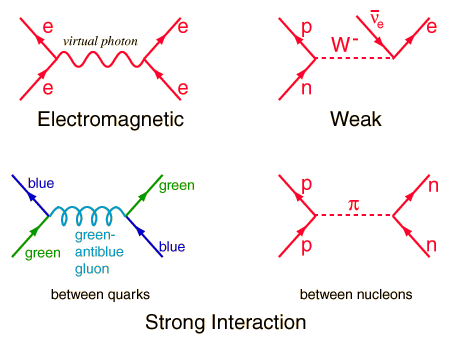
Charged particles interact by exchanging photons, producing attraction or repulsion. Inside every atom, electrons remain bound to nuclei through continuous photon exchange. On larger scales, this same interaction determines how molecules form, how solids hold together, and how matter maintains its structure throughout the cosmos.
From Soft Water to Solid Iron
The physical differences between materials arise from how electromagnetic interactions are arranged internally.
- Water molecules rely on relatively weak bonds involving a limited number of electrons, giving water its fluid nature.
- Iron forms a metallic crystal lattice in which electrons move freely among many atoms, creating strong collective bonds and mechanical strength.
When water freezes, hydrogen bonds reorganize molecules into a rigid lattice, increasing the number of shared interactions. This shift in electromagnetic structure is what transforms liquid water into solid ice.
Magnetism and the Motion Hidden Inside Matter
Electricity and magnetism are two expressions of the same force: electromagnetism. While electric effects arise from electric charge, magnetic effects emerge only from moving charges.
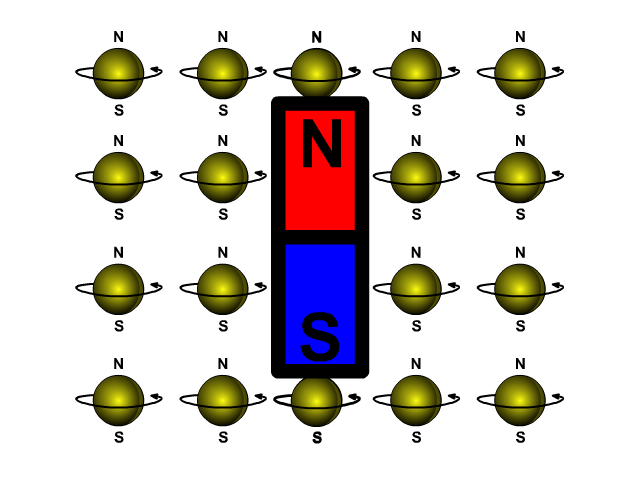
Even in objects that appear still, electrons inside atoms are constantly in motion and possess intrinsic spin. In most materials, these microscopic magnetic effects cancel out. In certain materials, however, many electron spins align, turning the object into a permanent magnet — sustained entirely by invisible internal motion.
Why Photons Matter in Astronomy
In astronomy, photons are everything. They carry information from distant stars, galaxies, and the earliest moments of the universe.

Temperature, composition, motion, age — all of it is inferred from how matter emits, absorbs, and alters photons. By studying light, astronomers do not just observe the universe; they decode its history and structure, one photon at a time.
Conclusion: Reading the Universe Through Light
Photons are far more than illumination. They are the universe’s primary language — shaping matter, transmitting forces, and carrying information across unimaginable distances.
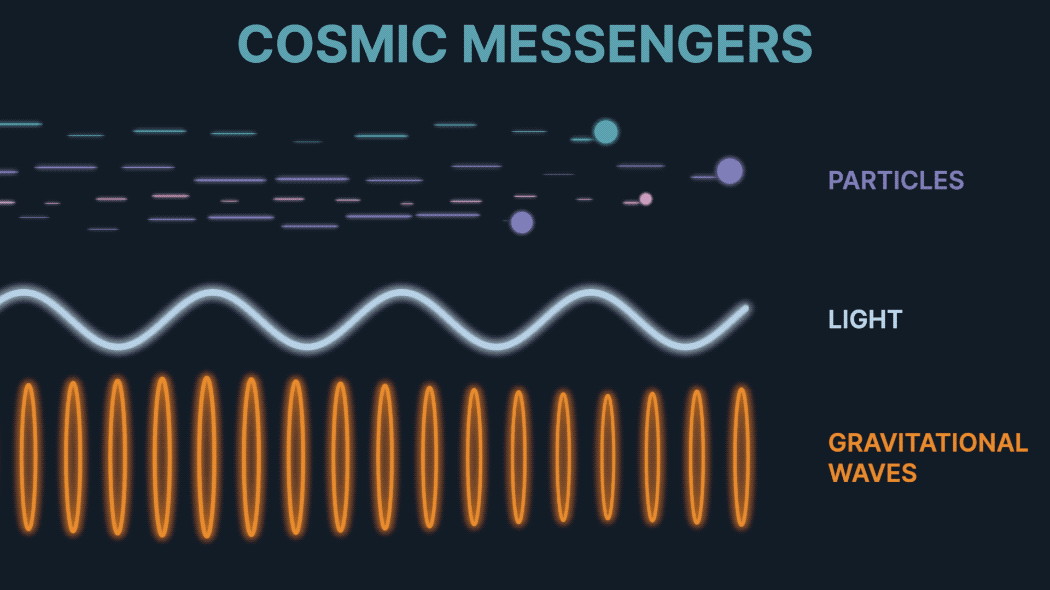
Human perception captures only a thin slice of this dialogue, yet through science and astronomy, we have learned to extend our senses. Every telescope, detector, and spectrum analyzer is ultimately a tool for reading the same message: the universe speaking through light.