One of the main reasons string theory remains unproven lies in the extreme energy scale it requires. The Large Hadron Collider can currently generate about 6.5 tera–electronvolts per collision, which is already thousands of times greater than the energy contained in a single proton. This allows scientists to break protons into smaller components and study their structure.
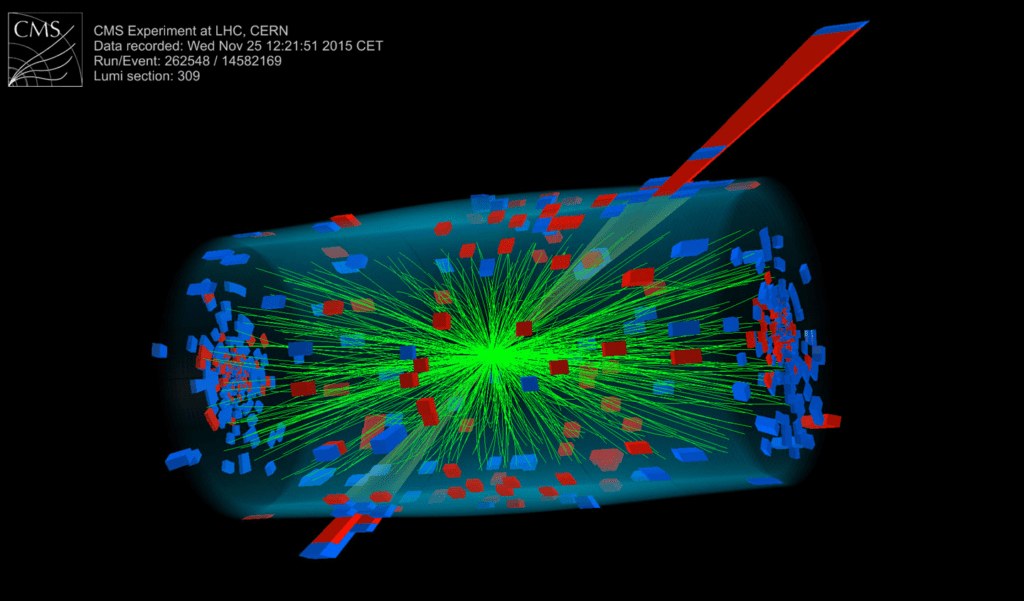
However, string theory operates at the Planck scale, where energies are unimaginably higher. The energy produced by current technology is only a tiny fraction of what would be needed to directly probe strings. Because of this limitation, it is extremely unlikely that experimental physics will reach this level in the near future.
The Limits of Observation at Extremely Small Scales
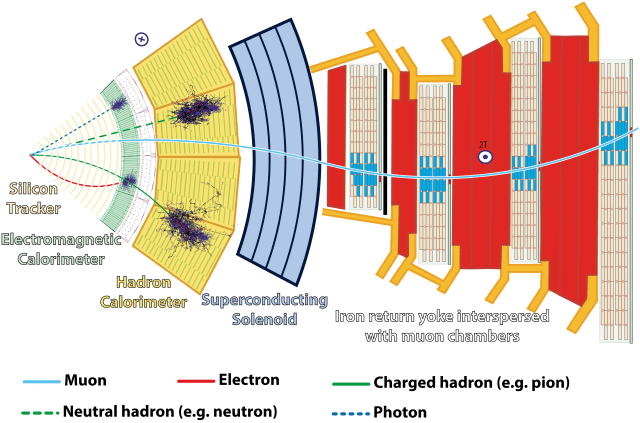
At normal scales, observation works by collecting photons reflected from objects. At smaller scales, such as atoms or subatomic particles, scientists use high-energy collisions to study matter. Particles are accelerated and smashed together, and detectors analyze the fragments produced.
As we attempt to probe smaller and smaller scales, quantum mechanics begins to dominate. Wave-particle duality and the uncertainty principle become essential. When photons are used as probes, the measurement error is always comparable to their wavelength. Increasing energy improves precision, but uncertainty can never be completely removed.
Does the Universe Have a Smallest Possible Scale?
This leads to a fundamental question: is the Planck scale the smallest possible scale in the universe?
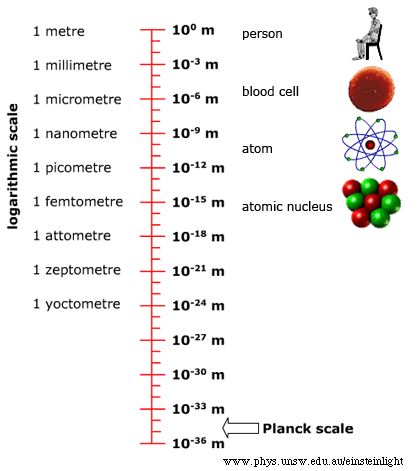
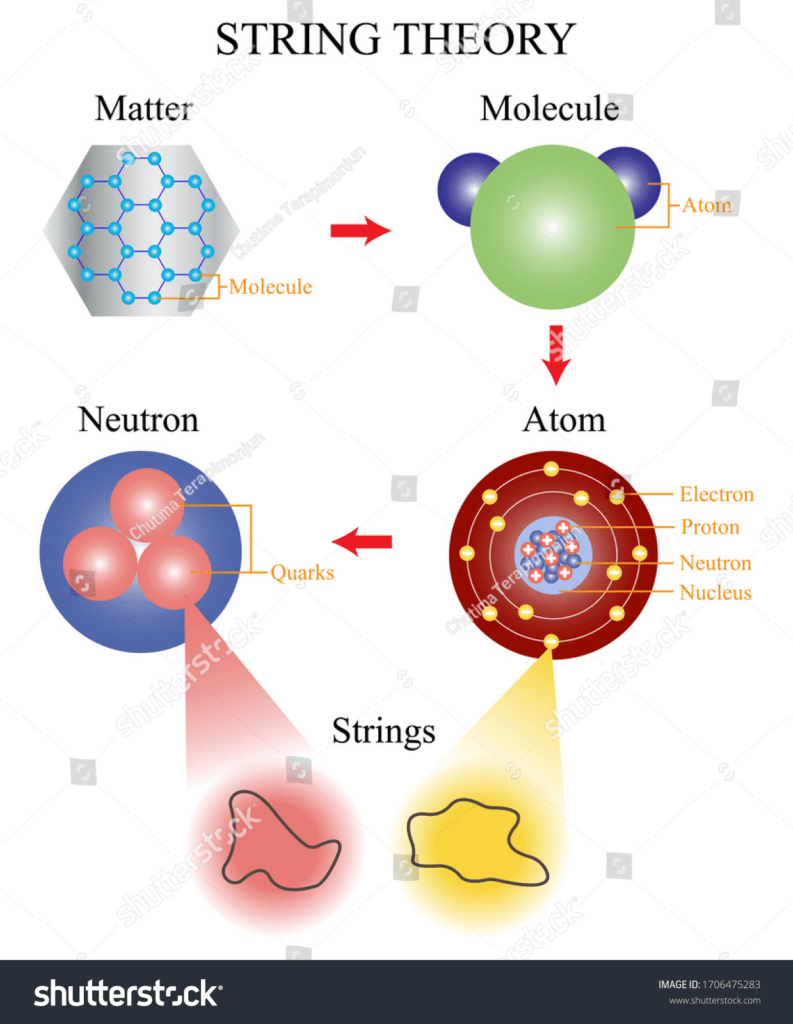
In string theory, particles are not point-like. Instead, they are tiny vibrating strings with finite size. These strings cannot shrink below the Planck length, which introduces a natural lower limit to physical reality.
In contrast, the point-particle model describes particles as infinitely small, with no volume. This means they can exist at arbitrarily small scales, as long as they are not exactly zero. The difference between these two perspectives defines a crucial boundary in modern physics.
The Real Source of the Conflict
The conflict between relativity and quantum mechanics may come from how we define the size of fundamental particles. Treating particles as dimensionless points often leads to mathematical infinities and inconsistencies.
Despite this, the point-particle model remains highly successful. Many of its predictions match experimental results with remarkable precision. Some physicists, including Paul Dirac and Richard Feynman, once suggested that particles might not be true points but rather small extended objects.
String theory takes this idea further by proposing that understanding the universe depends on identifying a true physical limit at the Planck scale.
A Direct Comparison: Point Particles vs Strings
Consider a collision between an electron and a positron. They annihilate and produce energy, typically in the form of high-energy photons. If the energy is large enough, new particle–antiparticle pairs can be created.
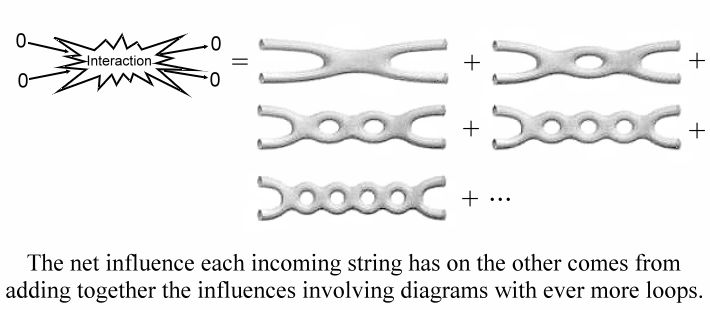
In the point-particle model, this process is represented as discrete events happening at specific points in space and time. A photon appears as an intermediate state before transforming into new particles.
In string theory, the same interaction is continuous. Strings merge, form a single intermediate string, and then split again. The process is smoother and not confined to a single point.
How String Theory Resolves the Conflict
This continuous description aligns naturally with relativity, where space and time depend on the observer’s frame of reference. In string theory, interactions are not fixed at a single point, so different observers can perceive them differently without contradiction.
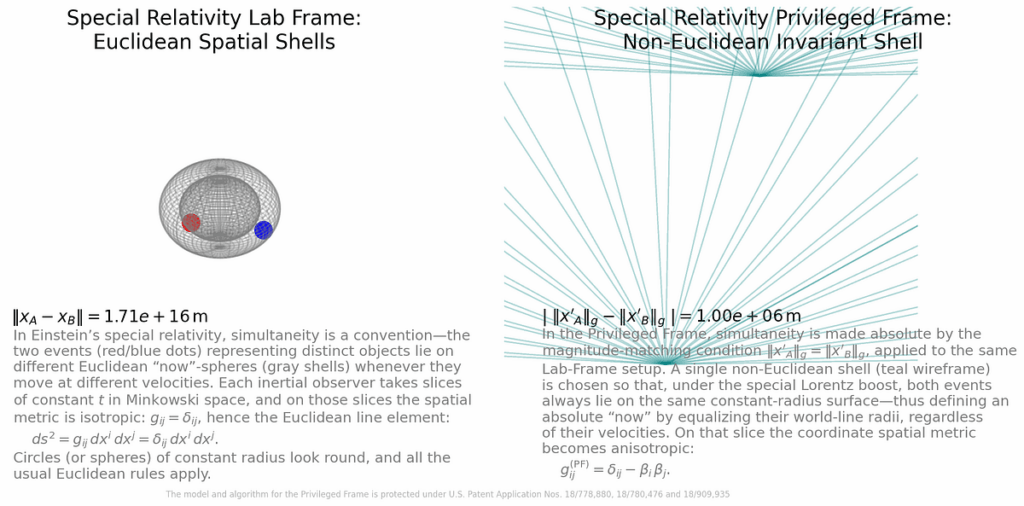
In contrast, point-particle models assume fixed interaction points, which can conflict with relativistic principles. By spreading interactions over finite regions, string theory provides a more consistent framework.
This is why the Planck scale becomes so important. It defines a fundamental limit to the structure of the universe and offers a possible way to reconcile quantum mechanics with relativity.