Through the interaction of strings across different frames of reference, it becomes clear that a string is not a dimensionless point but something that truly occupies space. This suggests that the idea of point particles may only be an idealization. If strings are real, then extra spatial dimensions must also be real. The real problem is that we cannot see them, so the question becomes: where are these dimensions, and what do they actually look like?
Our Perception of Space and the Role of Time
In our everyday experience, space has three dimensions. Any movement is limited to forward–backward, left–right, and up–down. However, every change requires time. Even doing nothing still involves the passage of time, which is why time is considered the fourth dimension.
This structure is consistent and cannot be avoided. Any additional dimensions must exist beyond this familiar framework without contradicting it. This is where the concept of hidden dimensions begins to emerge.
The Origin of Higher Dimensions
In 1919, Theodor Kaluza proposed that the universe might have more than three spatial dimensions. His idea suggested that by adding a fifth dimension, gravity and electromagnetism could be unified. Initially, Albert Einstein was interested but skeptical.
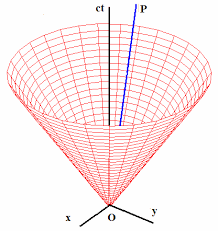
Later, Einstein reconsidered and recognized the potential of this idea. However, it was too advanced for the physics of that time and remained largely unexplored until the 1960s and 1970s, when physicists began revisiting higher-dimensional models while trying to resolve the remaining problems of fundamental forces.
A Simple Analogy for Hidden Dimensions
To understand how extra dimensions can exist without being noticed, imagine an ant walking on a very thin string stretched across a large distance. From the ant’s perspective, it can only move forward or backward, so its universe appears one-dimensional.
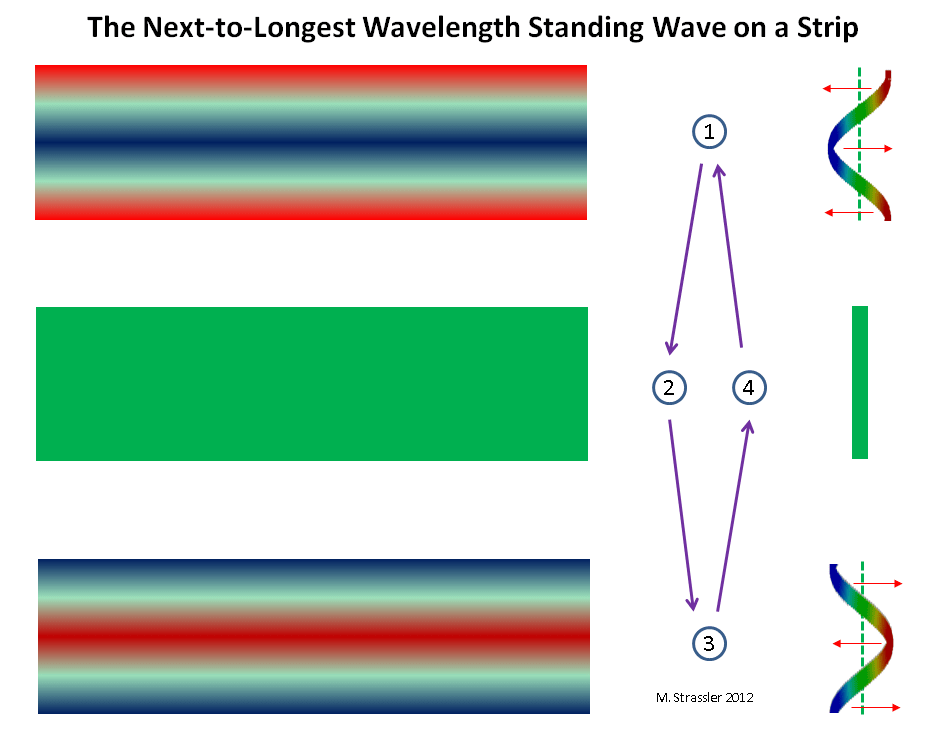
Now replace the string with a hollow tube. The ant can still move forward and backward, but it can also move around the tube. This additional direction represents another dimension. However, if the tube is extremely small, this extra dimension becomes difficult to perceive. This is similar to how hidden dimensions in the universe might exist but remain undetectable.
Compact Dimensions and the Structure of Space
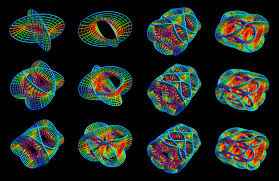
Modern physics suggests that extra dimensions are compactified, meaning they are curled up into extremely small, twisted structures. As more dimensions are added, space becomes increasingly complex, filled with folds and hidden regions.
When strings move through these regions, parts of their motion occur in directions we cannot observe. These hidden pathways still contain energy and mass, but because they exist at extremely small scales, they cannot be directly measured. This explains why extra dimensions remain invisible despite potentially being everywhere.
Why String Theory Requires Ten Dimensions
As string theory developed, physicists found that adding just one extra dimension was not enough. Each additional interaction required more degrees of freedom. Eventually, calculations showed that the theory only becomes consistent when strings can vibrate in nine spatial dimensions, plus one dimension of time.
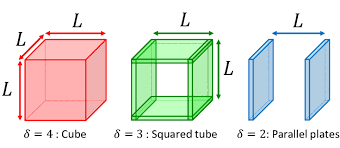
This requirement eliminates problematic results such as negative probabilities, which appear when the number of dimensions is too low. In this sense, the existence of ten dimensions is not arbitrary but a necessary condition for the theory to work.
Why We Cannot Experience Hidden Dimensions
Even if these extra dimensions exist, we cannot experience them because they are extremely small. When we move through space, we are technically moving through all dimensions at once, including the hidden ones.
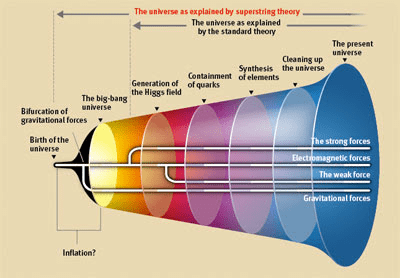
However, these dimensions are too compact to accommodate objects of our size. Only at the scale of strings do they become relevant. This is why our perception is limited to three spatial dimensions, even though the true structure of the universe may involve many more.