Infinity as a Concept in Physics and the Universe
Infinity is a familiar idea in mathematics and philosophy, yet it becomes deeply problematic when applied to physical reality. In everyday science, we describe planets, stars, galaxies, and even the observable universe using finite quantities such as mass, size, energy, and time.
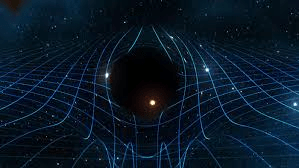
At the same time, completely removing the idea of infinity often makes our descriptions meaningless. Modern cosmology does not give a clear answer to whether the universe is finite or infinite.
The universe is expanding, which suggests it has not yet reached a final size.
However, expansion does not necessarily imply the existence of a boundary. Space may be finite without having an edge, and space itself cannot be separated from time.
Time, unlike space, always moves forward and has no known final limit.
When space and time are treated together as spacetime, the question of finiteness becomes deeply ambiguous.
In this sense, infinity appears less as a physical object and more as a sign of the limits of our current understanding.
Black Hole Density and the Idea of the Singularity
When discussing black holes, the question of infinity often centers on density and spacetime distortion. No one knows with certainty what a black hole is made of internally.
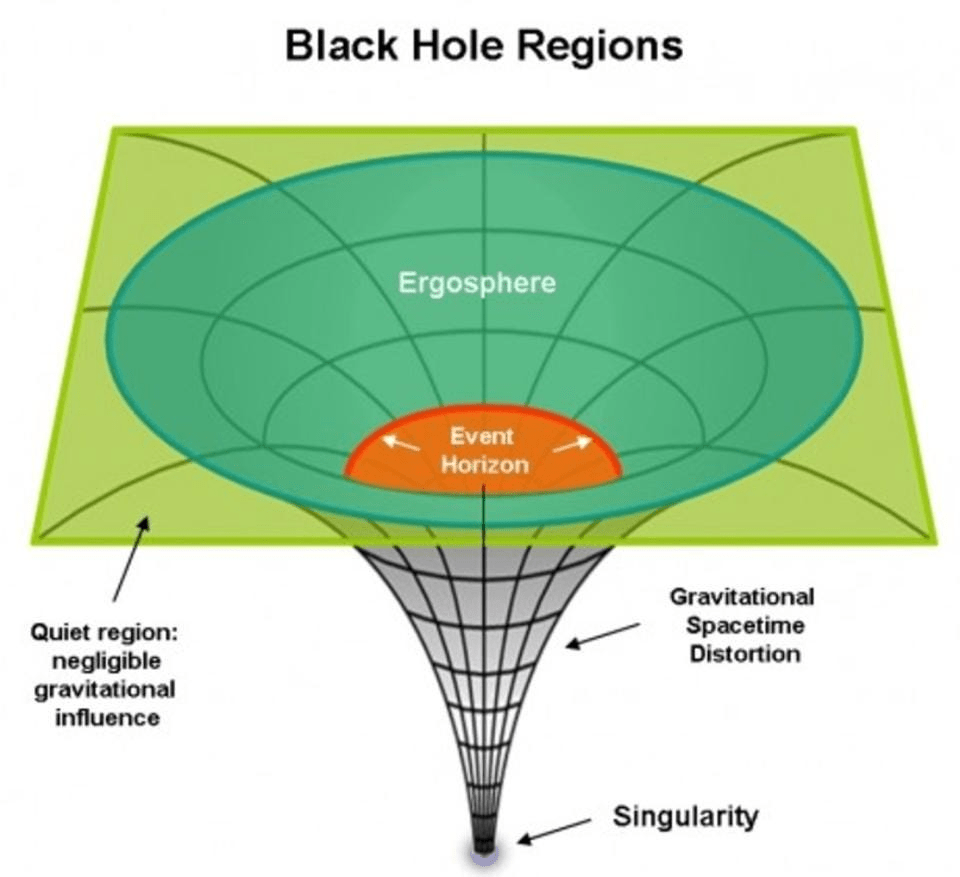
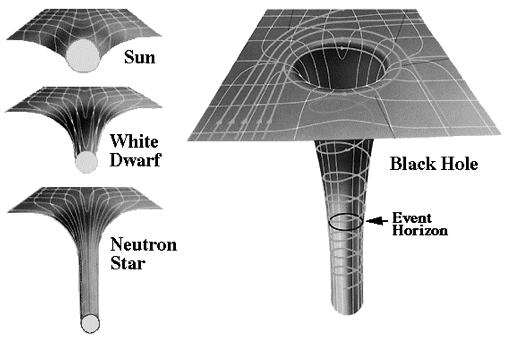
It may consist of extremely compressed matter, pure energy, or something that does not fit into existing categories. According to general relativity, any sufficiently dense object will have a non-uniform internal structure, with conditions becoming more extreme toward the center.
This leads to the concept of a singularity — a region where physical quantities such as density and curvature appear to reach extreme or even infinite values.
At the singularity, spacetime may be distorted beyond all recognizable limits, creating an environment that cannot be described by modern theories.
Rather than viewing the singularity as a point of infinite matter, it may be more accurate to see it as the place where our equations stop working.
Spacetime Flow and the Meaning of “Infinite” Inside a Black Hole
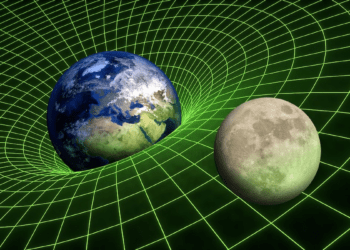
One possible way to understand the interior of a black hole is to imagine spacetime itself as dynamic rather than static.
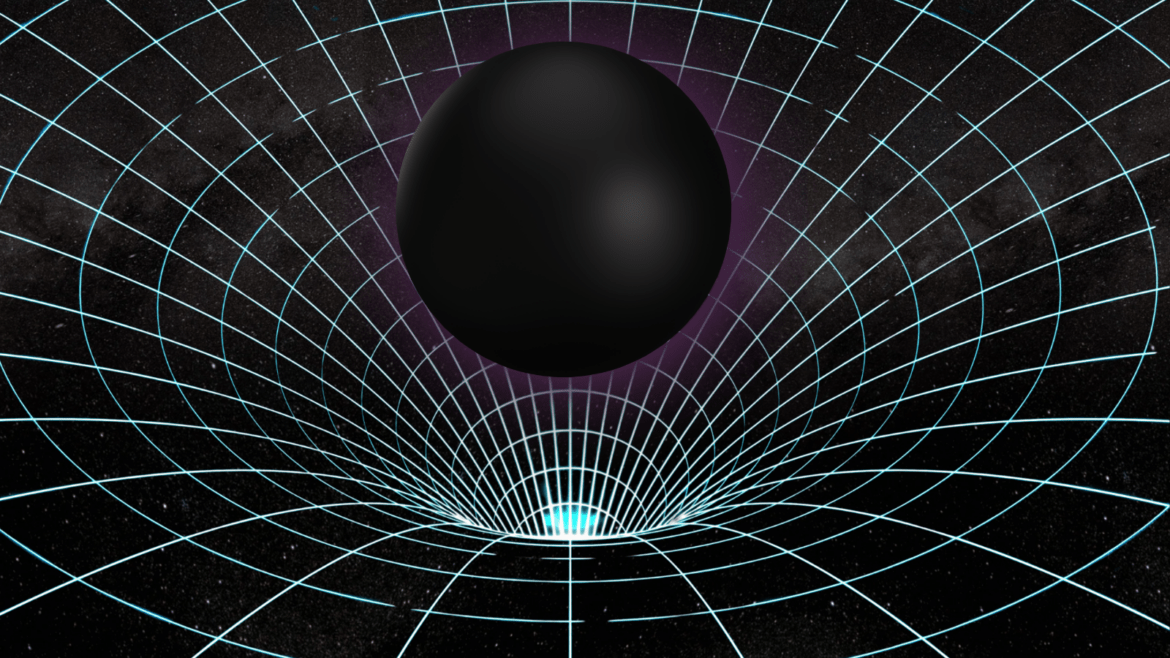
Near the singularity, spacetime may be pulled inward continuously, like a waterfall that never stops flowing.
In this picture, all possible futures inside the event horizon lead inevitably toward the singularity.
Space and time are so tightly compressed that multiple spatial dimensions may effectively converge at a single point.
If an observer could survive such conditions, time might lose all conventional meaning, and the experience of space could become radically unfamiliar.
From this perspective, infinity does not necessarily refer to infinite mass or infinite size.
A black hole has finite mass.
Instead, infinity may refer to unbounded energy density or unbounded curvature — quantities that cannot be measured using ordinary physical rules.
Whether this truly represents infinity or simply signals a breakdown of our theories depends on interpretation.
Event Horizons, Observation, and the Fate of Black Holes
From the viewpoint of a distant observer, objects falling toward a black hole appear to slow down as they approach the event horizon due to gravitational time dilation.
In theory, this process could seem to stretch indefinitely.
In practice, however, such an observation is unrealistic.
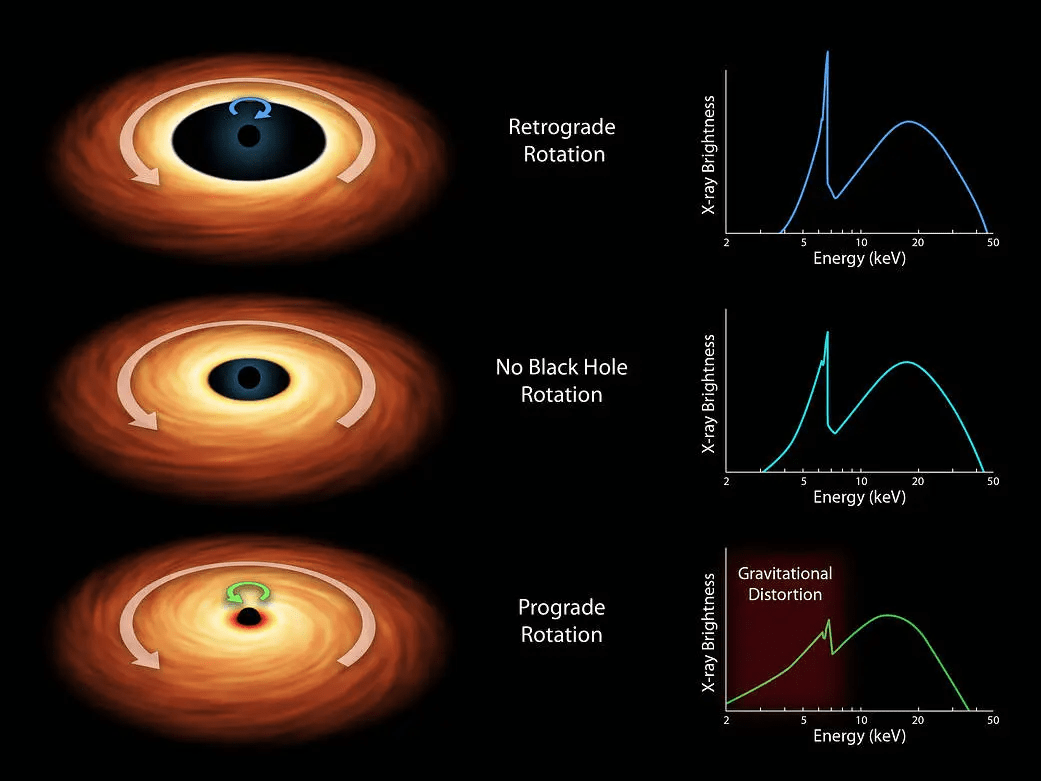
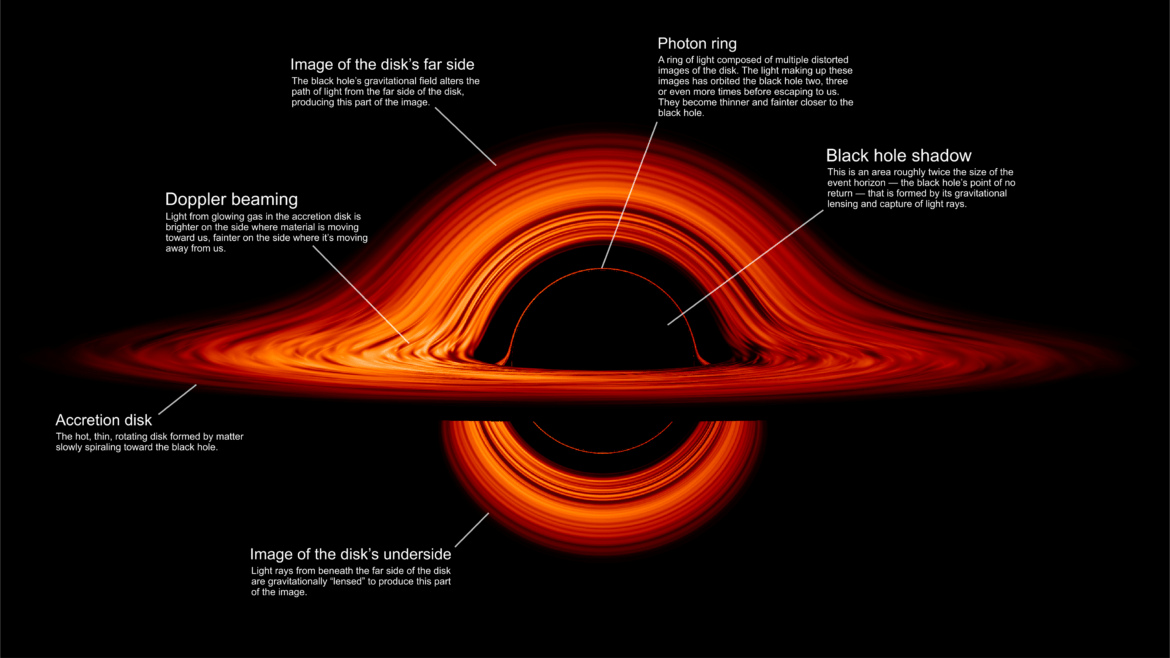
Any object approaching a black hole will be violently accelerated, torn apart by tidal forces, and absorbed into the surrounding accretion disk long before a clean, slow disappearance can be seen.
Observationally, we do not see individual objects crossing event horizons.
We see glowing disks of matter spiraling inward.
As for the idea that a black hole might collapse into a singularity and trigger a new Big Bang, current evidence strongly suggests otherwise.
Supermassive black holes exist throughout the universe and continue to grow rather than collapse explosively.
If Hawking radiation is correct, black holes will eventually evaporate over extremely long timescales instead of giving birth to new universes.
Once again, infinity appears not as a physical event, but as a boundary where human knowledge remains incomplete.