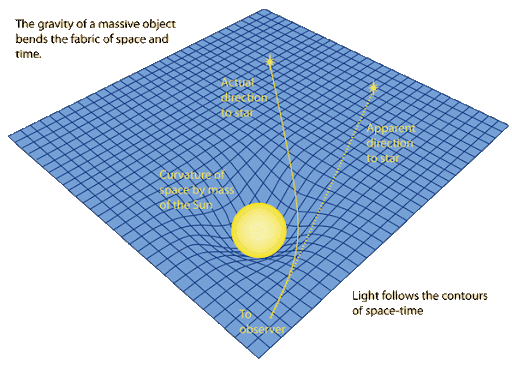
In 1919, Arthur Eddington carried out a crucial experiment during a total solar eclipse to test General Relativity developed by Albert Einstein. By observing stars whose light passed near the Sun, he confirmed that light is bent by gravity.

This result transformed Einstein from a relatively unknown scientist into a central figure in physics and established relativity as a foundation for understanding the universe. Since then, physical laws have been assumed to be universal, unchanged by time or location, suggesting that the universe itself must share a common origin. If that is true, then all forces and laws must unify under extreme conditions, leading to the concept of supersymmetry.
The Problem of Quantum Instability
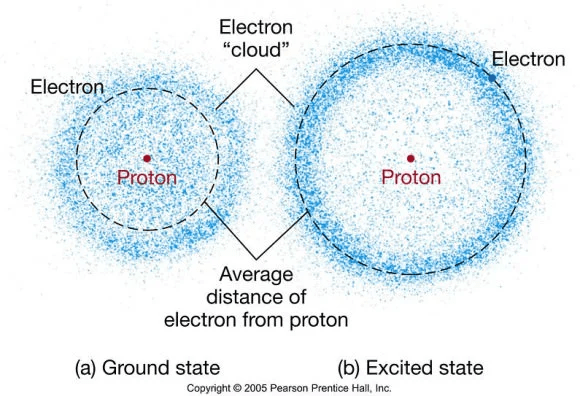
Within the Standard Model, quantum effects introduce extreme instability into calculations. Every particle contributes to fluctuations, and making predictions requires an almost impossible level of precision. The allowed error margin must be extraordinarily small, comparable to hitting a microscopic target from an astronomical distance. Even the slightest deviation can make results meaningless.
Because of this, many physicists doubt whether simply fine-tuning parameters is a valid solution. Instead, they turned to a deeper property of particles known as spin. Bosons, which carry forces, have integer spin, while fermions, which make up matter, have half-integer spin. When combined properly, their quantum effects can cancel each other out. However, there are not enough known particles to achieve complete cancellation, implying that unknown partner particles must exist.
Supersymmetric Particles and Hidden Balance
This leads to the idea of supersymmetry, where every known particle has a corresponding partner. These supersymmetric particles would balance quantum fluctuations and remove problematic divergences. When included in calculations, interactions become stable and no longer depend on extreme fine-tuning.
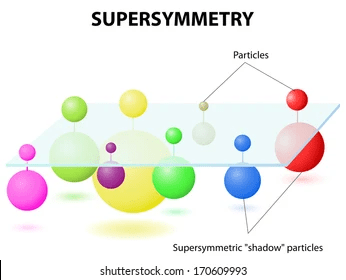
Beyond stabilizing quantum theory, these hidden particles could also explain deeper mysteries. They provide a possible path toward unifying forces and are even considered candidates for dark matter. Despite their importance, no supersymmetric particles have been directly observed, likely because their masses are far beyond the reach of current experiments.
The Challenge of Unifying Forces
One of the biggest obstacles in physics is the vast difference in strength between the fundamental forces. The electromagnetic force is much weaker than the strong force, the weak force is weaker still, and gravity is extraordinarily weak in comparison. At first glance, this makes unification seem impossible.
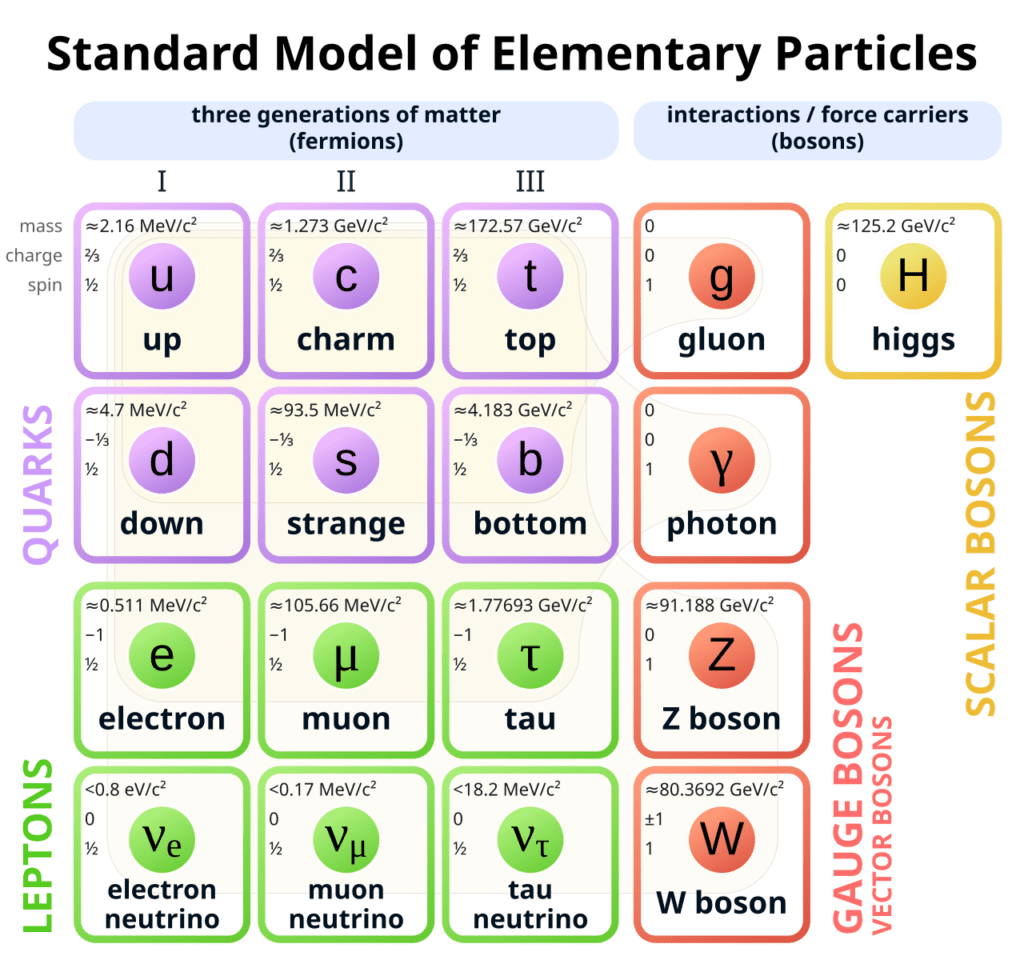
However, experiments and theoretical work have shown that unification can occur under extreme conditions. In 1979, Sheldon Glashow, Abdus Salam, and Steven Weinberg demonstrated that the electromagnetic and weak forces are actually two aspects of a single force at high energies. This suggests that all forces may converge at even higher energy scales.
Distance, Energy, and the Nature of Forces
The key to this unification lies in distance. As particles get closer together, the strength of forces changes. For electromagnetism, the interaction becomes stronger at shorter distances due to the structure of the surrounding electric field. An electron, for example, is surrounded by a cloud of virtual photons that mediate its interactions.
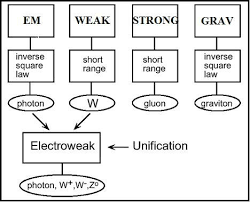
When another charged particle moves through this cloud at extremely small distances, the electromagnetic force becomes much stronger. At distances around 10⁻²⁹ cm, the strengths of the electromagnetic, weak, and strong forces begin to converge. However, such conditions require temperatures and energies far beyond what exists in the current universe.
Why Supersymmetry Is Essential
Even under extreme conditions, calculations show that the forces do not perfectly unify unless supersymmetry is included. Without it, the strengths only come close but never fully match. Supersymmetric particles enhance quantum fluctuations in a way that fills the gap, allowing the forces to truly converge.
This makes supersymmetry a critical component in modern theoretical physics. It not only stabilizes quantum systems but also enables the unification of forces and supports the framework of string theory. The challenge remains that these particles have never been observed, likely because they require energy scales far beyond current technology.