Light, Motion and the Relativity of Time
One of the most fundamental facts of the universe is the invariance of the speed of light. No matter how fast an observer moves, the speed of light remains unchanged. From this single rule arises a profound consequence: time does not flow at the same rate for all observers.
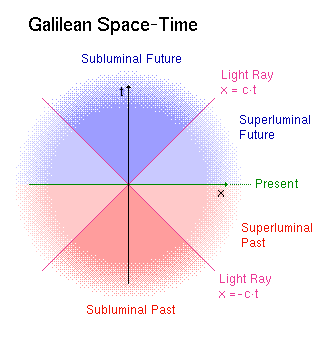
When an object moves at high speed, time for that object passes more slowly relative to a stationary observer. This effect, known as time dilation, does not allow anyone to escape aging or manipulate time. It only reflects the relative nature of space and time.
If a particle of light could carry a clock, that clock would behave very differently from one at rest.
Yet from within its own frame of reference, the passage of time would remain perfectly normal.
Particle Lifetimes and Why Time Cannot Be Cheated
The effects of time dilation become especially clear when observing unstable particles. A free neutron decays within minutes, while a muon survives for only a few microseconds when at rest.
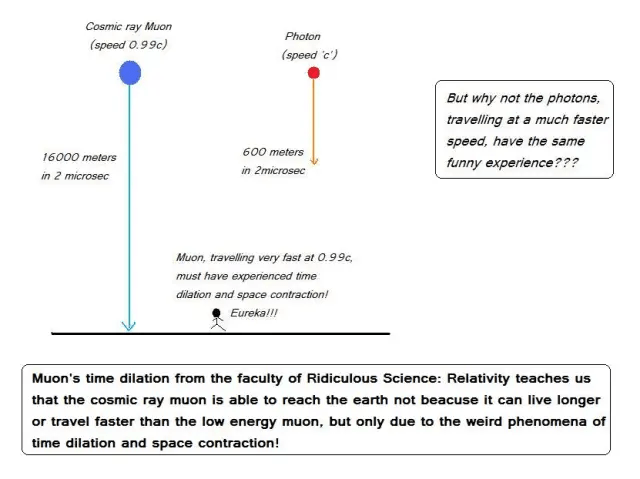
When a muon is accelerated to speeds extremely close to that of light, its lifetime appears significantly longer to an observer in the laboratory.
At about 99.5 percent of the speed of light, a muon can live roughly ten times longer than usual.
However, from the muon’s own perspective, nothing extraordinary happens.
The number of internal processes it experiences remains unchanged.
This reveals a fundamental truth of relativity: increasing speed alters how time is observed, but it does not extend the lived experience of the object itself.
When High Speed Alters Space
Velocity does not affect time alone; it reshapes space as well. At ordinary speeds, the length of a moving object is indistinguishable from its length at rest.
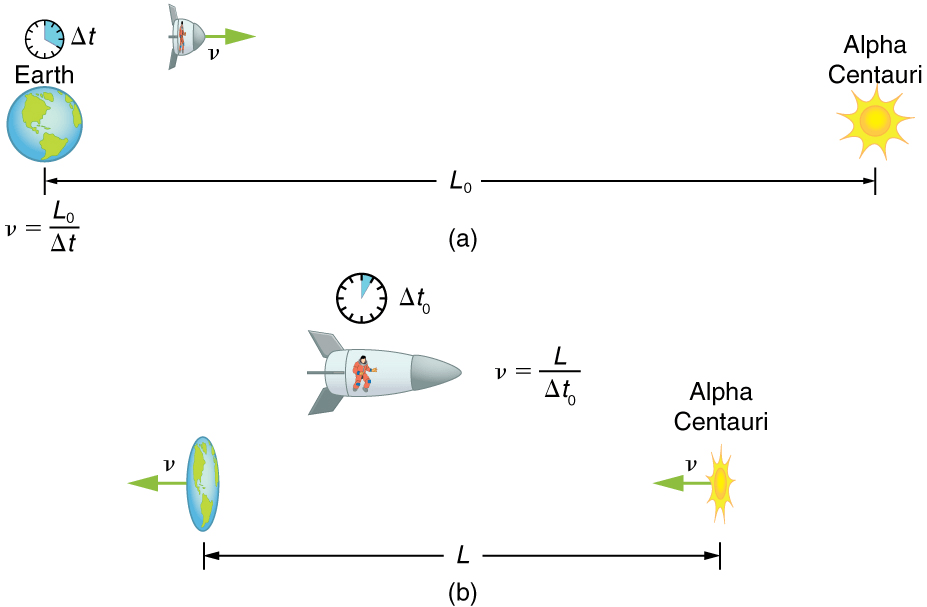
As an object approaches the speed of light, its length along the direction of motion begins to contract.
At sufficiently high velocities, this contraction becomes dramatic, reducing the object to a fraction of its original size as measured by an external observer.
This phenomenon shows that space and time are not independent entities.
They are deeply bound together, forming a unified structure known as spacetime.
Moving Mostly Through Time, Not Space
From a human point of view, motion feels like movement through space: walking, driving, traveling across the planet.
On cosmic scales, however, these movements are insignificant.
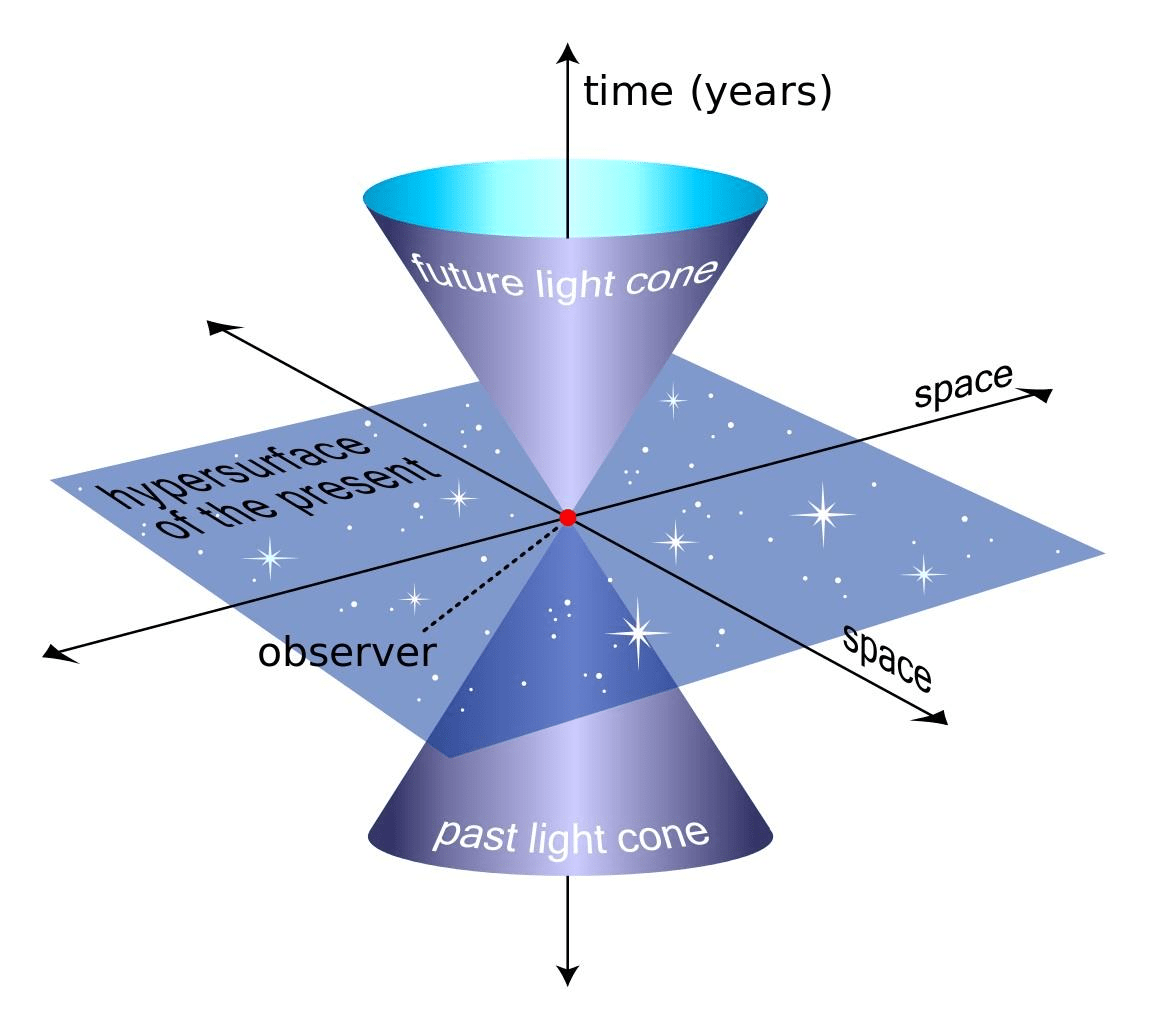
Most of our true spatial motion comes from:
- Earth orbiting the Sun
- The Sun orbiting the center of the galaxy
- The galaxy moving through cosmic space
In contrast, motion through time is constant and unavoidable.
Whether we move or remain still, time advances uniformly, aging everything around us.
This is why time is best understood as the fourth dimension of the universe.
Any event requires not only a location in space, but also a moment in time.
Without time, events would never occur, and encounters would never align.