Why Gravity Is the Weakest Force Yet Creates Black Holes
At first glance, gravity appears to be the weakest of the four fundamental forces in the universe. Compared to the strong or electromagnetic force, gravitational interaction between particles is almost negligible.
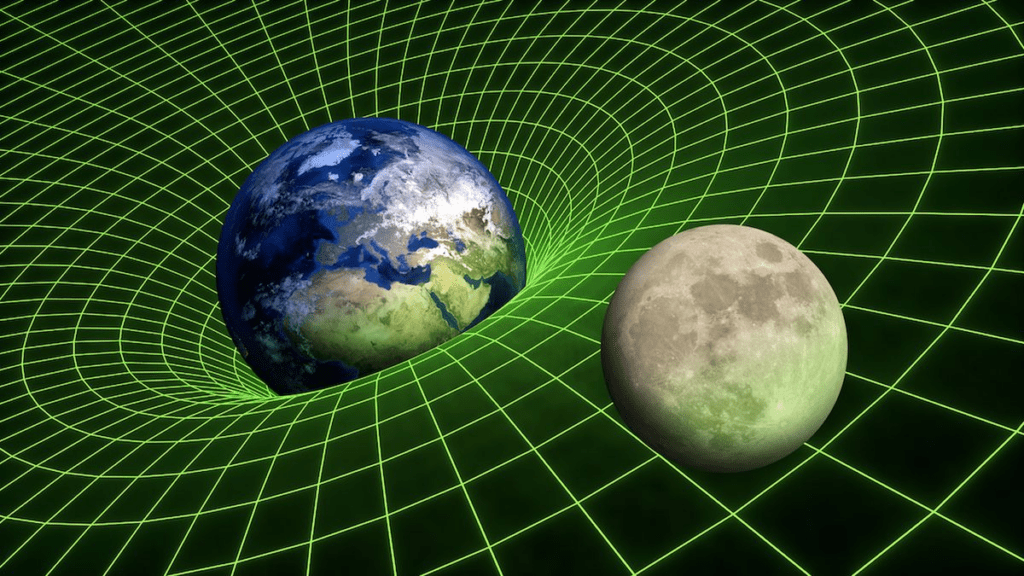
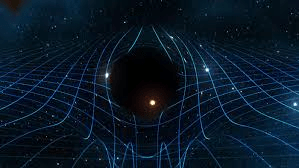
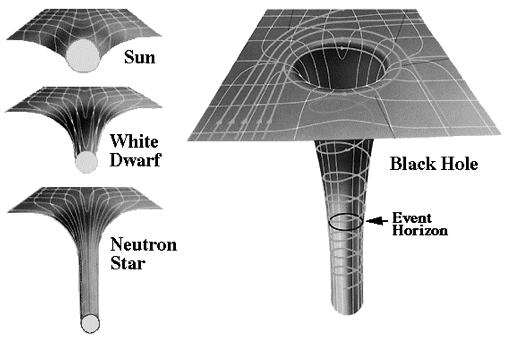
Yet paradoxically, gravity is the force that ultimately creates black holes—objects so extreme that not even light can escape them. The key lies in how gravity behaves differently from other forces. While electromagnetic forces can both attract and repel, effectively canceling themselves out, gravity only attracts. There is no known mechanism that neutralizes it. As mass accumulates, gravitational attraction simply keeps adding up. When enough mass is concentrated into a small region, gravity overwhelms all other forces, leading to gravitational collapse. This is why, despite being weak on small scales, gravity dominates the large-scale structure of the universe and gives birth to black holes.
Can Black Holes Form Without Massive Stars
According to our current understanding, black holes are primarily formed from the collapse of extremely massive stars at the end of their life cycles. As these stars exhaust their nuclear fuel, nothing remains to counteract their own gravity, and they collapse inward, forming a black hole. In theory, however, any sufficiently massive object compressed into a small enough volume could become a black hole.
This raises the question: could black holes form without stars? While the idea is not forbidden by physics, in practice it is extremely unlikely. Before matter can collapse directly into a black hole, it typically reaches conditions that trigger nuclear fusion, turning it into a star first. Only in the early universe—when densities and energies were far more extreme—might black holes have formed directly from dense regions of matter, bypassing stellar evolution altogether. These hypothetical objects are often referred to as primordial black holes, though none have been conclusively observed.
Black Holes and Their Possible Link to Dark Matter
Dark matter remains one of the greatest mysteries in modern physics. We can observe its gravitational influence on galaxies and cosmic structures, yet we do not know what it is made of. This uncertainty naturally leads to speculation about its connection to black holes.
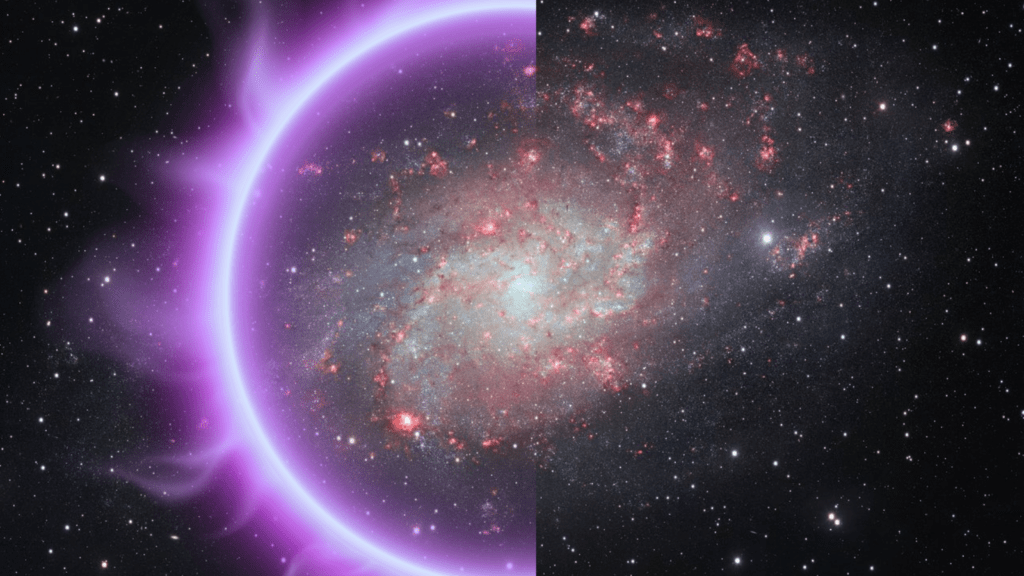
Could black holes contain dark matter, or even be composed of it? What we do know is that black holes form from ordinary matter collapsing under gravity. Whether they later absorb dark matter is still unclear. Some theories suggest that certain exotic particles, such as sterile neutrinos, could play a role, but there is no direct evidence. At present, the relationship between black holes and dark matter remains speculative, highlighting how much of the universe’s mass and structure is still beyond our understanding.
Why Black Holes Cannot Be Observed Directly
All astronomical observations we make rely on information carried by photons—light across the electromagnetic spectrum. Black holes, by definition, emit no light once matter crosses the event horizon. As a result, they cannot be observed directly.
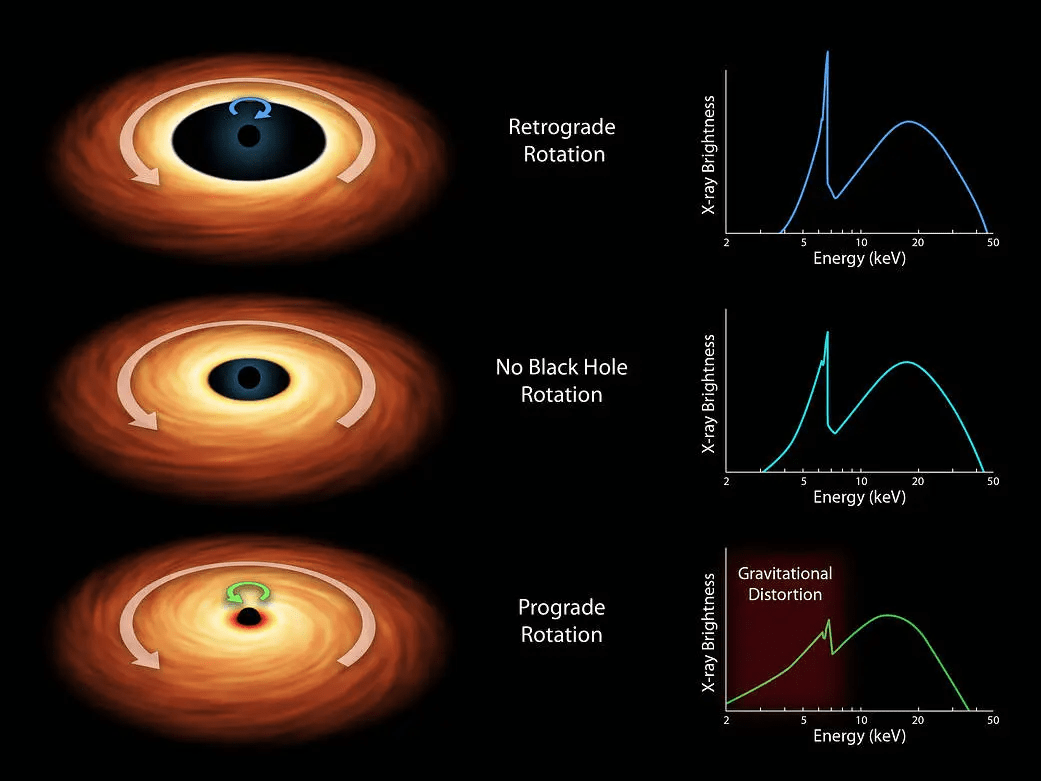
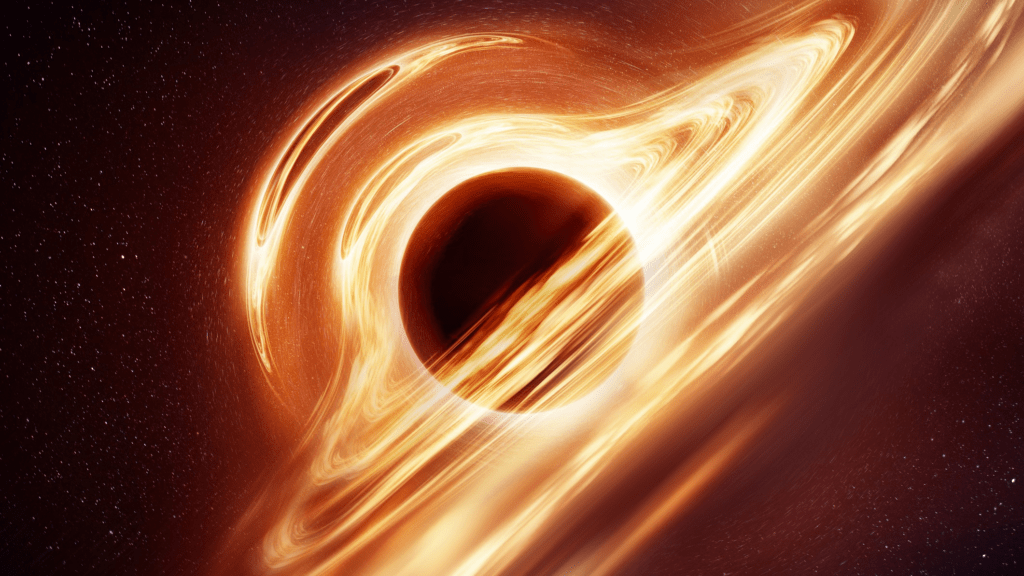
The famous images of black holes are not images of the black holes themselves, but of the glowing matter orbiting them in accretion disks, heated to extreme temperatures by friction and gravity. Even the bending of light used to infer a black hole’s presence is indirect evidence. Until we find a way to observe phenomena beyond electromagnetic radiation, black holes themselves will remain fundamentally invisible.
Singularities, Time, and the Limits of Physics
At the center of a black hole lies the singularity, a concept that challenges both intuition and mathematics. A singularity is described as a point with infinite density and zero volume, where our current laws of physics break down.
From an external observer’s perspective, the singularity is forever hidden behind the event horizon, existing only in the infinite future. Questions about time slowing down, stopping, or becoming meaningless near the singularity depend heavily on the observer’s frame of reference. While equations from general relativity and quantum mechanics can describe aspects of this behavior, they fail to provide a complete physical picture. The singularity thus represents not just an extreme object, but a boundary of human knowledge—where our best theories cease to give clear answers.