When we talk about the mysteries of the universe, black holes always seem to hold a strange, almost supernatural attraction. They sound like something taken straight out of science fiction—dark, extreme, and unreal. For a long time, even scientists struggled to believe that such objects could truly exist.
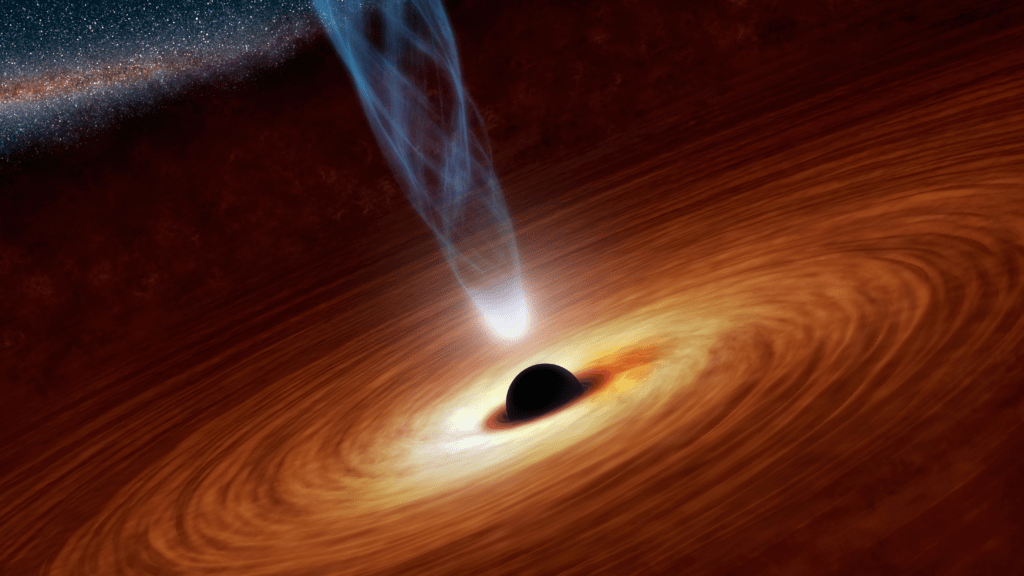
In fact, for decades, the idea of black holes pushed the laws of physics to their absolute limits. Even Albert Einstein himself doubted that these objects were real.
As early as the late 18th century, an English scientist named John Michell proposed a radical idea: there could exist a star so massive that even light could not escape its gravity. He called it a “dark star.” This concept later became the foundation of what we now call a black hole.
Despite centuries of progress, much of what we know about black holes is still theoretical. And to be honest, many people—including myself at one point—have misunderstood what black holes really are. So now, let’s slow down and take a closer look at their true nature.
A Black Hole Is Not a Hole
Despite the name, a black hole is not actually a hole. It is not an empty void or a tunnel in space. In reality, a black hole is a spherical object—the final remnant of a massive, dead star.
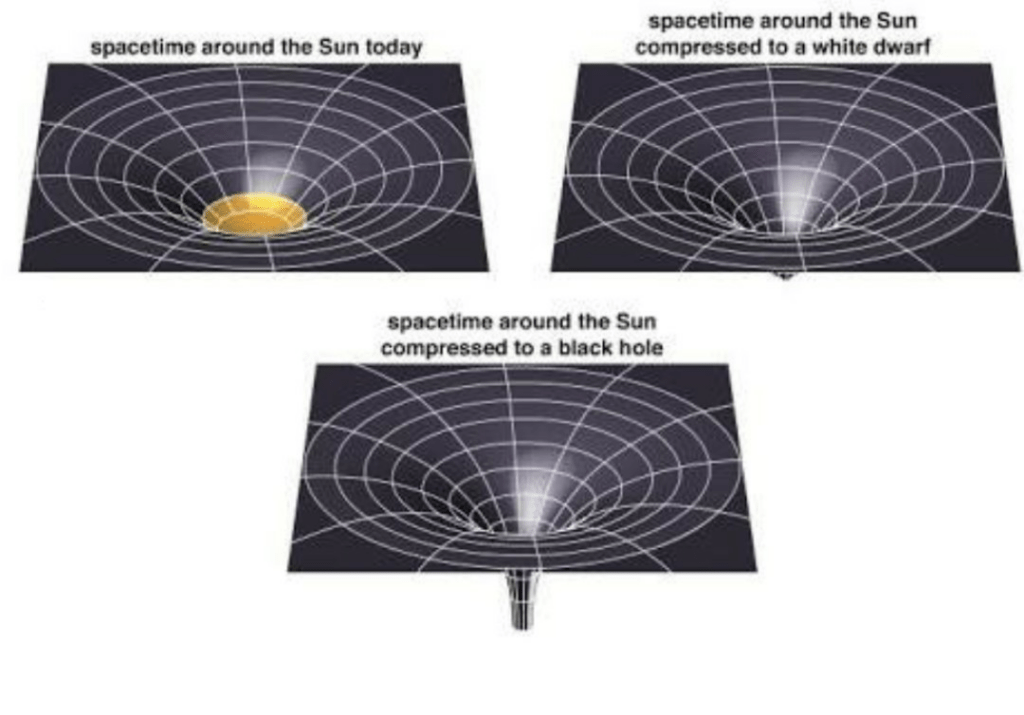
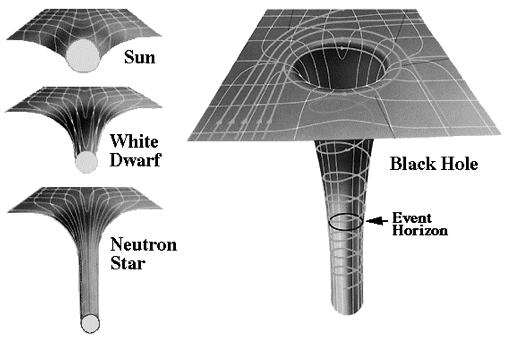
When a giant star reaches the end of its life, it can explode as a supernova. What remains afterward depends on the star’s mass. Smaller stars become white dwarfs, heavier ones collapse into neutron stars, and the most massive stars collapse even further—forming a black hole.
So why do we call it a “black hole”?
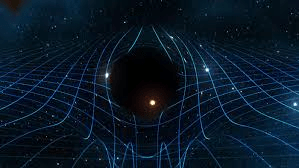
According to Einstein’s theory of relativity, space and time are woven together into a single fabric called spacetime. Massive objects bend this fabric. A black hole bends it so deeply that spacetime collapses inward without limit—like an infinitely deep well. Anything that falls in cannot climb back out.
That is where the idea of a “hole” comes from.
How Massive Does a Star Need to Be?
Not every star can become a black hole. Scientists estimate that a star must be at least 30–40 times more massive than the Sun to collapse into one after it dies.
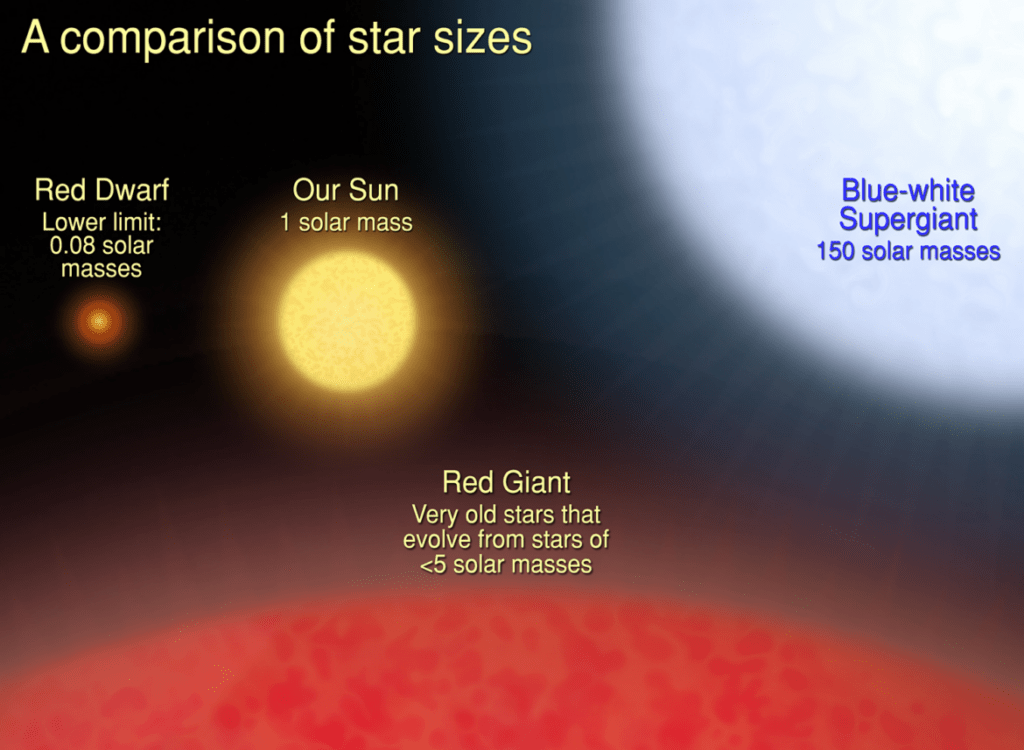
During its final stages, such a star swells to an enormous size before exploding. If we imagine a star 30 times heavier than the Sun at the end of its life, it could expand to a diameter of billions of kilometers, potentially stretching out as far as Neptune’s orbit if placed in our Solar System.
Thinking about that scale makes one thing clear:
We are incredibly lucky. Our Sun and the planets around it exist in a stable, “just right” environment—perfect for life to form and survive. Sometimes, it feels too perfect to be purely random.
Is the Density of a Black Hole Infinite?
A common belief is that black holes have infinite density. This isn’t entirely true.
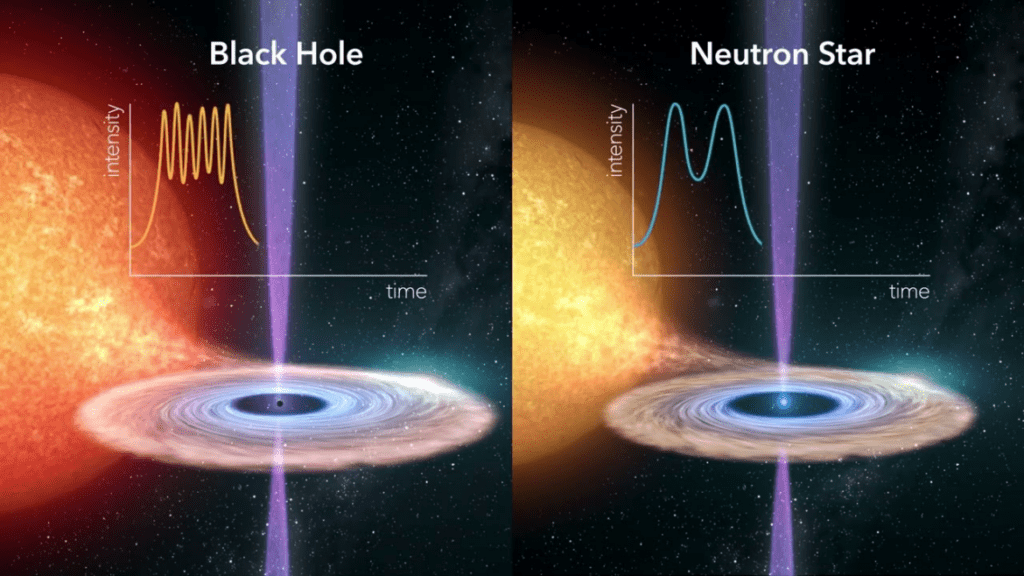
White dwarfs and neutron stars are already incredibly dense—far denser than anything we can imagine on Earth. A teaspoon of neutron star material would weigh billions of tons. But black holes are different.
We can’t measure the density of a black hole the same way, because its mass is compressed into a region so small that normal definitions break down. Physicists don’t describe black holes by density, but by mass—often measured in multiples of the Sun’s mass.
What we can say is this:
There is nothing in the universe that can compress matter more tightly than a black hole. It represents the ultimate limit of matter compression.
How Big Can a Black Hole Be?
Here’s something that surprises many people:
A black hole with the same mass as the Sun would be no larger than a grapefruit.
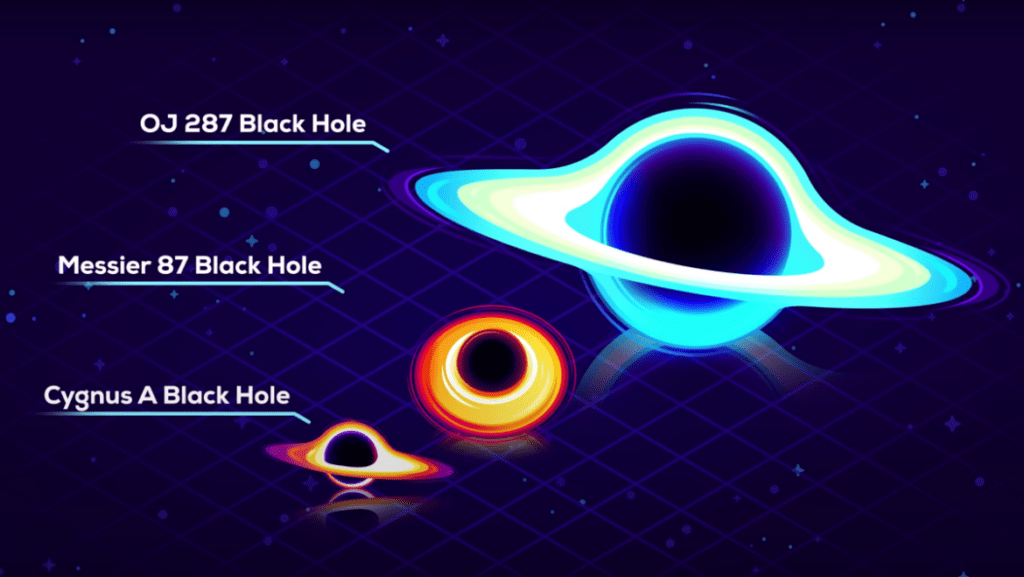
The supermassive black hole at the center of the Milky Way, known as Sagittarius A*, has a mass of about 4.3 million Suns. If we imagine lining up 4.3 million grapefruits in a row, the total length would be roughly 14,000 kilometers—just slightly larger than Earth’s diameter.
That’s right.
A black hole millions of times heavier than the Sun is only about the size of our planet.
And that alone is terrifying enough.
Do Black Holes Ever Disappear?
If nothing—not even light—can escape a black hole, how could it ever lose mass?
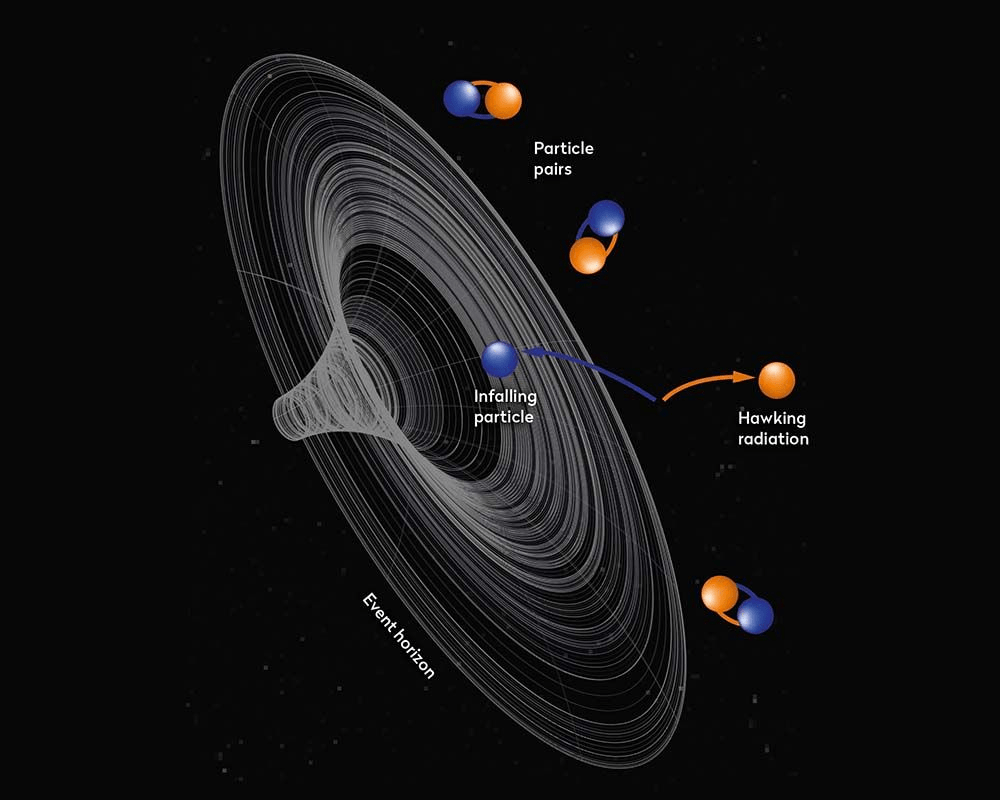
This question led Stephen Hawking to propose something extraordinary: Hawking radiation. According to his theory, black holes slowly emit tiny amounts of energy over immense periods of time. As they do, they gradually lose mass and may eventually evaporate completely.
This idea is especially important for mini black holes, hypothetical objects so small they may have no measurable size at all. These black holes would decay over time, disappearing into nothingness.
So even black holes are not truly eternal.
Why Can’t We See a Black Hole Directly?
Black holes emit no light, no radiation, no signals of their own. They are completely silent.
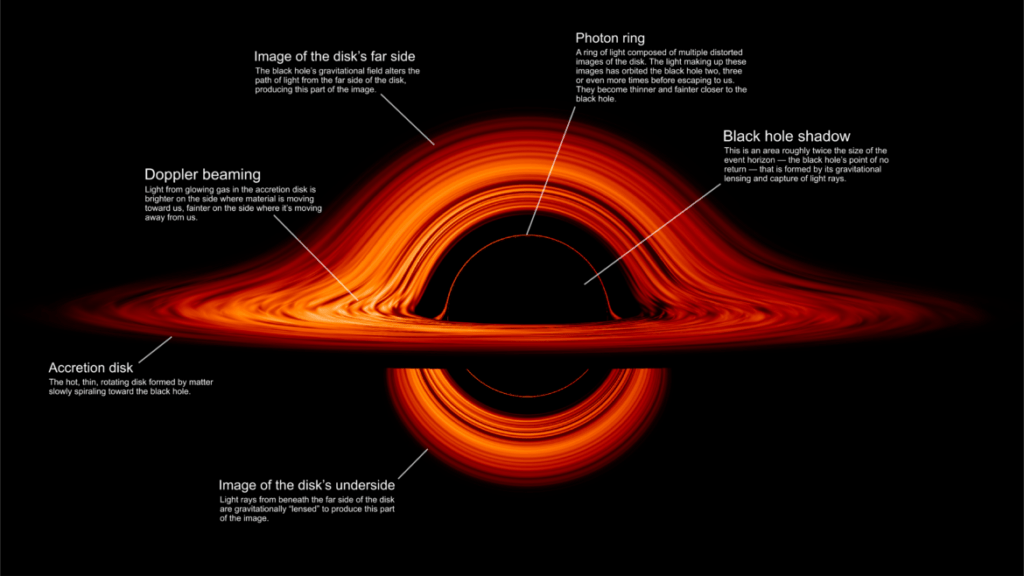
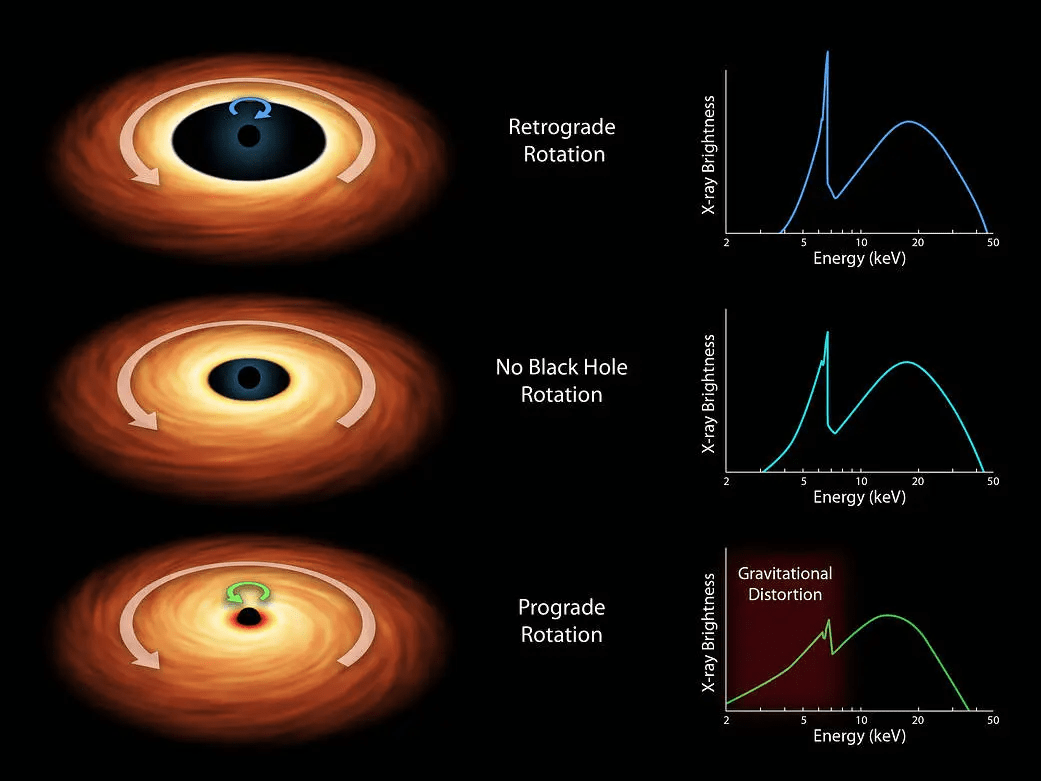
What we observe instead are the effects they have on their surroundings. Hot, glowing matter spiraling around a black hole forms an accretion disk, emitting intense radiation before vanishing beyond the event horizon—the invisible boundary beyond which nothing can return.
The event horizon acts like a cosmic curtain, blocking all information from the inside. Whatever happens beyond it remains forever hidden.
Black Holes, Wormholes, and Time Travel
Some of the most extreme ideas in physics come from trying to understand black holes. Concepts like white holes, wormholes, and even time travel are often linked to them—though most remain highly speculative.
Because a black hole bends spacetime infinitely, some scientists have imagined it as a possible gateway to another universe. This idea may sound unrealistic, but it follows logically from the mathematics of relativity.
At our current level of understanding, we simply don’t know. And imagination is sometimes the only tool we have left.
What is certain is this:
As powerful and mysterious as black holes are, they may not even be the most extreme phenomena in the universe. There could be forces and entities far more violent, far more incomprehensible—still waiting to be discovered.
And compared to them, black holes may be only the beginning.