The Challenge of Breaking a Proton
At first glance, it may seem that smashing particles together at extremely high speeds should easily destroy them. Modern particle accelerators can accelerate protons to nearly the speed of light and collide them with enormous energy. Yet even under these extreme conditions, scientists cannot completely destroy a proton.
When two protons collide, they do not simply disappear. Instead, the collision breaks some of the internal bonds that hold the proton together. Energy is released, and many new particles may be produced, but the fundamental structure is not truly annihilated.
In other words, the process only releases part of the energy stored within the strong nuclear force that binds the proton’s internal components.
Quarks and the Structure of Protons
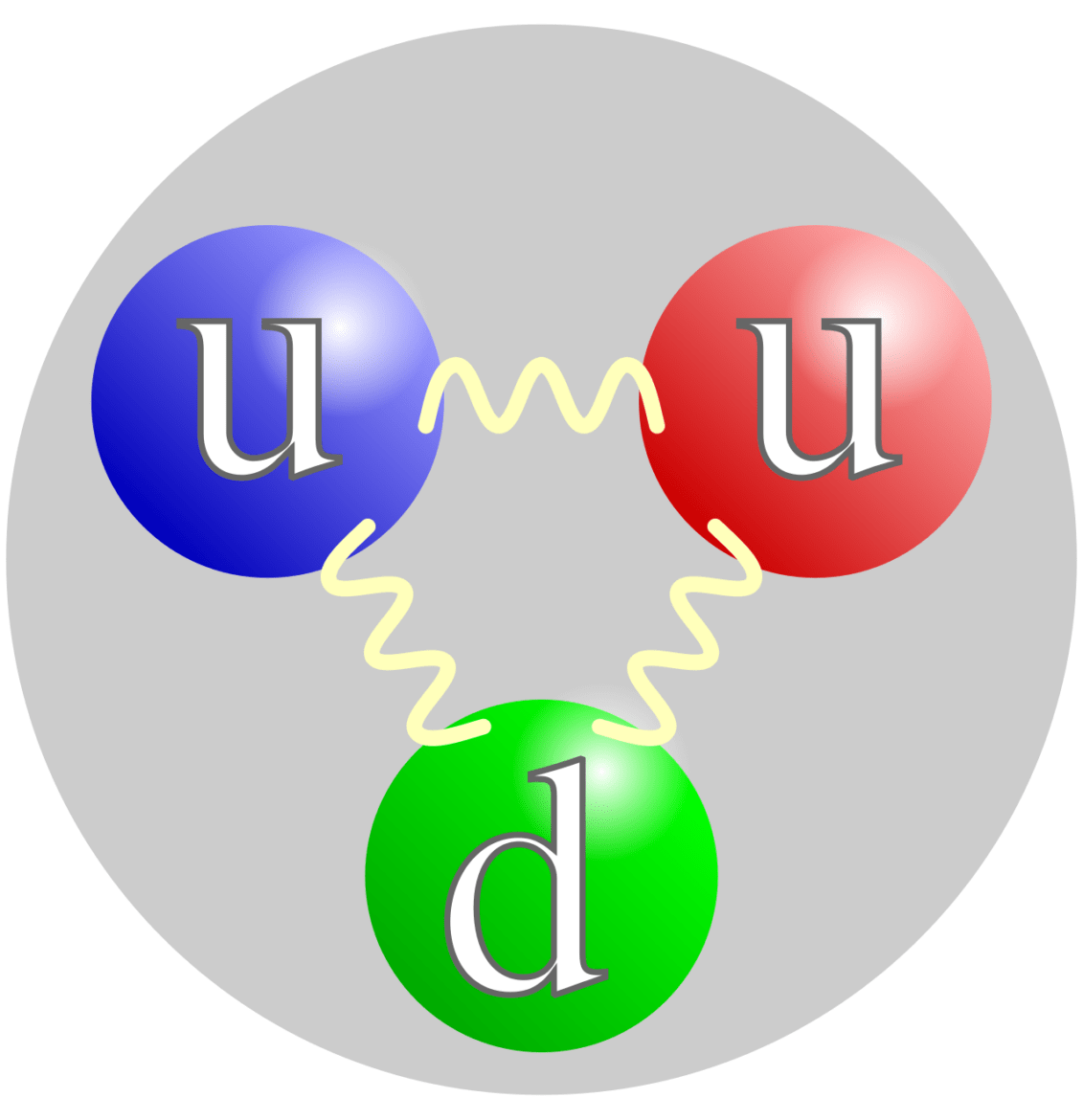
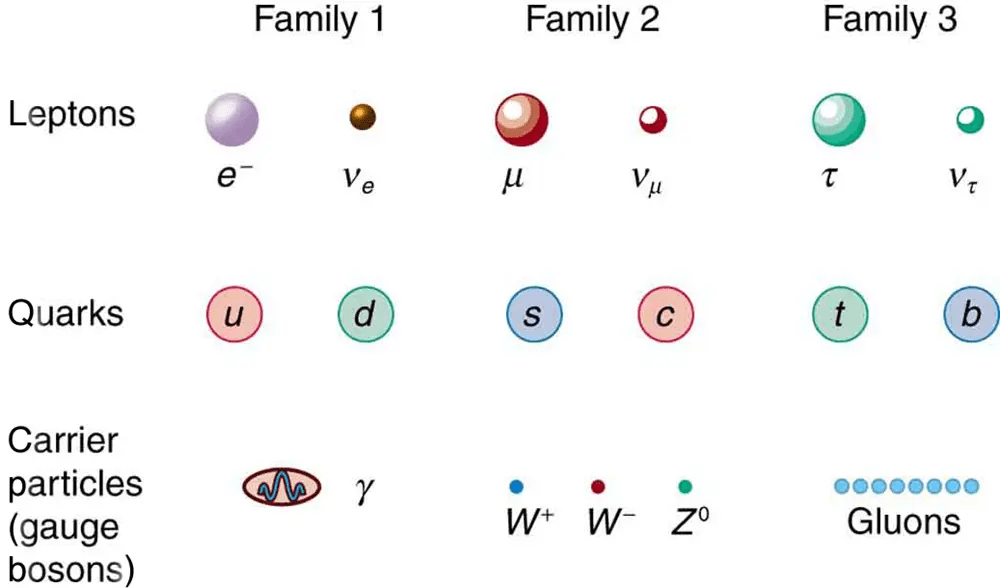
Protons are not elementary particles. They are composite particles made of smaller constituents called quarks. Three quarks combine to form a proton, and they are held together by gluons through the strong nuclear force.
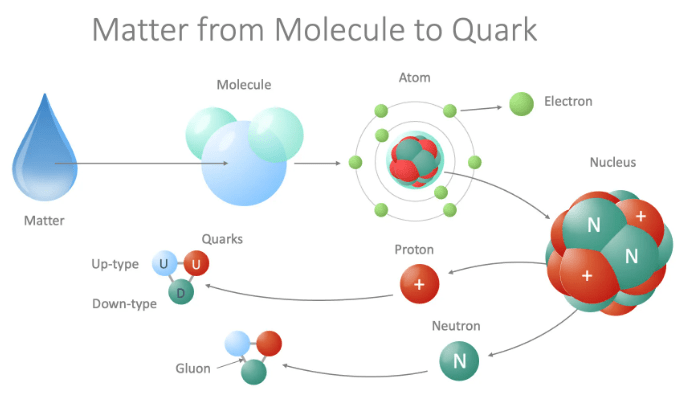
Quarks themselves are extremely unusual particles. In theoretical descriptions they behave almost like points in space, with no measurable size. Some experimental limits suggest their size is smaller than 10−19 meters, though the true value remains uncertain.
One remarkable property of quarks is that they never exist alone under normal conditions. This phenomenon is known as quark confinement. Quarks always remain bound to other quarks, forming particles such as protons, neutrons, or short-lived composite particles.
What Happens During Particle Collisions
If quarks cannot exist alone, what actually happens when protons collide in a particle accelerator?
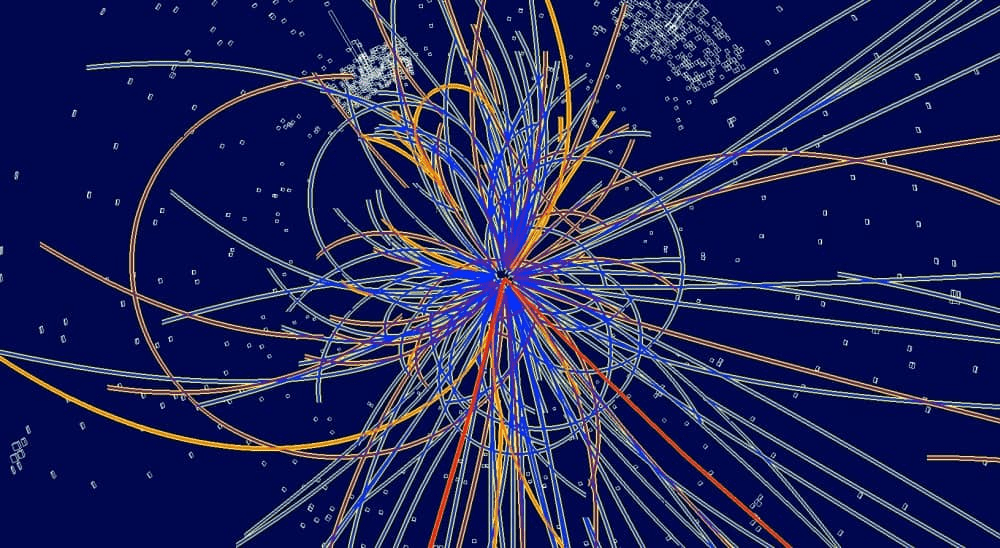
In high-energy collisions, the energy involved can become so large that new quark–antiquark pairs are created. Instead of separating the original quarks, the added energy converts directly into new particles.
This means the proton does not break into isolated quarks. Instead, the collision produces jets of new particles formed from combinations of quarks and antiquarks.
One common result is the creation of mesons, particles composed of one quark and one antiquark. These particles are extremely unstable and often decay within fractions of a second.
The Difficulty of Making Proton Collisions
Colliding protons is far more complicated than it might seem. Protons are incredibly small, and most of their internal structure is effectively empty space.
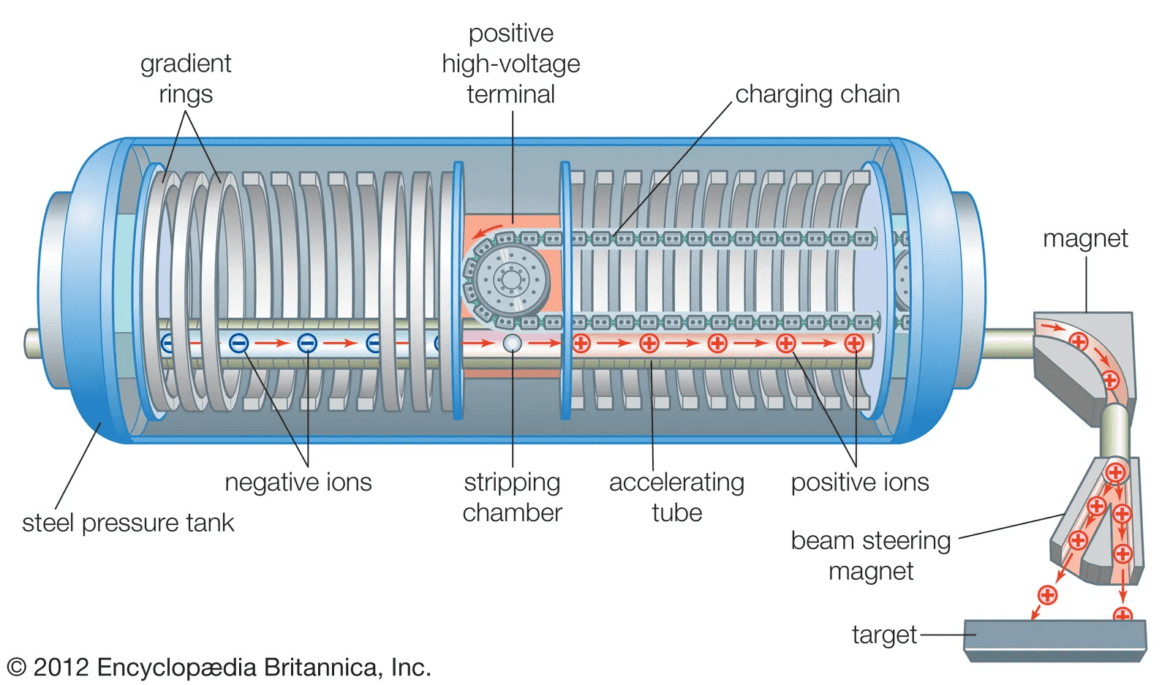
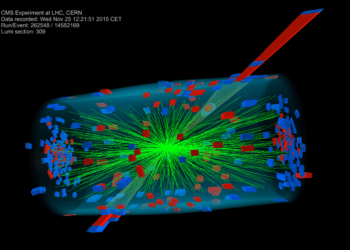
To increase the chances of collisions, particle accelerators do not fire just a few particles. Instead, they accelerate enormous beams containing billions of protons. These beams circulate inside massive machines like the Large Hadron Collider at extremely high energies.
When two beams intersect, many microscopic collisions occur simultaneously. Each collision can produce hundreds of secondary particles, which detectors track by observing the paths they leave behind.
Why Quarks Cannot Be Isolated
The reason quarks cannot exist individually lies in the behavior of the strong nuclear force. Unlike other forces, the strong force becomes stronger as quarks move farther apart.
When scientists attempt to separate quarks, the energy stored in the force field between them grows until it becomes large enough to create new quark–antiquark pairs.
These new particles then combine with the original quarks, forming new composite particles rather than allowing quarks to exist freely.
This is why isolating a single quark has never been observed in nature.
Quarks in the Early Universe
Interestingly, there was a brief moment in the early universe when quarks likely existed freely. Shortly after the Big Bang, the temperature of the universe was so high that quarks and gluons formed a hot, dense state known as quark–gluon plasma.
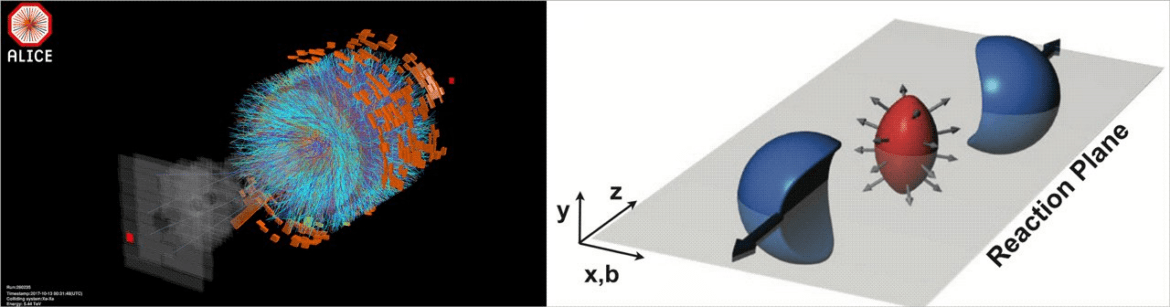
In this environment, particles had too much energy to bind together into protons and neutrons. Only as the universe expanded and cooled did the strong nuclear force begin to bind quarks into stable particles.
Today, conditions like this can only be recreated for tiny fractions of a second inside particle accelerators.
Antimatter and Complete Mass Conversion
Although destroying a proton completely is essentially impossible using collisions alone, another process can convert matter entirely into energy: annihilation with antimatter.
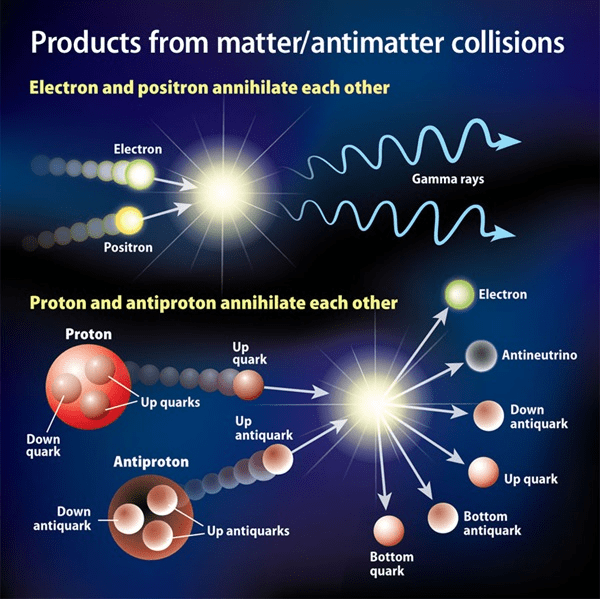
When a particle meets its corresponding antiparticle, both are converted into pure energy, usually in the form of high-energy photons called gamma rays.
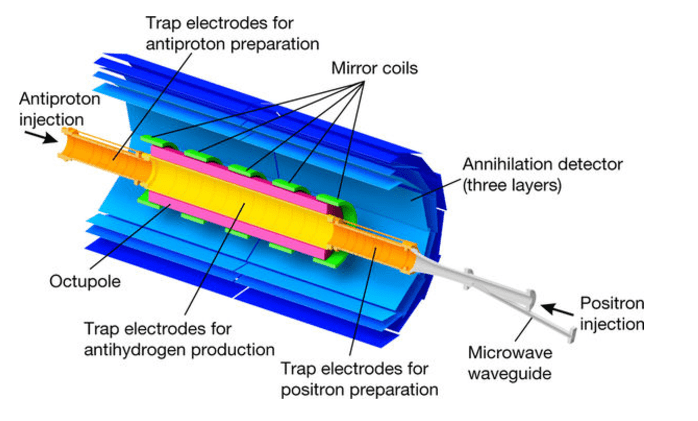
Scientists have even created small quantities of antimatter atoms, such as antihydrogen, in laboratories like CERN. However, producing and storing antimatter is extremely difficult because it annihilates instantly upon contact with ordinary matter.
The Enormous Energy of Matter–Antimatter Annihilation
The energy released by matter–antimatter annihilation follows Einstein’s famous equation:
E = mc²
Even tiny amounts of mass correspond to enormous energy. For example, the annihilation of just one gram of hydrogen with one gram of antihydrogen would release an amount of energy comparable to tens of thousands of tons of TNT.
Yet producing even a gram of antimatter with current technology would take many thousands of years.
For now, the complete conversion of matter into energy remains far beyond practical reach.