A Giant Made of the Same Elements as Stars
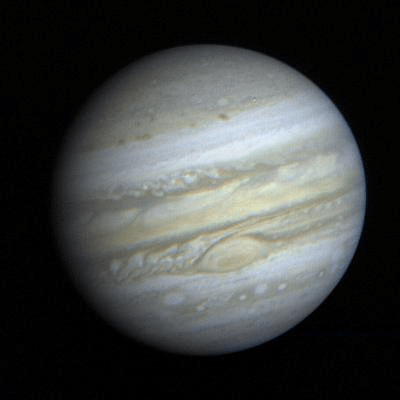
Jupiter is the largest planet in the Solar System and easily one of the most fascinating worlds we have ever observed. At first glance it appears as a massive sphere wrapped in colorful bands of clouds, but behind that beauty lies a planet unlike any other.
Jupiter belongs to a category known as gas giants, planets composed mostly of light primordial elements rather than rock or metal. Nearly ninety percent of Jupiter is hydrogen, while most of the rest is helium. These are the same elements that make up stars.
Because of this composition, Jupiter is often described as a kind of “failed star.” Its internal structure is somewhat similar to a small star, but its mass is far too small to trigger nuclear fusion in its core. Without enough gravity to ignite that process, Jupiter remains a planet rather than shining like the Sun.
A Planet Where There Is Nowhere to Land
Unlike Earth, Jupiter does not have a solid surface. If someone could somehow fall toward the planet, there would be no ground waiting below the clouds.
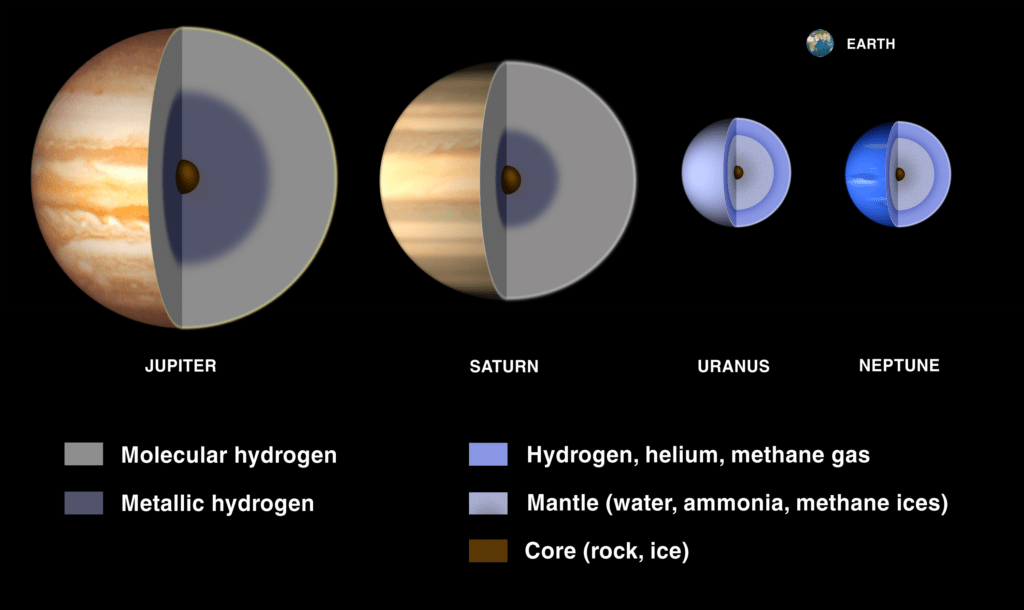
Instead, the atmosphere gradually becomes thicker and denser the deeper you descend. At first the clouds might appear soft and harmless, but deeper layers quickly become extremely compressed.
Eventually the gas behaves almost like a liquid. At a certain depth an object would stop sinking further because its density would match the surrounding atmosphere. In theory this would be the point where you “float.”
In reality, reaching such depths would be impossible. The pressure increases dramatically while temperatures climb higher and higher. Any spacecraft traveling too far down into Jupiter would eventually be crushed and melted.
A Planet So Large It Defies Imagination
Jupiter’s size is difficult to comprehend. The planet has a diameter of roughly 139,800 kilometers, which is more than eleven times wider than Earth.
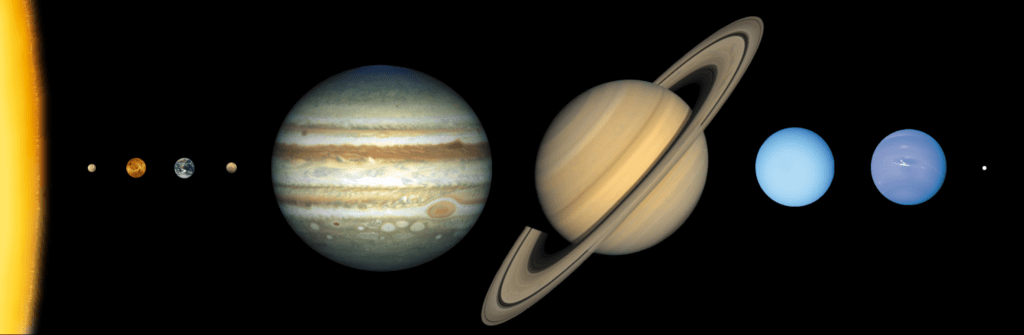
Its mass is about 318 times greater than our planet, and its volume is enormous. If Jupiter were hollow, it could contain more than 1,300 Earth-sized planets inside it.
Despite this massive scale, Jupiter rotates incredibly quickly. A full rotation takes only about ten hours, meaning a day on Jupiter is less than half the length of a day on Earth.
This rapid rotation stretches the planet slightly at the equator and plays a major role in shaping the powerful atmospheric bands that wrap around the entire planet.
The Most Violent Weather in the Solar System
From a distance Jupiter may look calm, almost like a giant marble floating in space. But up close it reveals one of the most extreme environments in the Solar System.
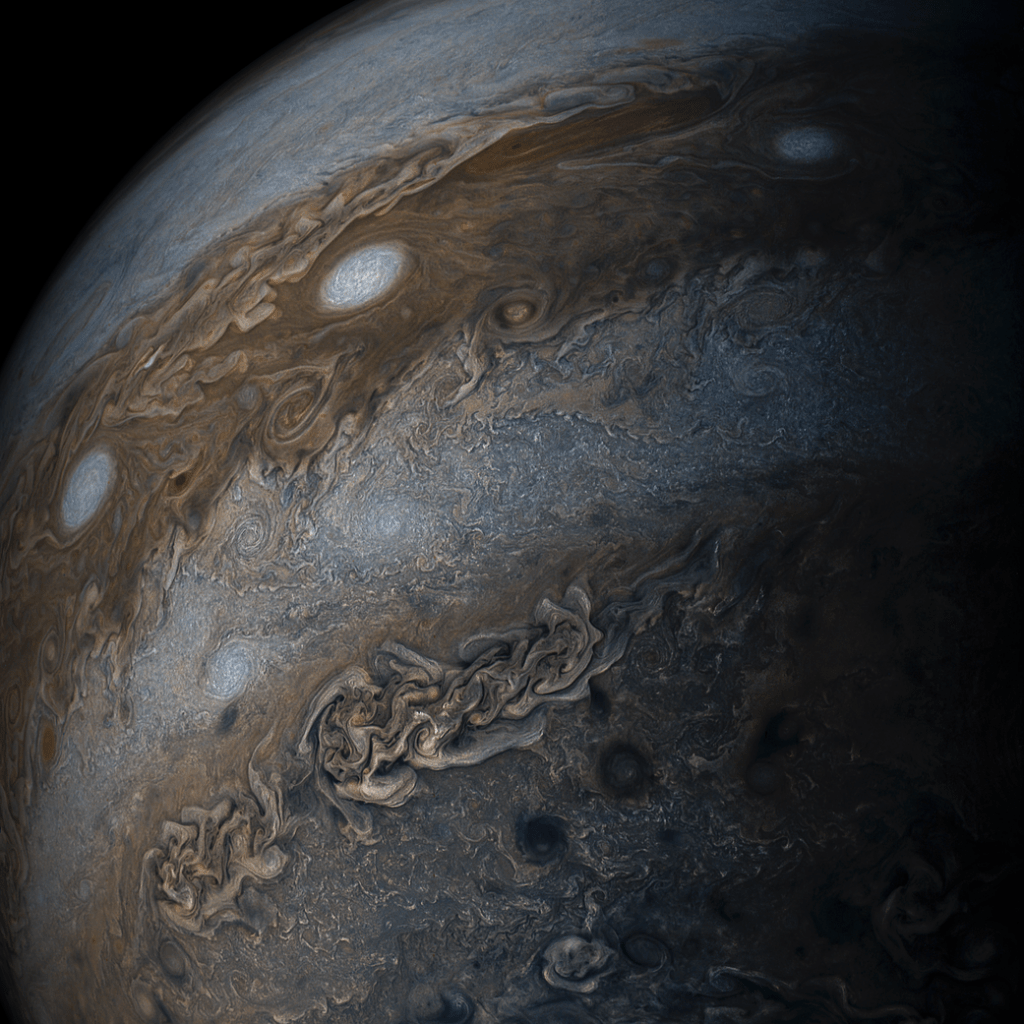
The planet’s atmosphere is filled with enormous storms and turbulent cloud systems. Jet streams race across the planet at speeds exceeding 600 kilometers per hour, constantly pushing clouds into long bands that circle the entire world.
Within these bands, giant vortices and cyclones form and collide. Some storms can last for centuries. Lightning flashes deep within the thick clouds while massive atmospheric currents twist and churn across the planet.
Scientists still do not fully understand why Jupiter’s atmospheric bands flow in alternating directions, creating one of the most chaotic weather systems among all the planets.
A Magnetic Field Stronger Than Any Other Planet
Jupiter is not only violent in its atmosphere. It also possesses the most powerful magnetic field of any planet in the Solar System.
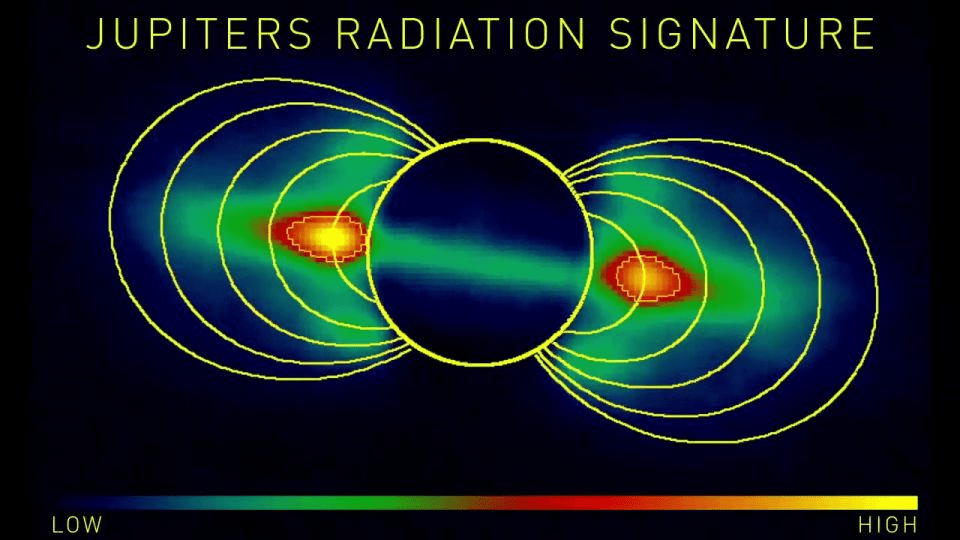
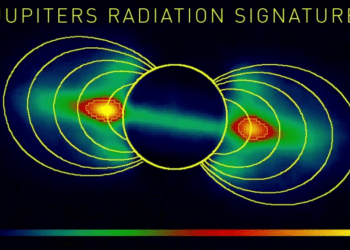
This immense magnetic field traps charged particles and accelerates them to extremely high energies, creating intense radiation belts around the planet. These particles include electrons, protons, and ionized atoms.
A large portion of them actually originates from Io, one of Jupiter’s moons. Io is the most volcanically active body in the Solar System and constantly ejects sulfur-rich material into space.
Once ionized, these particles become trapped within Jupiter’s magnetosphere and are accelerated to incredible speeds. The radiation environment around the planet is so intense that spacecraft must be specially designed to survive it.
The Giant Guardian of the Inner Solar System
Despite its hostile nature, Jupiter plays an important role in shaping the Solar System.
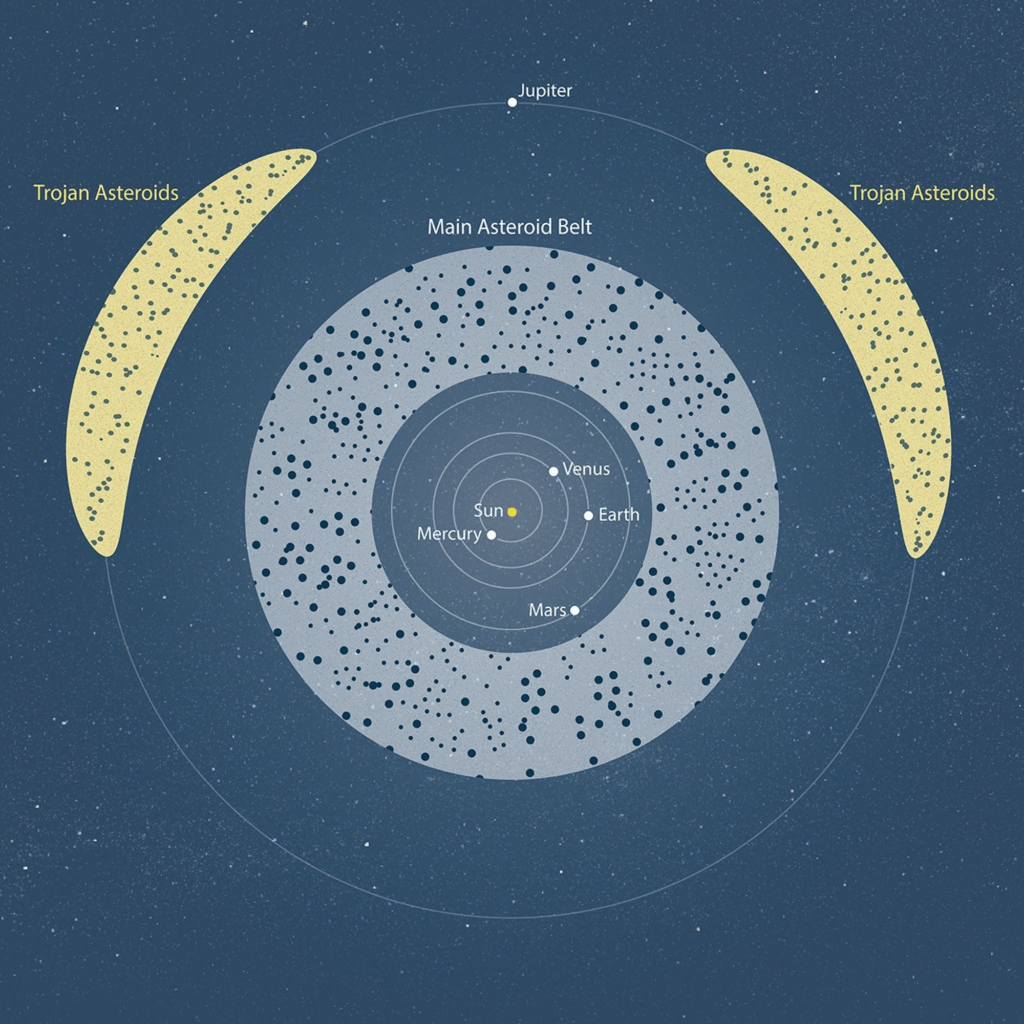
Its enormous gravity helps stabilize the asteroid belt located between Mars and Jupiter. This region contains millions of rocky bodies made of ice, stone, and metal. By influencing their orbits, Jupiter helps keep many of these objects from drifting inward toward the inner planets.
The giant planet also absorbs many impacts itself. Comets and asteroids collide with Jupiter far more often than they strike Earth.
Over time Jupiter gains mass from these collisions, yet it also slowly loses gas from its upper atmosphere into space. These processes nearly balance each other, meaning the planet changes very little.
For billions of years, Jupiter has remained the colossal giant of our Solar System, shaping the environment around it while continuing to dominate the planetary neighborhood.