Ancient Ideas About the Nature of Matter
More than two thousand years ago, the Greek philosopher Anaxagoras proposed a remarkably bold idea about the universe. He argued that nothing in the cosmos arises from nothing, and nothing truly disappears. Instead, everything is formed through the combination and separation of fundamental particles.
According to his view, matter could be divided endlessly into smaller pieces, and those pieces could recombine to create new forms of matter. In this sense, the world was not built from mystical forces but from underlying physical components.
Anaxagoras also introduced the concept of a universal mind, a principle he called Nous. This cosmic intelligence was imagined as a force capable of organizing and directing the motion of matter throughout the universe.
Although this idea belongs more to philosophy than to modern science, it raises an intriguing question: could the universe itself possess a kind of structure resembling a mind?
The Cosmic Web and the Structure of the Universe
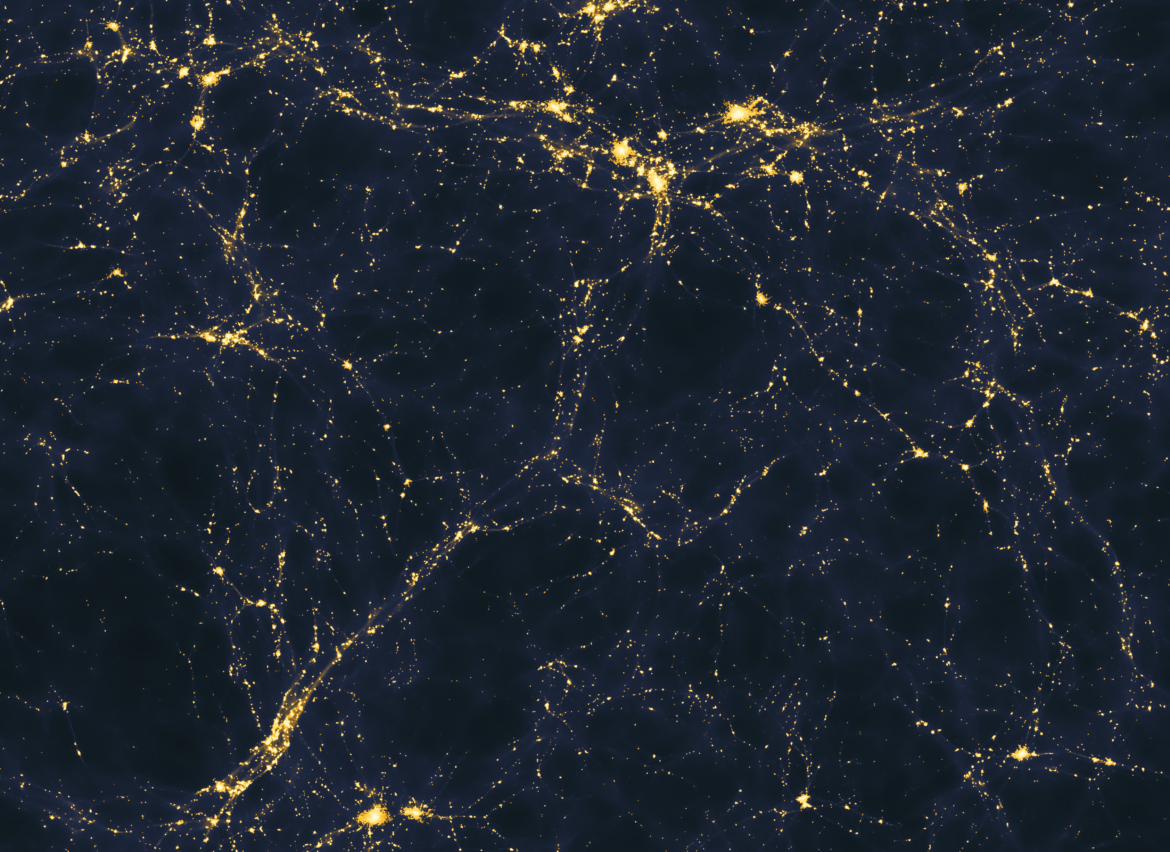
Modern astronomy has revealed that galaxies are not distributed randomly throughout space. Instead, they form an immense structure known as the cosmic web.
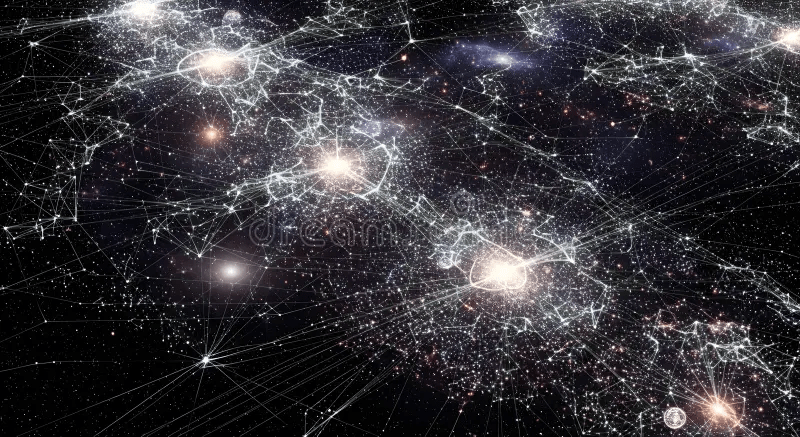
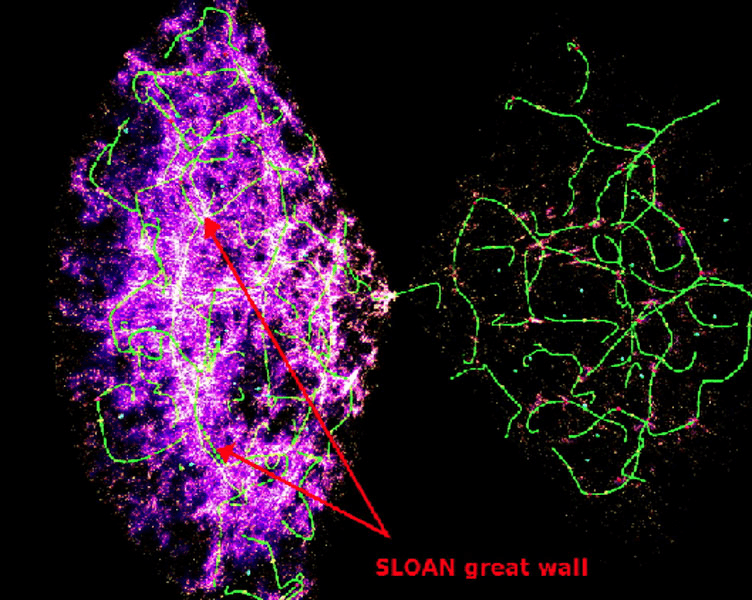
This network consists of filaments of galaxies stretching across hundreds of millions of light-years, intersecting at massive galaxy clusters while leaving enormous voids between them. The structure is so vast that it defines the large-scale architecture of the universe.
The concept of the cosmic web began to take shape in the late twentieth century as large galaxy surveys mapped the distribution of matter across the sky. What emerged was a picture of the universe resembling a gigantic interconnected network.
This discovery transformed our understanding of cosmic structure.
A Surprising Visual Similarity
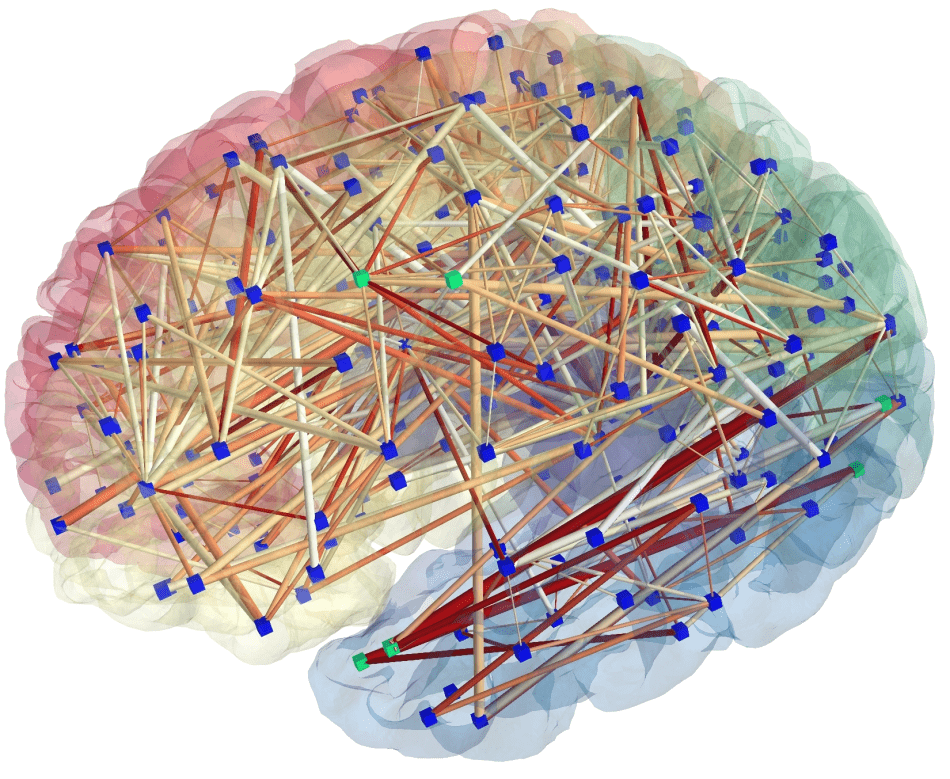
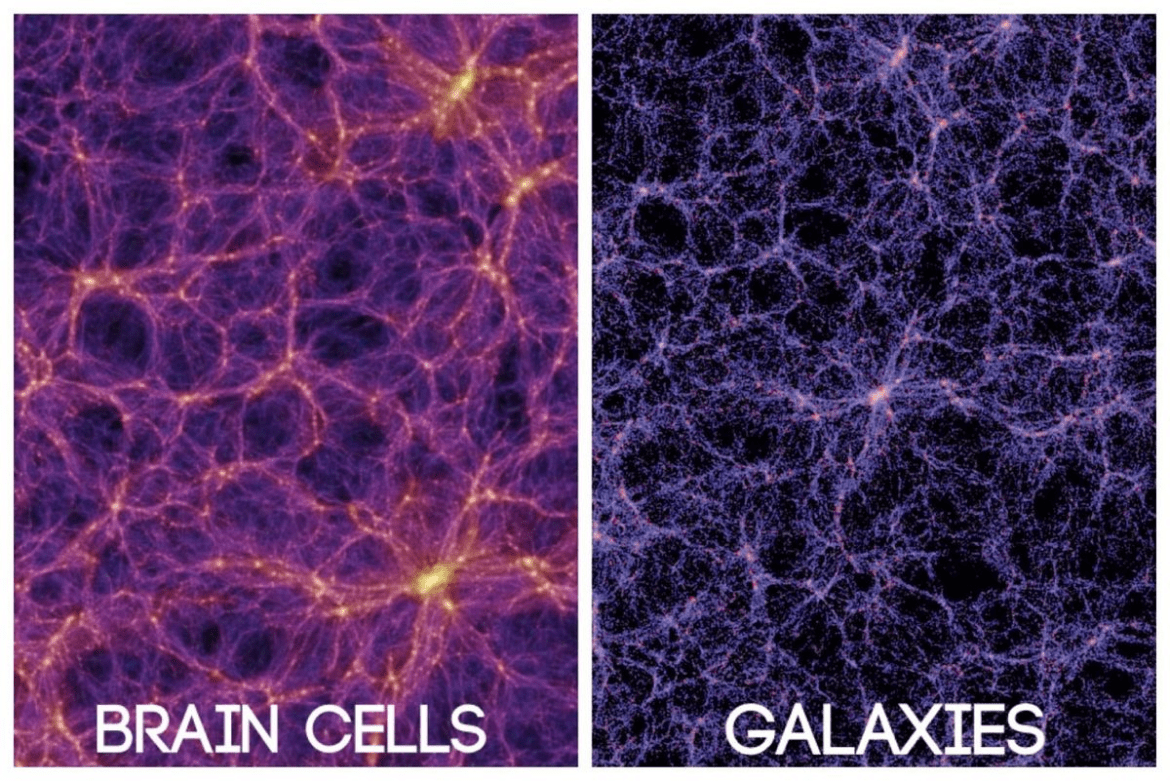
Interestingly, when neuroscientists visualize the connections between neurons in the human brain, the resulting patterns can look strikingly similar to maps of the cosmic web.
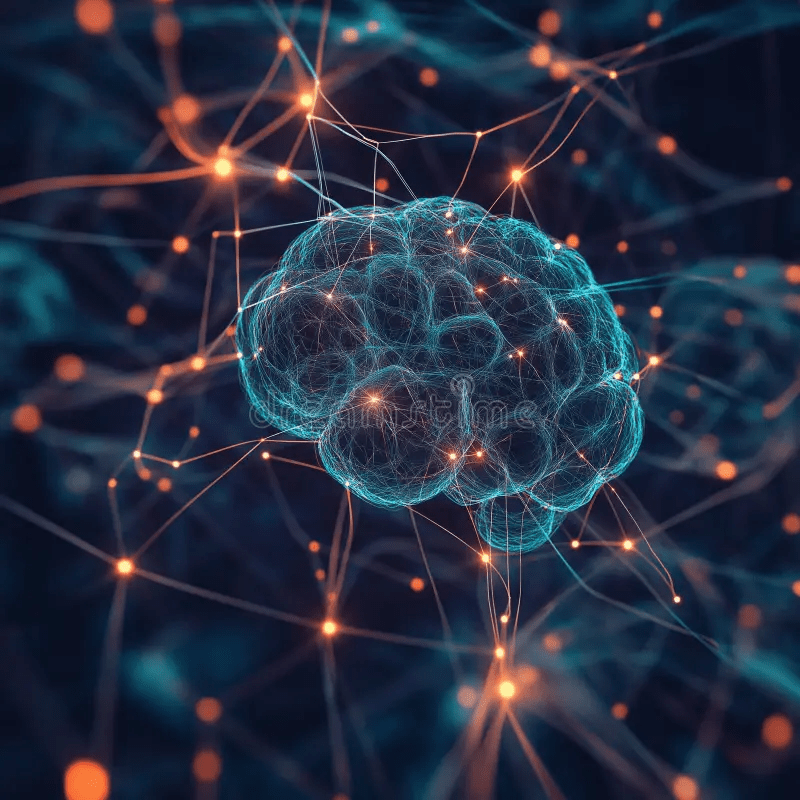
Both systems consist of nodes connected by filaments.
In the brain, the nodes are neurons linked by synapses.
In the universe, the nodes are galaxy clusters connected by gravitational filaments.
The similarity becomes even more surprising when comparing structures at completely different scales. The neural network inside the brain can be examined at fractions of a millimeter, while cosmic structures extend across hundreds of millions of light-years.
Despite the enormous difference in scale, the patterns can appear unexpectedly alike.
Why the Universe Is Probably Not a Giant Brain
While the resemblance between these two networks is fascinating, it does not mean the universe is literally a giant brain.
The function of the brain is to process information through electrical and chemical signals. Neurons transmit signals rapidly through synapses, allowing the brain to respond to stimuli within fractions of a second.
The cosmic web operates very differently. Galaxies are separated by enormous distances, and the filaments connecting them are not physical communication channels. They are simply regions where gravity has drawn matter together.
Even if information were transmitted through photons, the process would be extremely slow on cosmic scales. The expansion of space itself would further complicate any attempt to send signals across the universe.
For these reasons, the idea that the universe functions like a brain remains a metaphor rather than a scientific theory.
The Human Tendency to Create Meaning
The comparison between the brain and the universe tells us something interesting about human nature. Humans are exceptional at creating stories and searching for patterns, even when those patterns may not represent physical relationships.
We often interpret similarities as signs of deeper meaning. This instinct has helped drive scientific discovery, but it can also lead to philosophical speculation.
The idea that the universe might resemble a living system reflects our natural tendency to connect the unknown with familiar structures.
The Role of Belief in Human Society
One of the most powerful forces shaping human civilization is belief. Much of the structure of modern society depends on shared beliefs rather than physical objects.
Money, governments, corporations, and financial systems all exist largely because people collectively agree that they exist. A bank balance, for example, is not a physical object—it is information stored as digital numbers.
Its value exists only because people trust the system behind it.
Even everyday social behavior depends on belief: trust in institutions, trust in laws, and trust in other people.
Trust Beyond Human Society
Forms of trust also appear in animal societies. Certain primates use different alarm calls to warn their group about specific predators. A call indicating a lion triggers a different response than a call signaling an eagle.
These communication systems rely on a shared understanding within the group. Members react because they trust the signal.
Human societies operate on a far more complex level, but the underlying principle is similar. Cooperation and organization become possible only when individuals share common expectations about how others will behave.
In this sense, belief and trust may be among the most powerful organizing forces within human civilization—even more influential than many physical systems that shape the universe itself.