Earth is often described as a paradise of life — a fragile blue world where existence has quietly persisted for billions of years. From our daily perspective, life feels ordinary, almost guaranteed. Yet when viewed from space, Earth appears incredibly small and vulnerable. A single large asteroid, or a brief period of unusual solar activity, could severely disrupt the delicate balance that sustains all living things. As far as we know, there is no backup planet ready to replace it. At least not within the next hundred years.
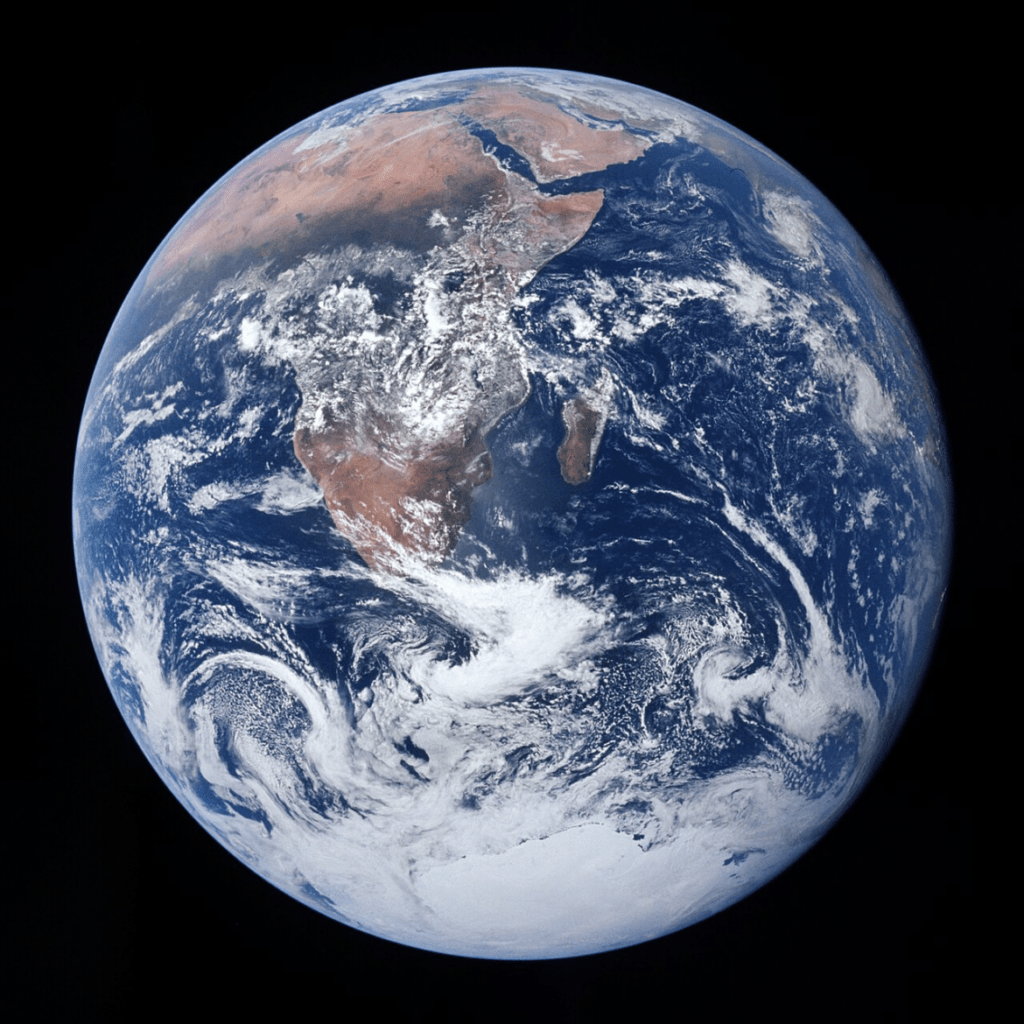
The more we learn about the universe, the clearer it becomes that Earth occupies a very rare position. We still do not fully understand why life exists here at all, but it may be that we are among the very few — or even the only — beings able to experience it. That realization is what drives us to explore the solar system, to understand not only where we live, but how easily everything we know could disappear.
Saturn the Giant Made of Gas
Among the planets orbiting our Sun, Saturn stands out as both majestic and deceptive. It is the second-largest planet in the solar system, surpassed only by Jupiter, yet it is astonishingly light for its size. Saturn is a gas giant with no solid surface — a massive sphere composed mostly of hydrogen and helium. If a body of water large enough existed, Saturn would actually float.
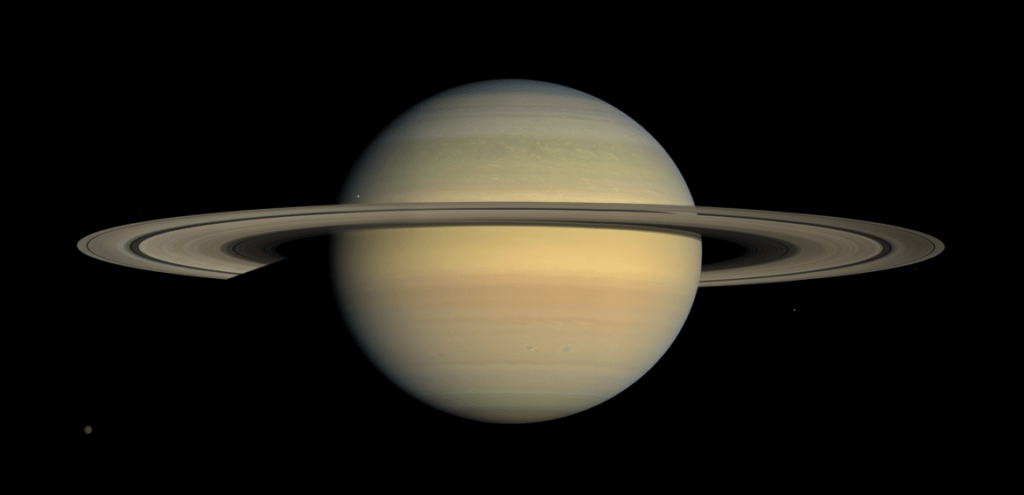
Despite its enormous size, gravity on Saturn is surprisingly similar to Earth’s. A person weighing 68 kilograms on Earth would weigh slightly less on Saturn, even though the planet could fit more than 760 Earths inside it. One day on Saturn lasts just over ten hours, but a single year stretches nearly thirty Earth years due to its vast distance from the Sun. Beneath its calm appearance lies a world of extreme pressure, rising temperatures, and violent internal motion.
A Turbulent World Beneath the Clouds
From afar, Saturn looks peaceful — pale bands of color drifting gently across its atmosphere. In reality, it is one of the most violent environments in the solar system. Winds can exceed 1,800 kilometers per hour, faster than the speed of sound on Earth. Massive storms can last for years before slowly fading away.
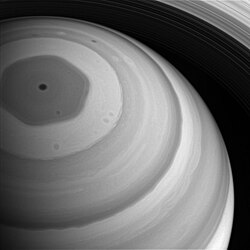
The most mysterious features appear near the poles. At the south pole, Saturn hosts a powerful hurricane-like storm with a deep, well-defined eye, something previously thought to exist only on Earth. Even more puzzling is the perfectly shaped hexagon at the north pole — a six-sided structure larger than Earth itself that has remained stable for decades. No one yet knows exactly what mechanism maintains such precise geometry in a chaotic atmosphere.
Moons That Resemble Other Worlds
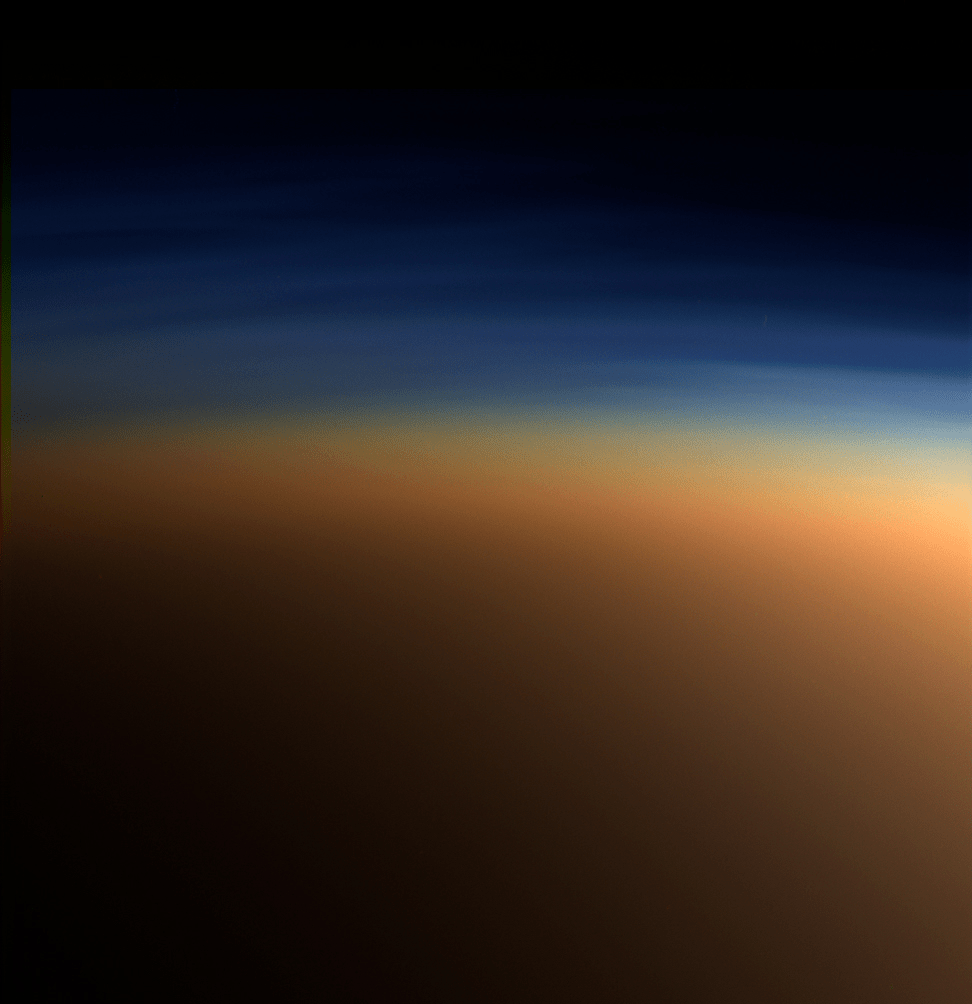
Saturn is surrounded by an extraordinary family of moons, more than sixty in total. Among them, Titan is the most remarkable. It is larger than Mercury and wrapped in a thick, golden atmosphere rich in nitrogen and methane. Beneath its clouds lie rivers, lakes, dunes, and mountains — not of water, but of liquid hydrocarbons. Although Titan is far too cold for life as we know it, its chemistry closely resembles early Earth.
Another moon, Enceladus, is even more intriguing. Beneath its icy crust lies a global ocean of liquid water, heated by tidal forces and rich in chemical energy. Water vapor and ice particles erupt into space from cracks near its south pole. These discoveries make Saturn’s moons some of the most promising places to search for life beyond Earth in the future.
Rings, Time, and the Cassini Legacy
Saturn’s rings are its most iconic feature — vast, thin, and breathtakingly beautiful. Spanning nearly 300,000 kilometers yet only tens of meters thick, they are composed mostly of ice and rock fragments ranging from dust grains to mountain-sized blocks. Their origin remains uncertain, and scientists still debate whether the rings are ancient or relatively young.
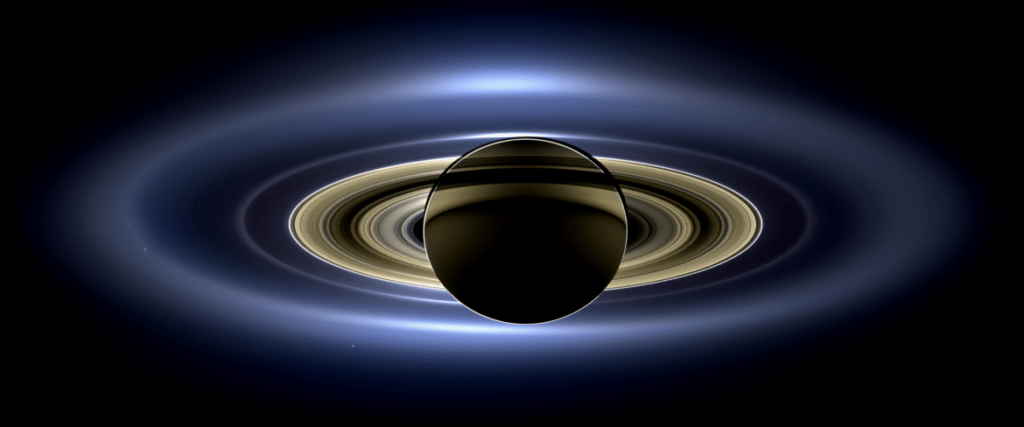
What is certain is that they will not last forever. Over time, the rings are slowly eroded and pulled into Saturn by gravity and electromagnetic forces. One day, this planetary masterpiece will vanish. Much of what we know about Saturn comes from the Cassini spacecraft, which spent over thirteen years exploring the system before deliberately plunging into Saturn in 2017. Cassini’s final act ensured that its legacy — and its discoveries — would remain uncontaminated, leaving humanity with a deeper understanding of one of the most beautiful worlds in our solar system.