Determinism and the Idea of a Predictable Universe
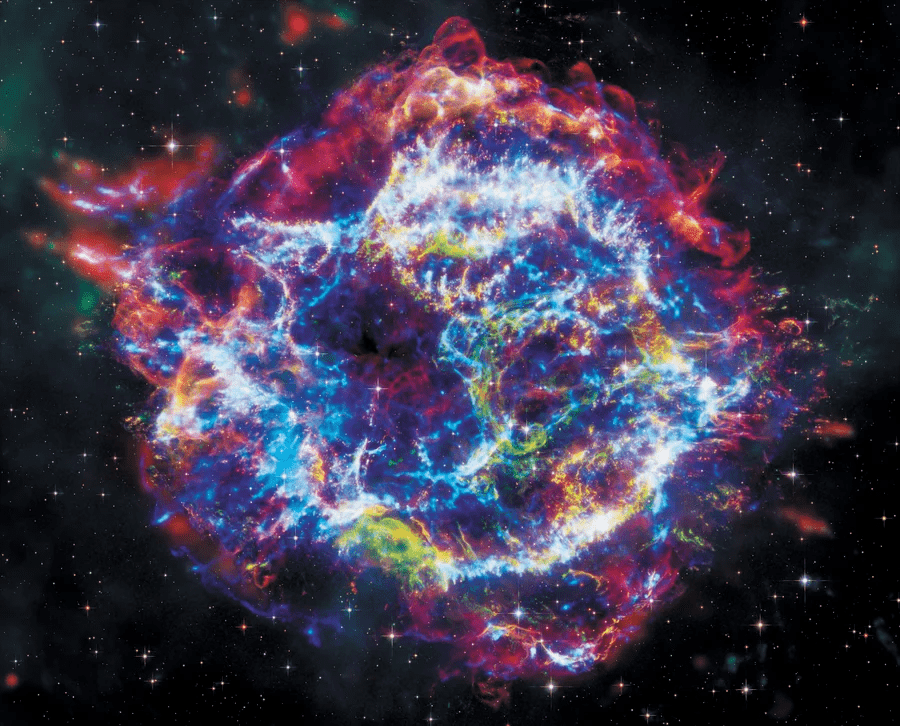
In Western philosophy, determinism proposes that every event has a cause and follows natural laws. According to this view, the universe behaves like a logical system whose evolution could, in principle, be fully explained if we knew all the initial conditions.
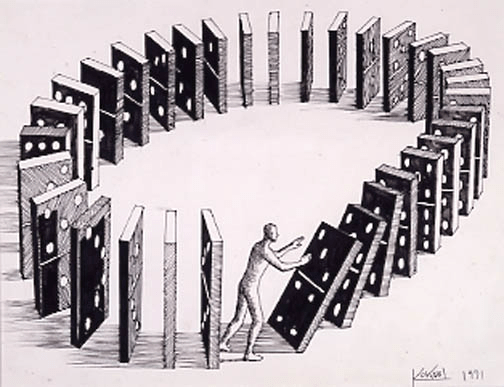
If every cause leads to a predictable effect, then the entire future of the universe might already be encoded in its present state. This idea resembles the philosophical concept of causality, where each event triggers the next in an unbroken chain.
From a scientific perspective, such thinking is not unreasonable. Many natural processes—from planetary motion to stellar evolution—can indeed be predicted with remarkable precision when the governing laws are well understood.
Yet the real universe is not always so straightforward.
Chaos Does Not Destroy Determinism
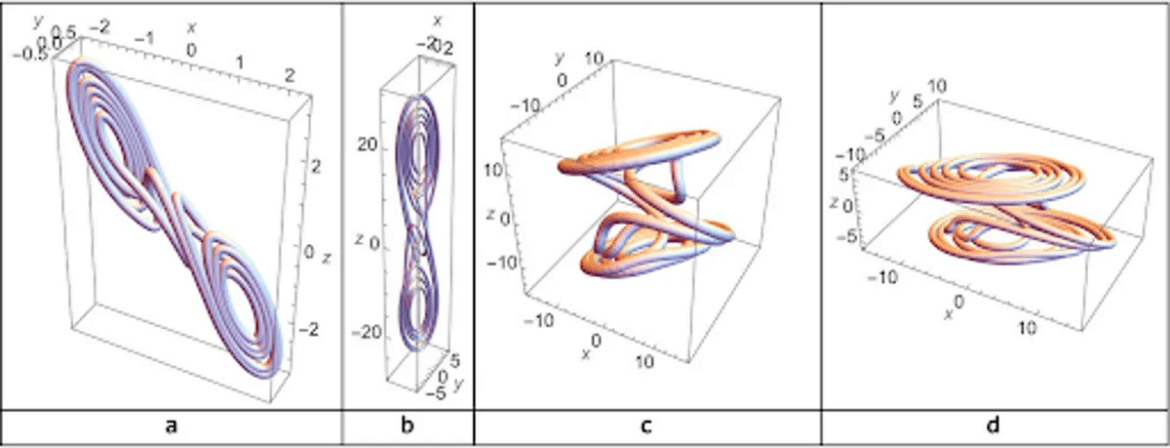
Chaotic systems often behave in ways that appear random. Small variations in initial conditions can produce dramatically different outcomes, making precise predictions extremely difficult.
However, chaos does not actually violate determinism.
Even chaotic systems still follow underlying laws.
Each stage in the development of a system emerges from the previous one through cause and effect. What chaos introduces is not randomness in the fundamental sense, but sensitivity—tiny changes that grow into large and unpredictable differences.
This explains why chaotic dynamics make long-term predictions nearly impossible, even though the system itself still obeys deterministic rules.
Such unpredictability can create the impression that human choices and thoughts are completely free.
Human Life Between Laws and Uncertainty
Human life illustrates this tension clearly. Our lives are influenced by fundamental physical laws—gravity, thermodynamics, biological aging, and energy conservation.
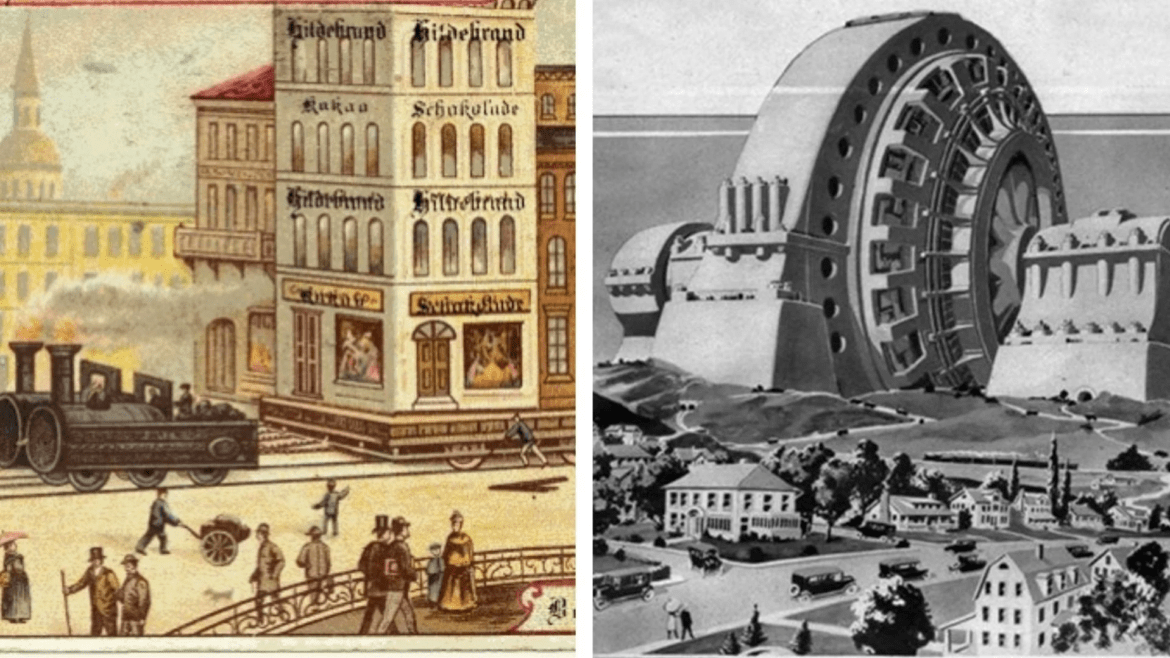
But human society adds additional layers of influence: economic systems, social structures, cultural traditions, political institutions, and personal relationships.
Unlike physical laws, these social rules are constantly changing.
They are invented by humans and can be modified at any time.
Because of this mixture of stable natural laws and flexible human rules, predicting the detailed course of a human life becomes nearly impossible—even though the broader physical framework remains predictable.
When History Refuses to Follow Predictions
History repeatedly shows how difficult it is to foresee the future. During the early nuclear era in the 1940s, many believed that global nuclear war would dominate the early twenty-first century.
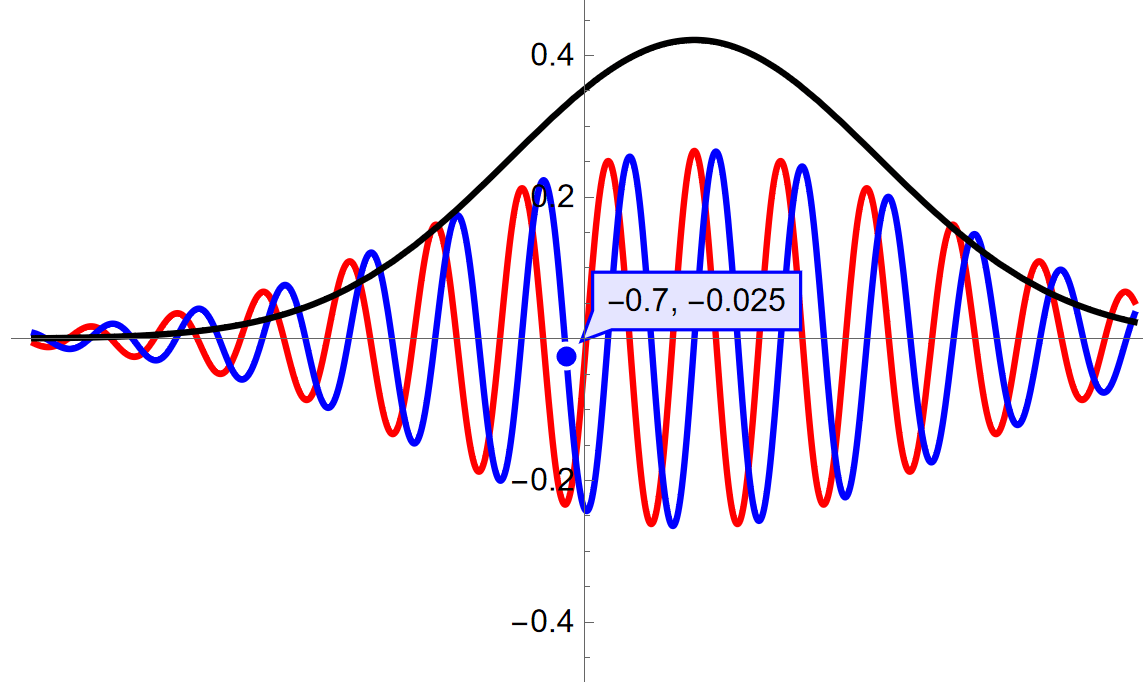
Later, after the launch of the satellite Sputnik 1 and the success of the Apollo program, some predicted that humanity would colonize Mars or even Pluto by the end of the century.
None of those predictions became reality.
At the same time, few people anticipated the transformative power of the internet. Its emergence reshaped communication, economics, and culture in ways that earlier generations rarely imagined.
This unpredictability suggests that complex systems—especially human civilization—are influenced by too many variables to forecast accurately.
Quantum Mechanics and the Limits of Classical Thinking
Modern physics introduces an even deeper challenge to classical determinism: quantum mechanics. At microscopic scales, particles are not described by definite positions and trajectories. Instead, they are represented by wave functions that encode probabilities.
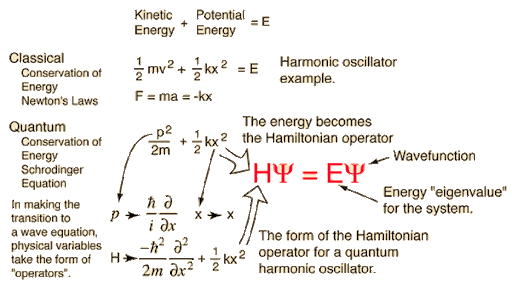
This revolutionary idea emerged from the work of Erwin Schrödinger in 1926. His famous wave equation describes how the probability distribution of a particle evolves over time.
Unlike classical physics, quantum theory does not predict exact outcomes.
It predicts probabilities.
Even so, quantum mechanics does not necessarily prove the existence of free will. Although the results are probabilistic, they still follow strict mathematical rules.
The Mystery of Thought and Freedom
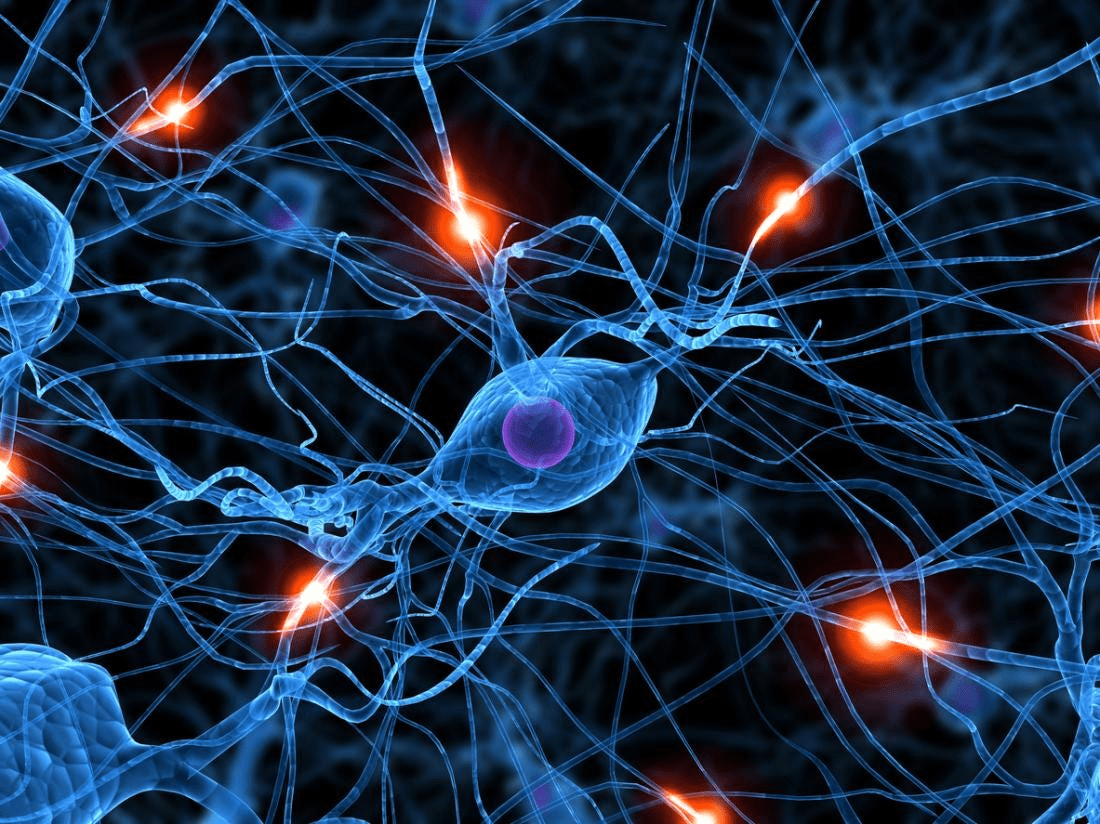
Human thought operates on a level of complexity far beyond that of individual particles. The brain contains billions of neurons interacting through dynamic networks that we do not yet fully understand.
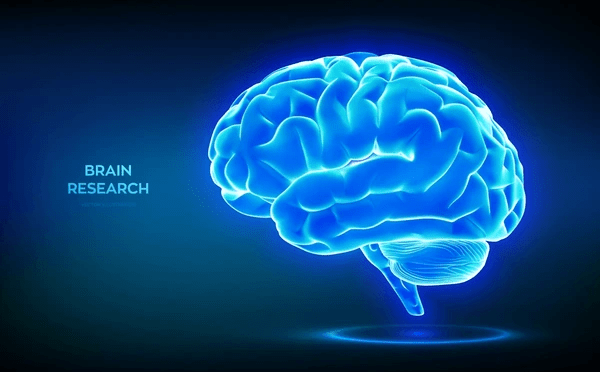
Because of this complexity, predicting someone’s thoughts is practically impossible.
You cannot calculate what a stranger on the street is thinking, nor can you predict your own future thoughts with certainty.
Chaos theory and quantum mechanics both challenge classical certainty, yet neither provides a definitive explanation for free will.
What they reveal instead is a universe far more intricate than earlier scientific models imagined. Physical laws exist, but their interaction with complexity, probability, and consciousness creates layers of unpredictability.
In that sense, the human mind may resemble a kind of Pandora’s box: each moment of awareness revealing something new, unexpected, and impossible to fully predict.