Rotation as a Fundamental Property of Black Holes
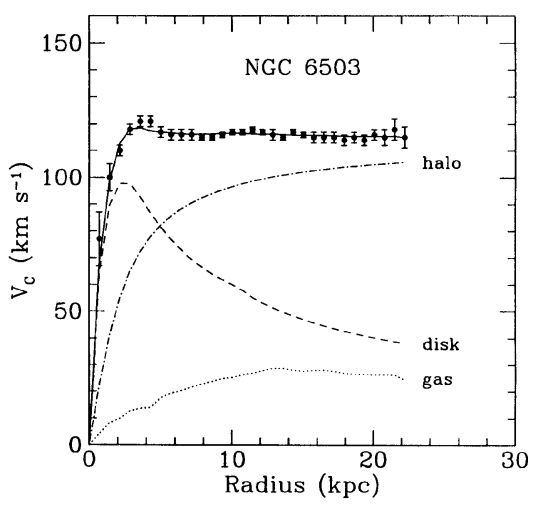
Rotation, or angular momentum, is one of the most common properties of celestial objects in the universe. Stars rotate, planets rotate, galaxies rotate, and this rotation is shaped by both formation history and external interactions. In theory, black holes can either rotate or remain non-rotating. However, so far, there is no clear observational evidence for truly non-rotating black holes.
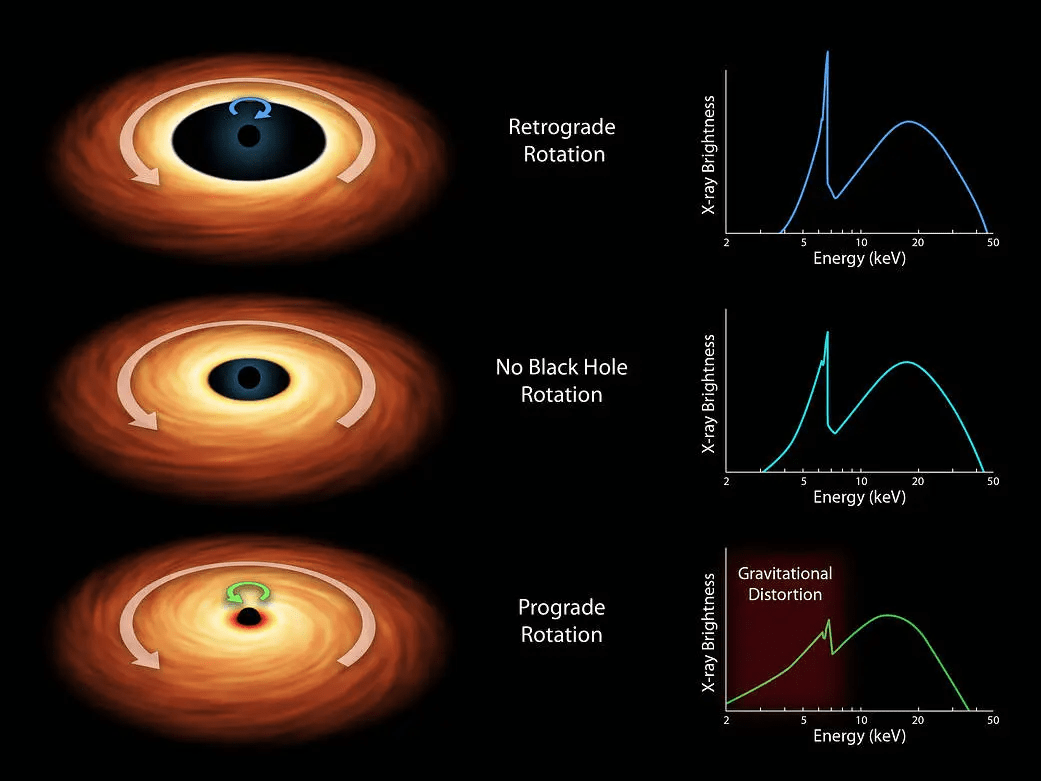
This does not mean non-rotating black holes cannot exist. Theoretically, they are allowed. In practice, they appear to be extremely rare, since almost every astrophysical process that forms a black hole naturally transfers angular momentum to it. In this sense, rotation is not an exception but the rule.
The Three Observable Properties of a Black Hole
From a certain point of view, black holes are among the simplest objects in the universe. From the outside, they are completely described by just three measurable quantities: mass, electric charge, and angular momentum.
Once the mass of a black hole is known, its gravitational influence can be calculated.
If it carries electric charge, it will interact with charged particles through attraction and repulsion.
Angular momentum, however, plays a particularly important role.
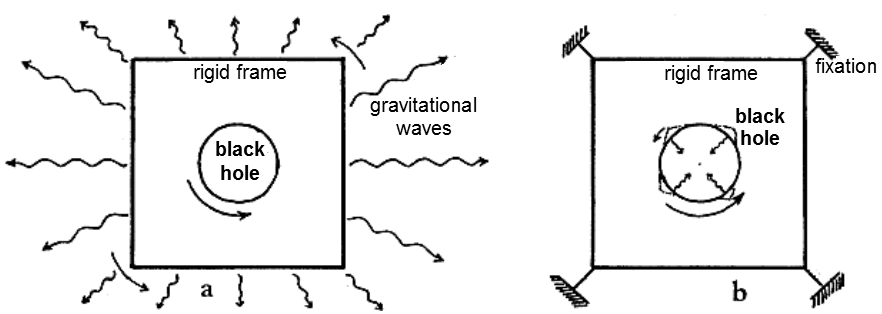
Rotation distorts spacetime itself, generating frame dragging and contributing to the production of gravitational waves. According to general relativity, gravitational waves arise from changes in spacetime caused by massive moving objects, and rapidly spinning black holes are among the most powerful sources of these disturbances.
When Rotation Competes with Gravity
If a black hole spins fast enough, its angular momentum can begin to compete with its gravitational pull. In extreme cases, incoming matter may be more likely to be deflected or ejected rather than swallowed directly. This means that faster rotation does not necessarily lead to faster growth.
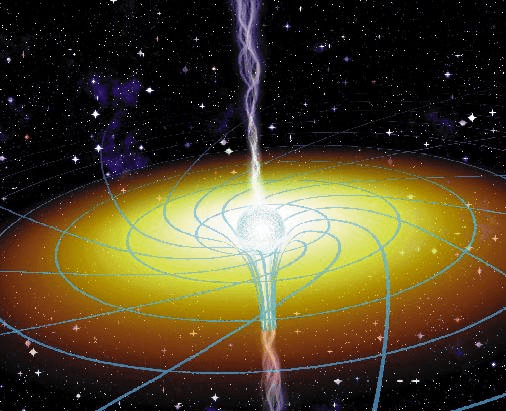
As rotation increases, spacetime becomes increasingly twisted around the black hole. These effects are not just theoretical curiosities; they influence how matter accretes, how energy is released, and how efficiently a black hole converts infalling mass into radiation. In higher-dimensional extensions of spacetime, black holes must also obey strict theoretical constraints to remain physically consistent, hinting that rotation places fundamental limits on their structure.
How Black Holes Were Predicted and Discovered
The idea of objects so massive that light cannot escape predates modern physics. In the eighteenth century, thinkers such as John Michell and Pierre-Simon Laplace proposed the concept of “dark stars” using Newtonian gravity. These early ideas suggested that gravity alone could trap light if it became strong enough.
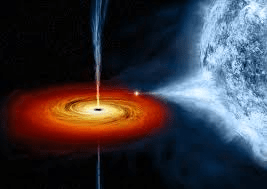
After Einstein introduced general relativity in 1915, gravity was understood as the curvature of spacetime rather than a force. This new framework naturally predicted the existence of black holes. By 1916, physicists realized that if general relativity was correct, black holes were unavoidable.
The first strong observational confirmation came in 1971 with the discovery of Cygnus X-1. Since then, black holes have become a central subject in astronomy. Today, they are detected indirectly through their gravitational influence on nearby stars, through X-ray and gamma-ray emissions from hot accretion disks, through suspiciously dark regions of space, and through gravitational waves produced by black hole mergers.
Accretion, Information, and the Lifetime of Black Holes
When matter approaches a black hole, it crosses a boundary known as the event horizon. Beyond this boundary, no signal can return to the outside universe. For supermassive black holes, this process often creates extremely bright accretion disks, known as quasars, which can convert a surprisingly large fraction of infalling mass into energy.
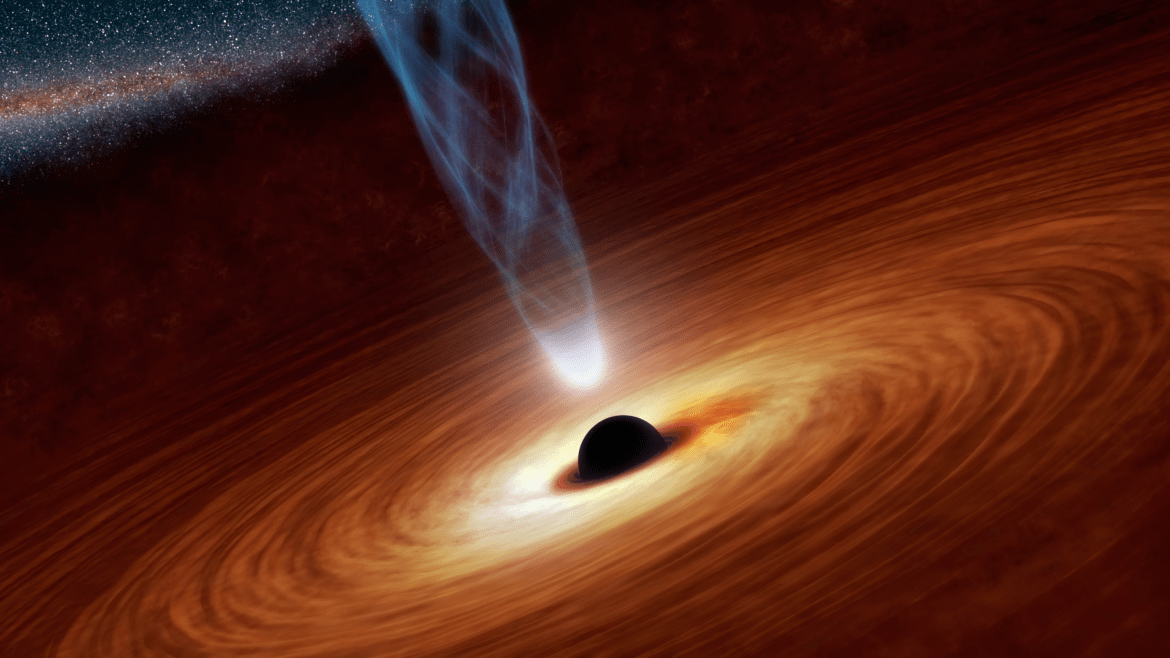
However, the faster a black hole spins, the more complex this process becomes. Not all incoming matter is absorbed. Some is converted into radiation, and some may be flung outward. What remains absorbed contributes only to the black hole’s mass, charge, and angular momentum.
Although we do not know what truly happens beyond the event horizon, we do know that information does not simply vanish from the universe. Basic properties of infalling matter are encoded in the black hole’s observable parameters. Over extremely long timescales, Hawking radiation may cause black holes to slowly lose mass and eventually evaporate. Yet this leads to the unresolved problem known as the black hole information paradox: if black holes disappear, what happens to the information they once contained?
At present, this question remains unanswered. Black holes are not eternal, but neither are they fully understood. They sit at the boundary between gravity, quantum mechanics, and our deepest uncertainties about the universe.