Why Quantum Systems Resist Observation
One of the strangest ideas in modern physics is that quantum systems appear to “hide” their true behavior from direct observation. In classical science, observing a system simply reveals information about it. But in quantum mechanics, the act of observation can actually change the outcome.
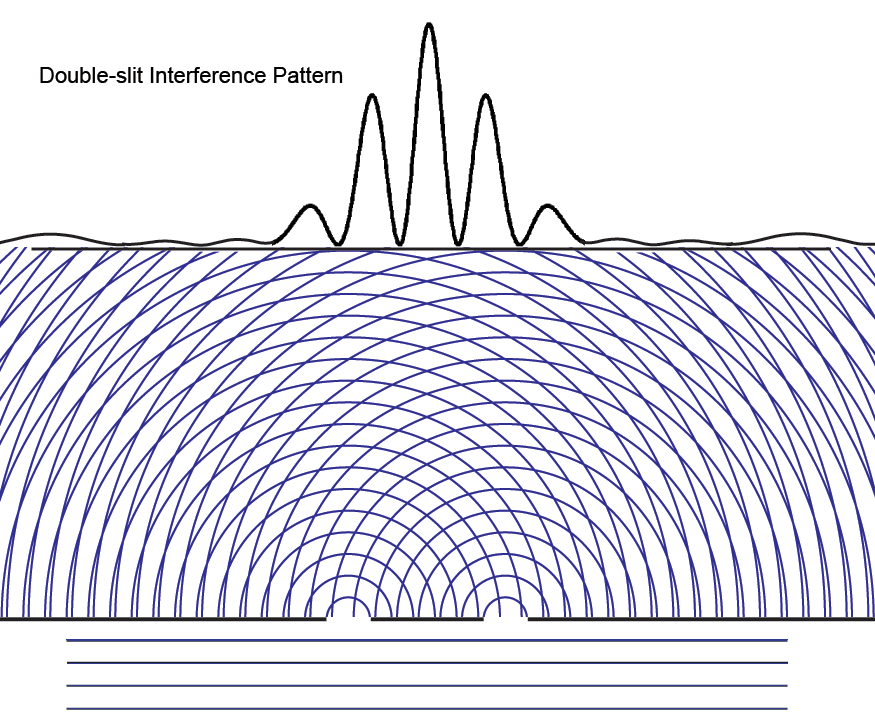
This strange behavior creates a deep challenge for science. Experiments normally rely on measurement and observation to confirm theories. Yet quantum systems often behave differently once they are measured, as if the act of looking itself alters reality.
Because of this, many physicists believe that the deepest secrets of quantum mechanics may always remain partly hidden from us.
What Counts as an Observer?
At first glance, the word “observer” sounds simple: someone who watches an experiment. But in quantum physics the concept becomes surprisingly complicated.
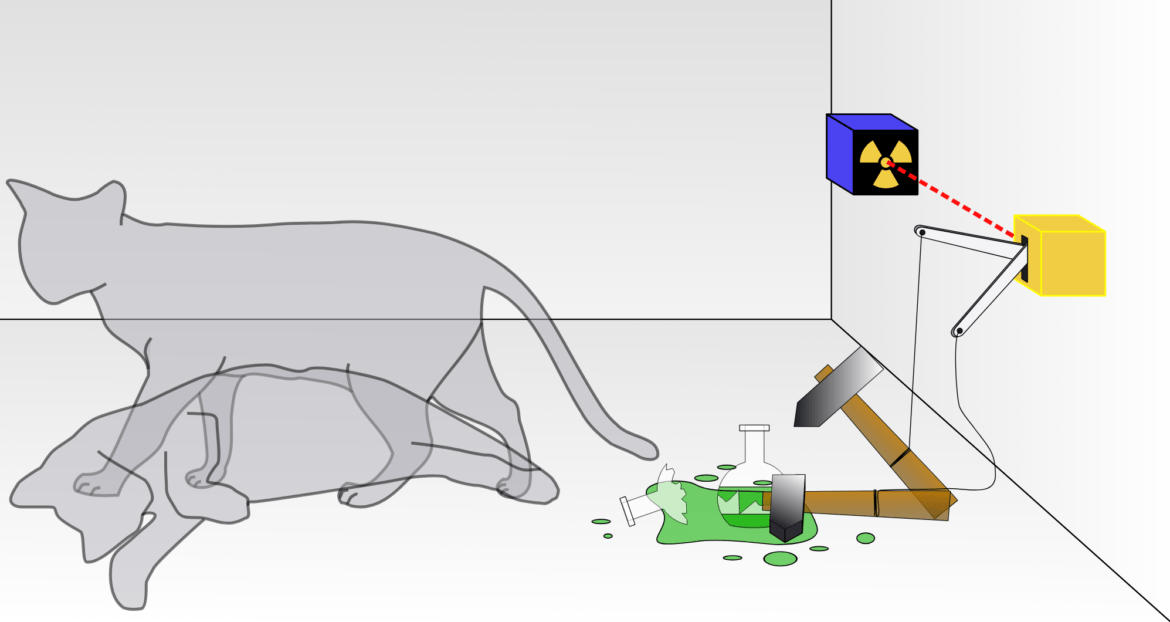
Does an observer need to be a conscious human who understands the experiment? Or could a machine also count as an observer? What about an animal, like a dog or a cat, that happens to see something during an experiment?
If an animal were trained to react to certain signals—barking once for a blue light, twice for a red light—it would effectively function as a biological measurement device. Even if the animal does not understand what it is observing, it still records and responds to the event.
From this perspective, an observer in quantum mechanics might be any system that interacts with the quantum experiment and records information about it.
Observation Changes the System
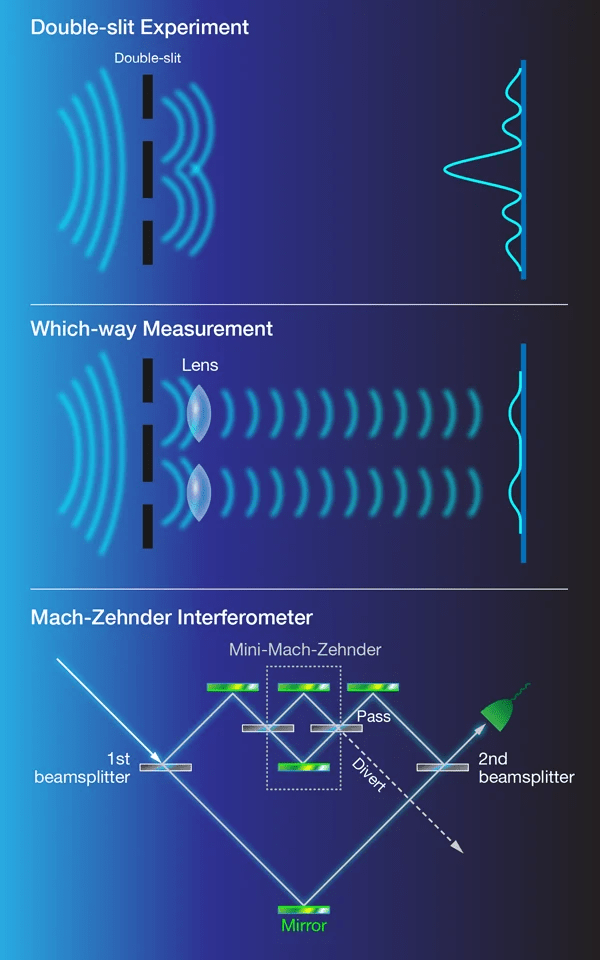
Quantum experiments are fundamentally different from classical ones because observation itself affects the system being observed.
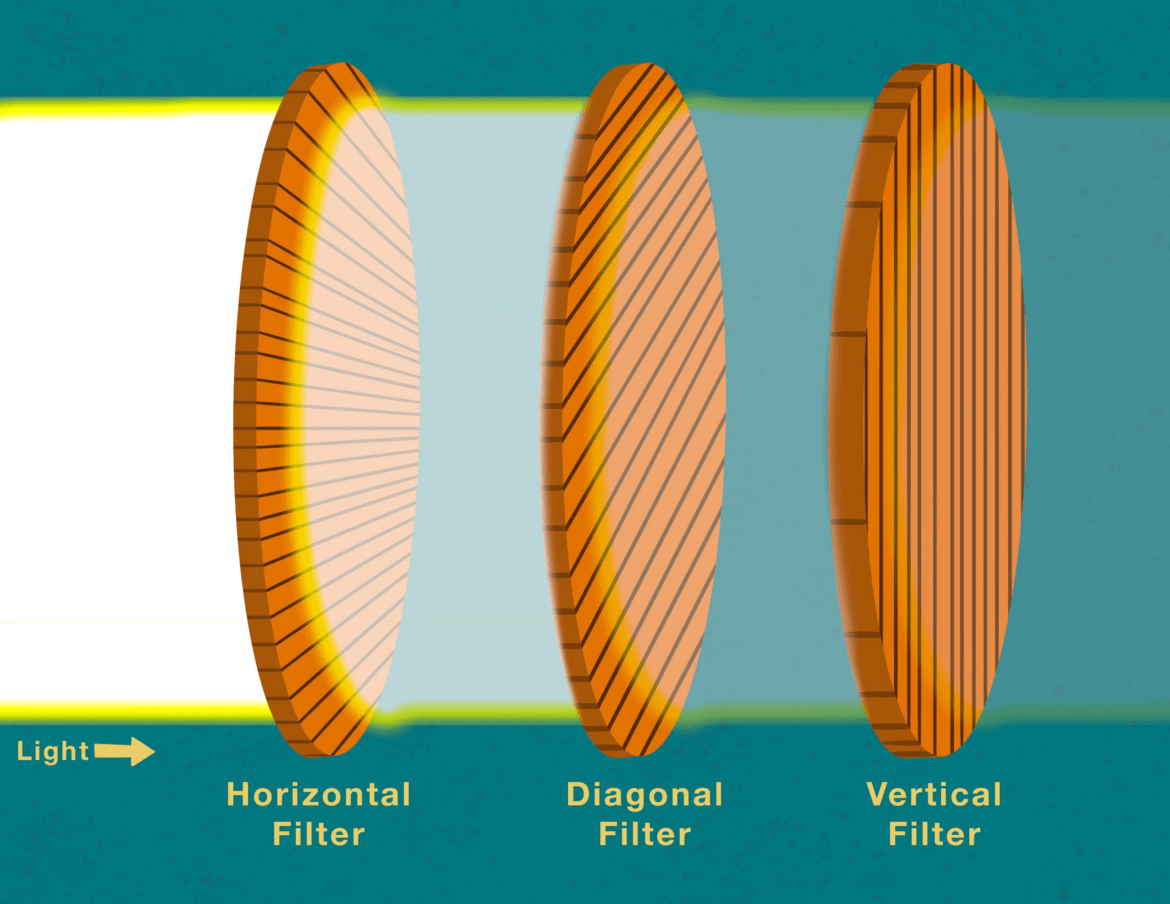
A famous illustration of this idea is the thought experiment known as Schrödinger’s cat, proposed by Erwin Schrödinger. In this paradox, a cat inside a sealed box exists in a superposition of two states—alive and dead—until someone opens the box and observes the result.
Once the box is opened, the superposition collapses and only one outcome becomes reality.
This example highlights a strange feature of quantum systems: they must remain isolated from the outside world in order to maintain superposition. Even a single interaction with the environment can destroy that delicate state.
When Even a Photon Becomes an Observer
Quantum objects are extremely small—often individual particles like electrons or photons. Because of their tiny scale, even the slightest interaction can disturb them.
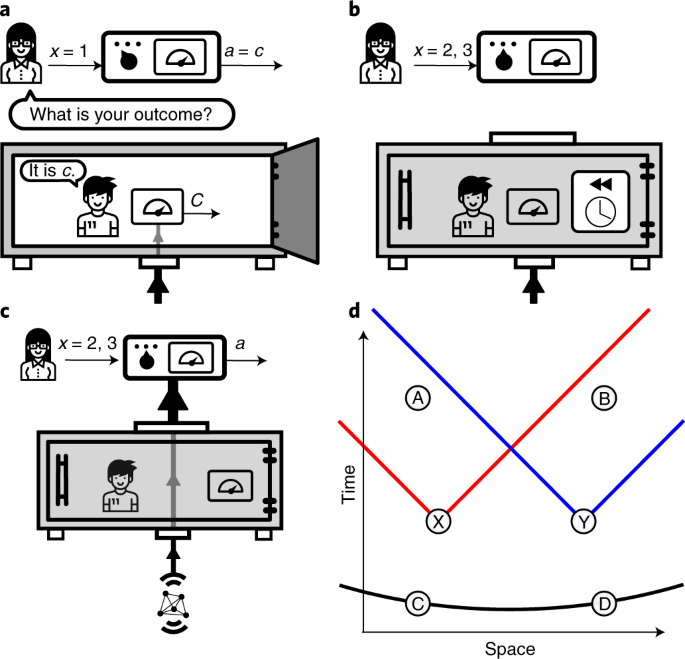
If a photon from the surrounding environment interacts with a quantum particle, that interaction can change the particle’s energy and collapse its quantum state. In this sense, even a single photon can function as an observer.
This is why quantum experiments must often be performed in extremely controlled environments, where researchers attempt to isolate systems from external disturbances.
Creating such isolation is extremely difficult, which is one reason why quantum effects are usually observable only for very short periods of time.
The Paradox of Wigner’s Friend
In 1961, physicist Eugene Wigner proposed a thought experiment that pushes the observer problem even further. The scenario is now known as Wigner’s friend thought experiment.
Imagine a scientist performing a quantum experiment inside a sealed laboratory. Outside the lab stands another scientist—Wigner—who cannot see what is happening inside.
For the person inside the lab, the measurement has already happened. But from Wigner’s perspective outside, the entire laboratory—including the experiment and the scientist inside—could still be in a quantum superposition.
This leads to a disturbing possibility: two observers might disagree about what reality actually is.
Using Photons as Observers
Because it is impossible to place humans inside true quantum superpositions, researchers have proposed experimental versions of Wigner’s thought experiment using photons.
In these experiments, photons interact with quantum systems and effectively become part of the superposition themselves. The photon carries information about the system, but measuring that photon immediately collapses the state.
This creates a dilemma. How can scientists extract information from the system without destroying the very quantum behavior they are trying to observe?
Solving this puzzle remains one of the biggest challenges in quantum research.
Could Quantum AI Observe Without Collapse?
Some researchers have suggested an intriguing possibility: what if the observer itself were a quantum system?
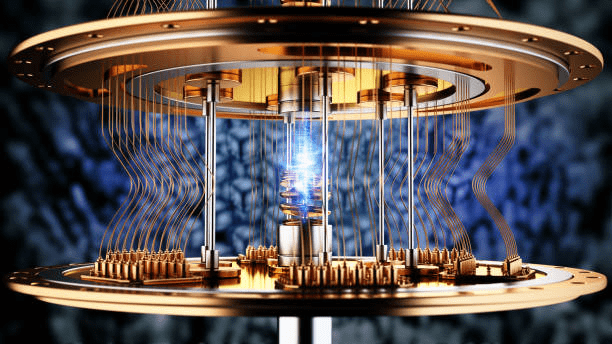
Scientists at Griffith University in Australia have explored theoretical ideas involving artificial intelligence running inside quantum computers. In principle, such an AI could exist within a quantum system while still processing information.
If such a system were possible, it might allow scientists to study quantum behavior without immediately collapsing the state.
For now, this idea remains purely theoretical. But it hints at a future where quantum computing and artificial intelligence might help unlock deeper secrets of quantum mechanics.
The Limits of Understanding Quantum Reality
Quantum mechanics has repeatedly challenged our understanding of reality. Every attempt to observe the quantum world more clearly seems to introduce new paradoxes.
If we ever learn how quantum systems truly behave, we might even discover ways to control the collapse of quantum states—effectively shaping physical outcomes at the smallest scales.
But there is also another possibility: perhaps quantum systems cannot be fooled at all. Perhaps the strange rules of quantum mechanics simply reflect a deeper layer of reality that human intuition will never fully grasp.
For now, the quantum world remains one of the most mysterious frontiers in science.