Welcome back. After a long break, I want to continue talking about a topic that is never truly old—black holes.
In the previous video, there were many different opinions, especially about the shape of black holes and the size of the one at the center of our galaxy. Before moving forward, I want to clarify a few things and explain them more carefully.
Do Black Holes Really Have a Shape?
To be honest, our knowledge of black holes is still extremely limited. Almost everything we know is based on theory and indirect observation. We cannot see a black hole, measure it directly, or observe its true structure.
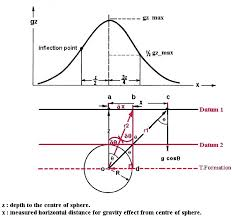
However, according to classical physics, any object with sufficiently strong gravity will naturally form a sphere. Gravity pulls matter equally toward the center from all directions. That is why planets and stars are spherical, and the stronger the gravity, the closer the object comes to a perfect sphere.
By that same logic, a black hole—having the strongest gravity of all—should be the most perfect sphere in the universe. Some people suggest that black holes may constantly change shape, but without direct observation, all such ideas remain speculation. At this stage, every explanation is still an educated guess.
What Exactly Is the Event Horizon?
One of the most confusing ideas about black holes is the event horizon. Simply put, it is the apparent boundary of a black hole. Once something crosses this boundary, it can never return.
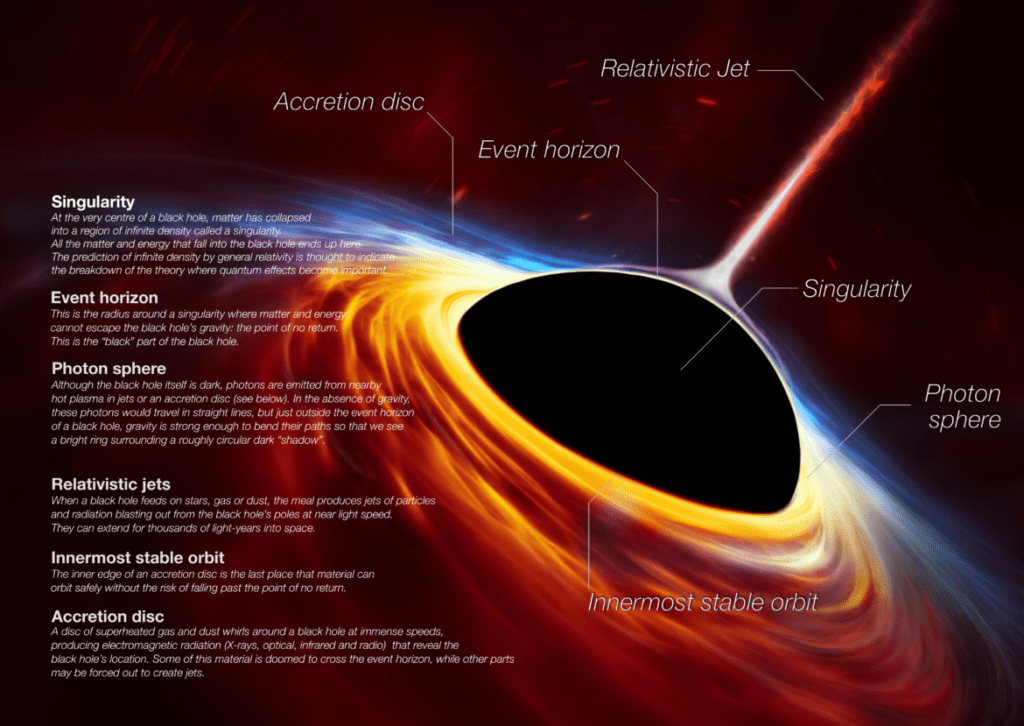
From the perspective of a distant observer, an object falling into a black hole appears to slow down more and more, almost as if it freezes in place. It may seem to take millions of years to move even a tiny distance.
But for the object itself, the fall happens in a finite amount of time. It crosses the event horizon almost instantly.
This contradiction exists because what we see is not the object itself, but the light coming from it. As gravity becomes stronger, that light slows down more and more until it can no longer escape.
How Do We Measure the Mass of a Black Hole?
Since we cannot see black holes directly, we measure them by observing their surroundings. Any object with mass affects nearby objects through gravity.
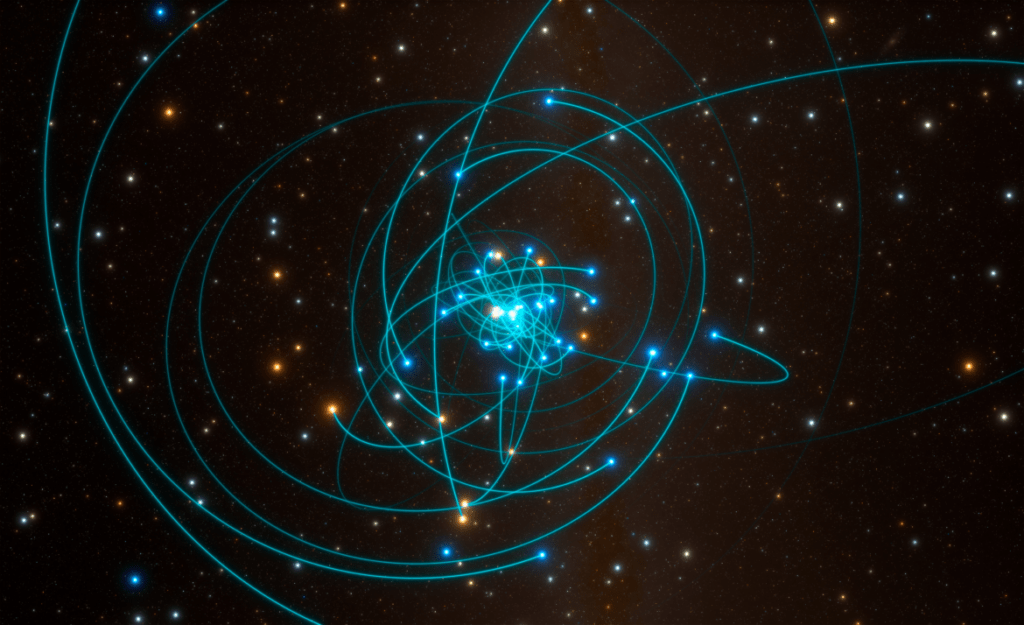
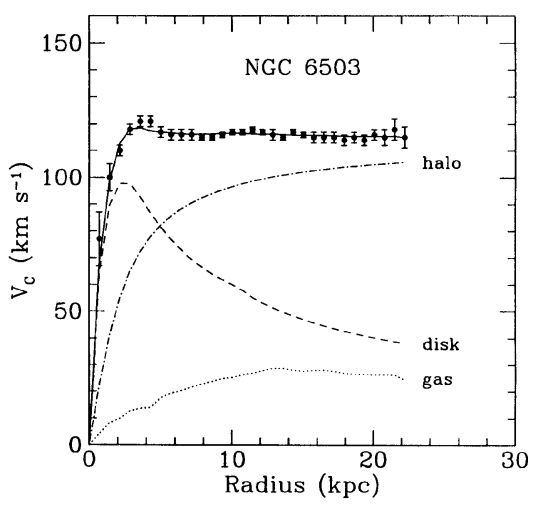
By studying the orbits, distances, and speeds of stars moving around a black hole, scientists can calculate the mass of the invisible object pulling on them. Near the center of our galaxy, some stars orbit at speeds of up to 16 million kilometers per hour—far faster than anything in our Solar System.
From these motions alone, we know there must be a massive black hole at the center of the Milky Way.
What Happens When Matter Falls Into a Black Hole
Despite its terrifying reputation, a black hole does not automatically swallow everything around it. Only objects that pass close enough are captured by its gravity.
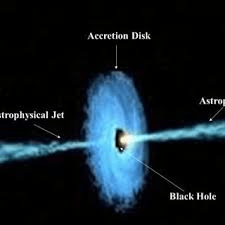
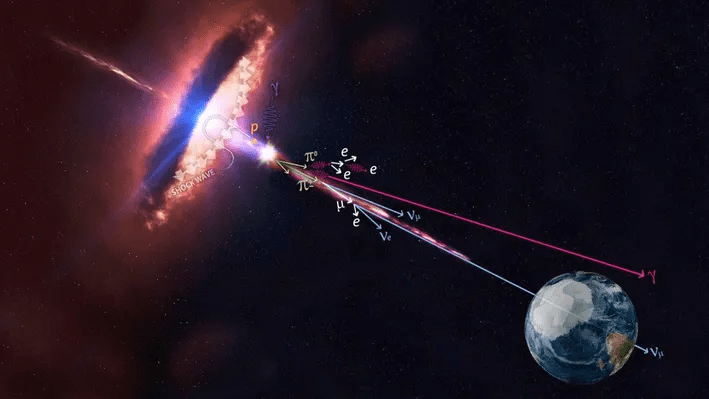
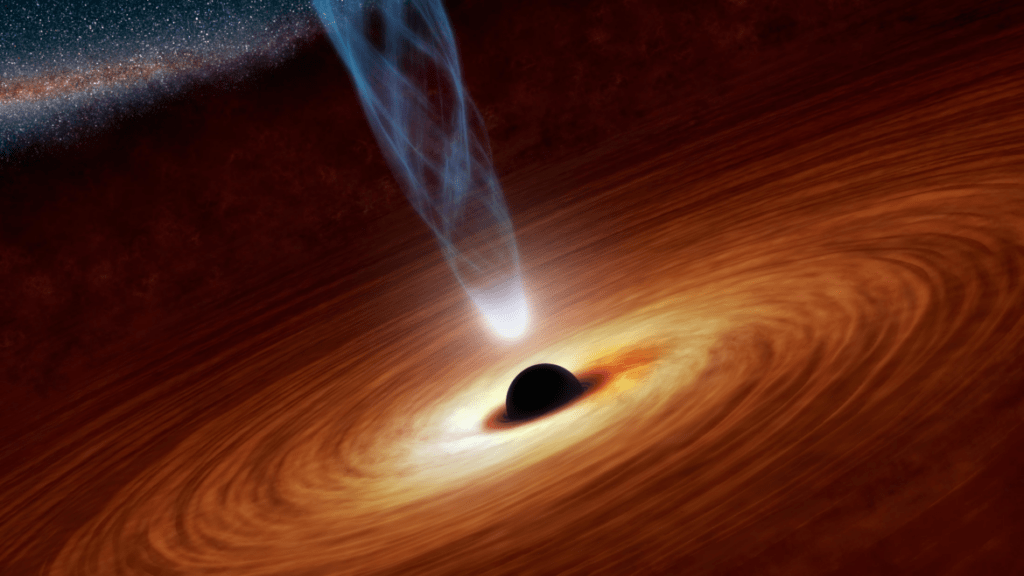
When matter falls in, it spirals inward, accelerating to near the speed of light. Friction and extreme pressure heat the material to incredible temperatures, causing it to glow intensely. This glowing matter forms an accretion disk and releases enormous amounts of energy, sometimes in the form of jets that stretch farther than an entire galaxy.
Absorbing a single star can take millions of years. Black holes are powerful, but they are not cosmic vacuum cleaners.
When Black Holes Collide
The merger of two black holes is one of the most violent events in the universe. Although we have never seen such a collision directly, we know it happens from gravitational wave observations and simulations.
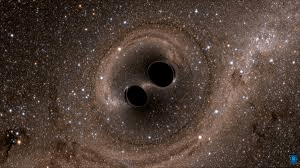
When two galaxies merge, their central black holes slowly spiral toward each other. Over billions of years, they collide and form an even larger black hole. This process reshapes entire galaxies, flinging stars into intergalactic space and releasing unimaginable energy.
In several billion years, our galaxy will merge with a neighboring one. When that happens, the black holes at their centers will eventually become one.
Quasars: The Most Extreme Objects We Know
At the heart of the most energetic objects in the universe lies something even more extreme than a black hole alone: the quasar.
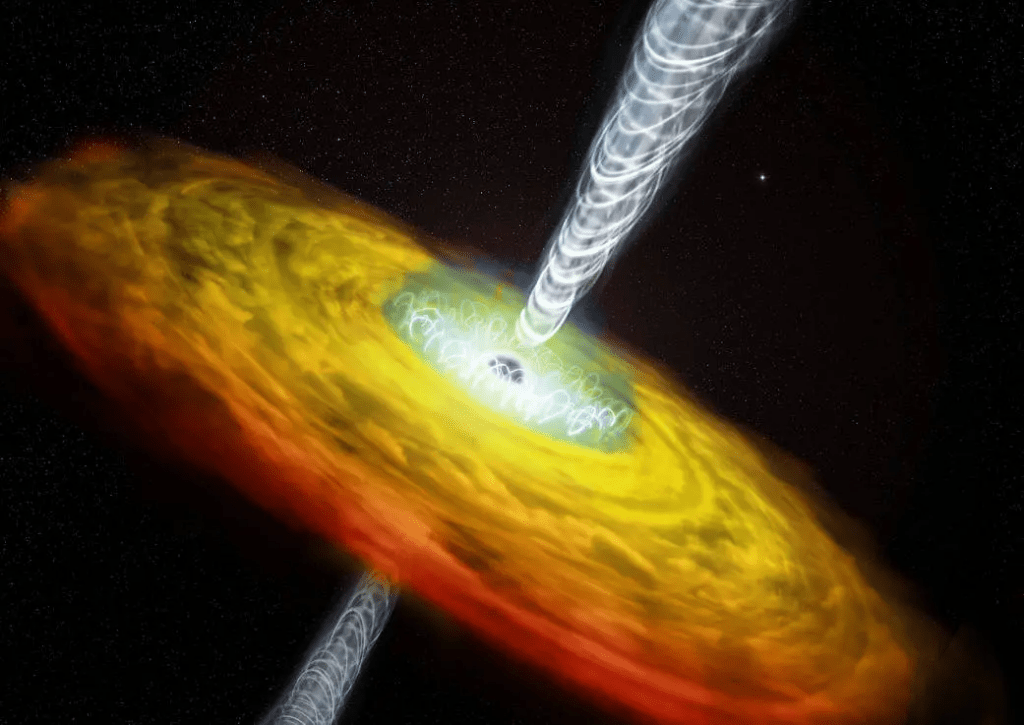
A quasar forms when a supermassive black hole enters an exceptionally violent phase, consuming enormous amounts of matter. The energy released can outshine an entire galaxy, even though the source is no larger than our Solar System.
Quasars may represent the birth stage of galaxies. Once the surrounding matter is consumed and the system stabilizes, the quasar fades, leaving behind a more familiar galaxy.
Some theories suggest quasars are something stranger still—but for now, they remain one of the greatest mysteries in modern astronomy.